Event 1
罗伯特·马洛里转入巴克利学校
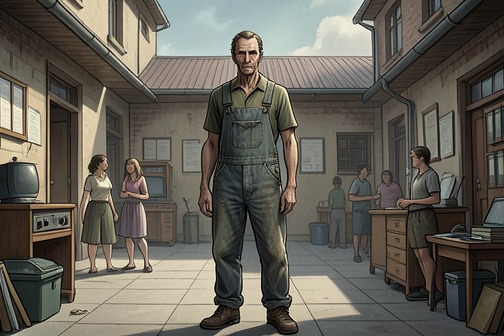
[Robert Mallory](entity:character-recall-character-robert-mallory-ae01c493887e)’s arrival at [Buckley](entity:organization-recall-organization-buckley-306f3c15107a) is the hinge between the narrator’s remembered paradise of spring and summer [1981](entity:time-recall-time-1981-16063b32b4e5) and the ominous events of senior year. First announced as the name of an unfamiliar student, Robert enters the school’s social center with an immediate, unsettling magnetism. The retrospective narrative makes his arrival feel consequential without proving that it caused the violence gathering around the city: it is a beginning in the story [Bret](entity:character-recall-character-bret-7b256fc8a433) remembers, and a point from which earlier signs acquire darker meanings.
## Before Robert Arrives
[Thom Wright](entity:character-recall-character-thom-wright-3c7fd30d0100) and [Susan Reynolds](entity:character-recall-character-susan-reynolds-b299ccba7f71) had been dating since sophomore year and, by the end of junior year, were among the most popular students at Buckley. They moved through school and social life as a near-constant pair, their relationship appearing easy and settled. Bret, Susan’s closest male friend, had been secretly in love with her; he was also infatuated with Thom, though he expected Thom’s heterosexuality to make those feelings unreciprocated. The trio’s closeness gave the coming arrival a particular charge: Robert would enter a world whose central relationships already seemed firmly established.
The retrospective account sets that social stability against the city’s changing atmosphere. Bret describes the spring and summer as paradisiacal, then casts September as the end of the dream: unsettling patterns seemed to emerge, while reports of strange and violent incidents accumulated across [Los Angeles](entity:location-recall-location-los-angeles-11eff639bdf5). This is an association in the narration, not a claim that Robert caused those events. The book’s structure instead lets his arrival coincide with the point when the ordinary world begins to look newly ominous.
## The Name and the First Encounter
The name was first spoken during a conversation among Bret and his friends. Susan identified the new student as Robert Mallory and knew only that he had a [Century City](entity:location-recall-location-century-city-6364cc26b88c) address, in one of the [Century Towers](entity:location-recall-location-century-towers-d9532f10cd35). The news struck the group as unusual because senior-year transfers were rare. Bret would later remember the moment not because the name meant anything to them then, but because subsequent events made its first utterance feel like an origin point.
Robert’s first appearance at the lunch table follows a quiet interruption in the group’s familiar routine. Bret notices the new boy approaching the popular table, apparently calm and in need of guidance. Robert’s clothes and features make a strong impression, but Bret’s attention is also unsettled by a feeling that he already knows him. When Bret introduces himself, Robert meets his eyes and smiles. His handshake is initially too firm, then softens as he pulls away; Bret reads the exchange as a nervous first impression and recalls his own effort to remain composed.
Robert’s account of his arrival fills in practical details while leaving the transfer itself unexplained. He says he landed at Los Angeles International Airport the night before, overslept, had barely unpacked, and could not find his school uniform. On the drive from Century City he became lost, missing both Benedict Canyon and Beverly Glen before ending up on the 405 near Sunset; he then had to take the 101 and exit at Woodman Avenue. When asked whether he had visited Buckley before, he says no and presents the move as a last-minute arrangement. The explanation offers a route into his new life at school, but not the circumstances that brought him there.
## Attraction, Secrecy, and Social Position
Bret’s response to Robert is immediate. He thinks the new student’s looks will make it easy for him to enter the tightly bounded social world of the senior class, and suspects that the same beauty may conceal his faults or let him avoid consequences. That perception contrasts Robert with the boys Bret already knows: Robert feels new enough to command attention, while Bret’s established feelings for Thom and Susan have long been rendered privately unworkable by the shape of their relationship and by the expectations surrounding them.
The summer’s other concealed attachment also shadows this first meeting. Bret and Ryan Vaughn had shared a private flirtation and had begun to acknowledge a mutual attraction, but Ryan wanted the relationship kept secret. He described discretion as necessary for it to work; Bret understood that their closeness would have to remain hidden. Ryan imagined leaving Los Angeles and starting again somewhere far from high school, a plan Bret recognized as his own. The arrival of a new student into Buckley’s visible social center thus coincides with Bret’s own experience of desire being pushed into secrecy and deferred futures.
## Retrospective Significance
Bret’s later account repeatedly revises the apparent innocence of Robert’s introduction. At lunch, nothing directly signals what will happen that fall; Robert seems vulnerable and polite, and his explanation of the transfer is accepted. Yet the narration places this ordinary first encounter within a wider sequence of threats, including the growing visibility of the group later known as the Riders of the Afterlife and the crimes eventually attributed to the Trawler. The stories are not presented as interchangeable: the cult’s activity and the Trawler’s murders are distinct strands, even as Bret retrospectively sees the cult and Robert’s presence as intertwined in the events that followed.
The book later identifies Robert as the figure the Trawler called “the God,” and reports that a letter verified by the [Los Angeles Police Department](entity:organization-recall-organization-c38071a69813) referred to Robert indirectly while absolving him of suspicion for the Trawler’s crimes. That later information transforms the introductory scene without making the first impression itself proof of guilt. Robert’s transfer remains significant because it opens the period in which Bret’s attraction, the school’s social world, and the city’s accumulating violence become bound together in his memory. The recollection is therefore both a record of an arrival and an example of how later knowledge can make an ordinary name seem to have announced a darker story.
Event 2
Matt Kellner’s fish and cat disappearance

[Matt Kellner’s fish and cat disappearance](entity:event-recall-event-916510b3a659) turns an ordinary detail of his [Encino](entity:location-recall-location-encino-a8599cea4df0) pool house into an early warning sign that [Bret](entity:character-recall-character-bret-7b256fc8a433) cannot understand at the time. The aquarium is suddenly empty, its filters silent, and Matt’s cat Alex is gone; Matt says he does not know what happened. When Matt later disappears, these losses join a wider pattern associated with the Trawler. The episode matters not because it resolves what happened to the animals, but because its unanswered questions become part of the evidence through which Bret interprets Matt’s fate.
## The Aquarium and the Missing Cat
Matt’s pool house had been part of Bret’s routine since the summer of [1980](entity:time-recall-time-1980-87083d7775fd), when the two met in [Buckley](entity:organization-recall-organization-buckley-306f3c15107a)’s summer program and began spending time together. Its long aquarium, stocked with fish and lit in blue, green, and purple, was among the room’s defining features. Alex, Matt’s cat, sometimes settled in front of the tank. The fish and the cat belonged to the ordinary surroundings of a place Bret knew well, rather than appearing at first as clues in a case.
On Labor Day in [1981](entity:time-recall-time-1981-16063b32b4e5), after Bret and Matt had been together in the room, Bret noticed that the aquarium’s cover was missing and the tank was empty. The lights were still on, but the filters had been switched off, leaving the bubbling sound Bret associated with the aquarium absent. Matt had returned to find the fish gone and said he did not know what had happened. He was searching for his pipe rather than investigating the empty tank; Bret saw it on the nightstand. Matt speculated that they might never know what had happened, and the two laughed about the mystery.
When Bret asked whether the cat could have taken the fish, Matt answered that Alex was missing too. Neither disappearance was explained. The exchange ends in laughter, but that laughter does not amount to an answer or to closure between the two boys. Bret leaves without saying goodbye, while Matt resumes his familiar, unhurried routine. The missing animals remain an unresolved disturbance in a scene that otherwise feels like the end of a summer and of their shared pattern of meetings.
## From Domestic Absence to a Pattern
The missing fish and cat take on a different significance against the home invasions that began in the hills above the [San Fernando Valley](entity:location-recall-location-san-fernando-valley-692f05c00b47) in 1980. At first, the crimes appeared random: people of different ages, genders, and household arrangements were targeted. One recurring clue, recognized only later as part of the Trawler’s pattern, was the disappearance of pets belonging to the intended victim and sometimes other animals in the neighborhood before an attack. The animals could be of many kinds, and in some cases three were sacrificed before an assault. At the time, the reason for their disappearance and what happened to them remained unknown.
That broader pattern does not establish, by itself, who took Matt’s fish or Alex. It does, however, make the losses at Matt’s home retrospectively legible as possible warning signs. The distinction matters: the event supplies a connection Bret can draw, not a conclusive account of the animals’ fate. The book lets the ordinary absence of pets acquire menace without turning uncertainty into proof.
## Matt’s Disappearance and Bret’s Suspicion
When Matt stopped appearing at school in the fall, his absence initially seemed compatible with his habits. His family did not immediately know when he had left, and the missing red Datsun and unlit guesthouse became apparent only after several days. Bret, however, recognized that the disappearance did not feel random. Alongside the empty aquarium and missing cat, he recalled anonymous silent phone calls and furniture rearranged inside the residence. These details led him to fear that Matt might be another victim of the Trawler.
Bret also resists the conclusion even as he forms it. Matt was male, unlike the three young women whose disappearances and deaths had dominated public attention, and Bret wonders whether the apparent pattern might be mistaken or incomplete. The possibility that other male victims had gone unrecognized further unsettles any simple account. The vanished animals therefore work in the narrative both as a clue and as a source of uncertainty: they encourage Bret to connect Matt’s disappearance to a larger sequence, while leaving open what happened in Matt’s house.
## Evidence and the Unresolved Official Account
Later, Matt’s father Ronald tells Bret that Matt could not have driven the distance associated with the supposed trip to Laguna Beach. Ronald had taken the Datsun to a dealership to replace a headlight and noted the mileage; when the car was returned after the period in question, he compared the reading and concluded it had not traveled the claimed hundred and forty miles. This detail strengthens Bret’s sense that the account of Matt’s absence does not add up, but it does not independently identify who was responsible.
Photographs Ronald shows Bret further unsettle the official explanation. One depicts an animal suspended from a pool-house column and another shows Alex’s head at the edge of the pool. The images make clear that the cat’s disappearance was not an ordinary loss, but they do not establish who killed Alex. Bret doubts the account that Matt, during a drug-related crisis, killed the cat and died after ingesting a large quantity of Quaaludes: he remembers Matt as too passive and impaired even to get up for a remote control, and the reported drug level seems inconsistent with the actions attributed to him. The fish, meanwhile, remain unexplained in the evidence presented here.
The contrast between the missing animals at the pool house and the later photographs is central to the episode’s lasting force. What began as an empty tank and a missing pet becomes entangled with a disputed death and with Bret’s attempt to reconstruct events from fragments. The book supplies grounds for suspicion, not a final resolution of who took the fish, what happened to Alex, or who was responsible for Matt’s death.
Event 3
The Trawler’s San Fernando Valley home invasions
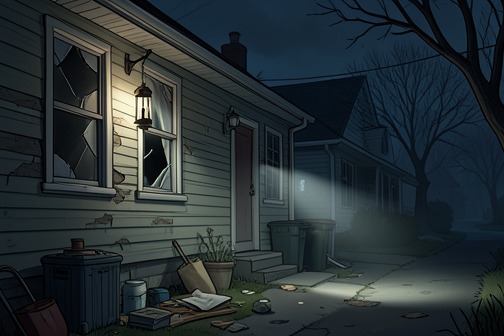
[The Trawler’s San Fernando Valley home invasions](entity:event-recall-event-481cd118a131) begin as a series of seemingly unrelated disturbances in residential neighborhoods, then emerge as the early stages of a deliberate pattern. Their progression—from a concealed presence and scattered break-ins to repeated warnings around selected homes—makes ordinary domestic space part of the threat. The episodes also establish a central uncertainty: the clues existed before the characters could recognize what they meant.
## Origins and apparent randomness
The invasions began in May [1980](entity:time-recall-time-1980-87083d7775fd), in the hills above the [San Fernando Valley](entity:location-recall-location-san-fernando-valley-692f05c00b47). At first, the range of targets offered no clear way to predict who might be next: young and older couples, a man living alone, a screenwriter, and families with teenage children were all represented. Boys as well as girls were attacked in the early invasions, although the Trawler would later favor girls, and one boy would eventually be killed. The apparent lack of a victim profile made the danger feel broadly shared rather than confined to a recognizable group.
The first reports emphasized presence more than entry. In one account, wind chimes sounded at a [Sherman Oaks](entity:location-recall-location-sherman-oaks-1d36d906a807) home on a still June night. In another, a figure dressed in black stood by a pool with a flashlight and a knife. As the summer continued, reports increasingly described an actual intruder, but the accounts did not settle into a stable portrait. Witnesses disagreed about the figure’s height, build, and eyes; some described striking eyes, while others had seen none. The black ski mask, jeans, and turtleneck obscured identity, leaving an elusive figure whose reported appearance seemed to shift from witness to witness.
That obscurity did not mean the activity was small. The account attributes twenty break-ins to the Trawler in the summer of 1980 alone. They ranged across the San Fernando Valley neighborhoods below Mulholland, from Studio City through Sherman Oaks and [Encino](entity:location-recall-location-encino-a8599cea4df0), with brief movement into [Bel Air](entity:location-recall-location-bel-air-721eb29dd6fc) and Benedict Canyon. The incidents then spread more widely, including Pasadena, Glendale, and [Hollywood](entity:location-recall-location-hollywood-3ce8b1af5069), before stopping abruptly. They resumed in mid-December and continued through January [1981](entity:time-recall-time-1981-16063b32b4e5), making the pause part of the pattern only in retrospect.
## Clues around the targeted homes
The early incidents seemed random partly because their connections had not yet been assembled. A recurring clue concerned animals: before an attack, a targeted household’s pet might disappear, and pets belonging to other people in the neighborhood might vanish as well. The animals varied—dogs, cats, birds, snakes, mice, rabbits, and guinea pigs—so the clue was not tied to a single species. In some cases, three animals in the same neighborhood were ultimately sacrificed before an assault. The reason for this repeated element remained unknown until late in 1981.
Other signs pointed to preparation rather than an intruder acting only on the night of an attack. Calls came to homes days beforehand, often from phone booths along Ventura Boulevard, Burbank, or Reseda, or from locations around Sunset and Hollywood. The caller said nothing, leaving the person who answered to interpret the silence. In later recollections, residents also noticed that something inside the house seemed different: an arrangement in a kitchen, bathroom, or bedroom had changed. Such details led investigators to consider whether the intruder had entered earlier to learn the layout. The pattern was disturbing precisely because these clues could seem minor until placed beside one another.
## A rehearsed pattern, and a change in the attacker
The surviving victims’ accounts made the invasions harder to understand as simple opportunistic crimes. In the first wave, some residents were restrained, and some were assaulted; afterward, survivors said the attacker had been weeping as he left. The accounts describe several early attacks as nonsexual, while acknowledging that some were sexual in nature. The combination of organized preparation and reported emotional distress suggested an attacker whose conduct did not fit a single, easy explanation.
The tone changed after the first murder. When attacks resumed in mid-December following the long lull, survivors from the next wave said the attacker no longer cried. The narrative presents that contrast as a possible shift in confidence after the first killing, without establishing it as a proven motive. In either case, the change distinguishes the initial spring and early-summer invasions from the later period: the repeated method continued, but witnesses described a different departure from the scene.
## Connection to the murders and the story’s wider threat
The early invasions became legible as part of a larger campaign only after separate events began to connect. At the time [Katherine Latchford](entity:character-recall-character-katherine-latchford-b303abca40f3)’s body was found in August 1980, people did not know that her disappearance was linked to the break-ins, missing pets, or assaults. Later information connected her missing cat and reports of silent calls to the developing pattern. The chronology therefore separates what the characters experienced from what they could understand: clues could be present without yet adding up to a case.
By the summer of 1981, the killer had not yet officially been named. The articles connecting the victims appeared in the [Los Angeles](entity:location-recall-location-los-angeles-11eff639bdf5) Times late that September, and the name Trawler entered the characters’ awareness during their third week of senior year. The narrator’s later account describes the home invasions as carefully assembled, staged acts rather than random or impulsive episodes. That retrospective framing gives the scattered signs—missing animals, phone calls, changed rooms, and masked appearances—an accumulating force without suggesting that the people living through them already knew their meaning.
The invasions also crossed into the narrator’s later life through recollection and fear. In 2006, while trying to write about the autumn of 1981, [Bret](entity:character-recall-character-bret-7b256fc8a433) experienced a severe anxiety attack and required emergency care at [Cedars-Sinai Medical Center](entity:location-recall-location-cedars-sinai-medical-fef5a4e8542d); the writing had brought back memories he had previously tried to put aside. Years afterward, reports of another home invasion in [Woodland Hills](entity:location-recall-location-woodland-hills-c558c46e2779)—with prior calls, rearranged furniture, a missing neighborhood dog, and a masked attacker—made Bret wonder whether a cult might be responsible. That suspicion was a momentary attempt to explain the danger, not a confirmed connection. The recurrence shows how the invasion pattern continued to shape perception: old clues could make a new report feel like a return of the same threat.
## Pursuit, uncertainty, and aftermath
The pattern also directs Bret’s own movements through the city. After witnessing an intimate conversation involving [Matt Kellner](entity:character-recall-character-matt-kellner-7d4c7c775d94) and [Robert Mallory](entity:character-recall-character-robert-mallory-ae01c493887e), he follows Robert’s black Porsche from [Buckley](entity:organization-recall-organization-buckley-306f3c15107a), trailing it through Beverly Glen and onto Ventura Boulevard. Later, he follows Robert down Benedict Canyon to a secluded house, waits nearby, and watches the Porsche leave after about ten minutes. These acts do not prove that Robert is responsible for the invasions; they show how the threat and the unresolved connections around it draw Bret into surveillance of his own.
In another pursuit on Benedict Canyon, Bret sees a beige van idling several houses from the place Robert has visited. He runs after it, falls, and tries to continue when it stops briefly, but the van drives away before he can identify its license plate. He then drives toward Sunset Boulevard without finding it. The encounter produces no confirmation, only a failed attempt to turn suspicion into evidence. The van’s later recurrence in Bret’s memory connects the unresolved home-invasion threat to his continuing fear that the Trawler was never caught.
The episodes’ significance lies in their gradual assembly. Initially, there is no dependable description, no obvious victim type, and no recognized link between the break-ins and the later killings. As the animal disappearances, silent calls, signs of earlier entry, and changes in the attacker’s reported behavior accumulate, the home invasions become an intelligible pattern—but one understood after the fact. Their geography matters as much as their method: activity moves through neighborhoods and along roads that the characters themselves use, making the city’s ordinary distances and routes part of the suspense.
Event 4
Katherine Latchford’s murder

[Katherine Latchford’s murder](entity:event-recall-event-a661a2810da4) is the first killing retrospectively connected to the Trawler and the point at which a series of seemingly unrelated disappearances, animal losses, and home invasions begins to look like a deliberate pattern. The evidence later associated with her case helps explain the offender’s developing method, but it does not resolve every uncertainty: at the time, the connections were unknown, and the narrator’s later reconstruction remains distinct from what investigators and the public understood then.
## Background and Delayed Recognition
Katherine disappeared in mid-June [1980](entity:time-recall-time-1980-87083d7775fd), but her body was not found until August. [The Trawler](entity:character-recall-character-the-trawler-8d8a25ce6371) had not yet been named, and the early home invasions across the [San Fernando Valley](entity:location-recall-location-san-fernando-valley-692f05c00b47) and nearby neighborhoods appeared random. They affected men and women, young and old, making it difficult for residents to identify who might be at risk or to connect one incident to another.
The name Trawler itself came later. Two investigators in the [Hollywood](entity:location-recall-location-hollywood-3ce8b1af5069) division of the [Los Angeles Police Department](entity:organization-recall-organization-c38071a69813) privately devised the nickname; a leaked, incompletely redacted memo helped bring it into newspaper coverage. The press did not begin confirming the linked series until late [September 1981](entity:time-recall-time-1981-9-b076a49216a6). In the summer of 1980, Katherine’s death and the invasions were not publicly understood as parts of one campaign, and the identifying details of the victims’ treatment remained largely withheld.
The narration makes that gap in knowledge central to the event’s meaning. Looking back, the narrator recognizes clues that had been present from the beginning, but stresses that their connections had not yet been made. The case therefore enters the story twice: first as an unexplained disappearance and death, and later as the opening murder in a pattern whose shape only becomes legible after further crimes.
## Warning Signs Before Katherine Disappeared
In retrospect, Katherine’s missing cat was one part of a broader animal-related pattern. Pets disappeared not only from a targeted household but sometimes from neighboring homes as well. The narrator later describes animal losses as a recurring feature preceding attacks, while noting that the reason for them was not understood until much later. At the time, Katherine’s family could not know that the loss might be connected to a larger threat.
Katherine had also told her parents that she was receiving strange phone calls in the days before she vanished. They were not obscene; their force lay in the caller’s silence, which left the recipient to imagine what the unknown person might want. Later accounts of the Trawler’s method describe silent calls placed to targeted homes, often from phone booths around Ventura Boulevard, Burbank, and Reseda, or across the canyons toward Sunset and Hollywood. In those calls, the offender listened as confusion gave way to fear.
Another retrospective clue was the possibility that someone had entered a victim’s home before the night of an attack. A room or its contents might seem different, including details in a kitchen, bathroom, or bedroom. Investigators later believed such changes could indicate that the offender had familiarized himself with a residence in advance. In Katherine’s case, the evidence catalog connects this kind of rehearsal to the broader pattern, but the narrative does not present it as a connection her family or the public recognized before her disappearance.
## A Pattern Takes Shape
The first wave of home invasions began in May 1980. Some survivors described being restrained or attacked by a masked figure, while others reported that the intruder seemed to leave in an emotional state very different from the confidence suggested by later crimes. The narrator contrasts early survivors’ reports that the attacker wept as he left with accounts from the renewed wave of invasions after a long pause, when survivors said he no longer cried. That contrast suggests a change in the offender’s behavior, though it does not by itself establish what caused it.
The attacks were not simply a collection of impulsive incidents. Looking back, the narrator describes them as carefully arranged and staged, as if the offender were building a narrative through repeated actions. The missing pets, silent calls, and apparent advance entries into homes become pieces of that developing design. Katherine’s murder is decisive within this structure because it is the first confirmed killing that later investigators and the narrator connect to the earlier invasions.
That retrospective pattern must still be distinguished from proof about any particular suspect. The narrator later considers whether the timing of the murders and [Robert Mallory](entity:character-recall-character-robert-mallory-ae01c493887e)’s presence in [Los Angeles](entity:location-recall-location-los-angeles-11eff639bdf5) could connect him to Katherine’s disappearance, but [Abigail Mallory](entity:character-recall-character-abigail-mallory-efa7797b6926) says Robert was searching for Katherine after she had been dropped off by her mother and was panicked that someone from [Buckley](entity:organization-recall-organization-buckley-306f3c15107a) had seen him at a movie with her. When the narrator presents a timeline linking Katherine and other victims to Robert’s visits, [Dr. Croft](entity:character-recall-character-dr-croft-22b935baf720) calls the conclusion a leap. The book thus presents an accumulating circumstantial case alongside explicit resistance to treating inference as certainty.
## What the Evidence Can and Cannot Establish
The case’s clues acquire meaning through later comparison: the missing cat, Katherine’s reports of silent calls, the apparent advance familiarity with victims’ homes, and the wider sequence of invasions. Together, they support the narrator’s reconstruction of a methodical campaign. Yet the evidence is disclosed unevenly. The public initially knew little about how the victims had been treated, while later reports and investigators’ connections changed how earlier events could be read.
The book also sets the Trawler’s carefully arranged pattern against the uncertainty of the records and the instability of memory. A clue can be real without being recognized when it occurs; a later pattern can clarify earlier events without settling every question about who committed them. Katherine’s murder therefore anchors the chronology of the Trawler case while preserving the novel’s distinction between what happened, what was known at the time, and what the narrator comes to believe in retrospect.
## Significance
Katherine’s murder marks the transition from a series of frightening but apparently scattered home invasions to a sequence later understood as serial violence. Her case makes the recurring signs—missing animals, silent calls, and possible rehearsal entries—visible as components of a method, even though their significance was not apparent beforehand.
The delay in naming the Trawler and the withholding of information about the victims underscore the novel’s concern with secrecy and narrative construction. The offender’s actions appear to form a staged story, but the story reaches the public in fragments: a leaked name, partial reports, and connections drawn only after later events. Katherine’s case is consequently both the first murder in the reconstructed series and an example of how an event’s meaning can change as evidence accumulates.
Event 5
Sarah Johnson’s murder
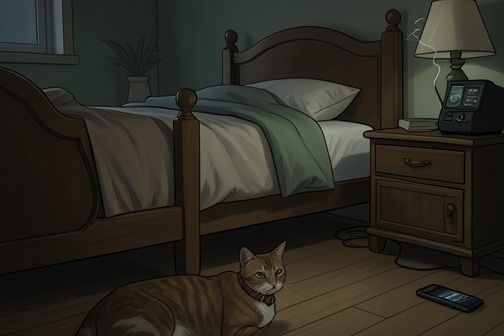
[Sarah Johnson’s murder](entity:event-recall-event-aa5440e8f3b3) is one of the early killings later associated with the Trawler, and a turning point in the pattern of home invasions and disappearances. Her case combines warning signs that initially seemed separate—missing animals, unnerving calls, and changes inside a home—with an abduction that occurred in the ordinary course of a drive home. The links to other victims became legible only over time, as later discoveries and disclosures reshaped the meaning of the earlier clues.
## Background and Warning Signs
In the days before Sarah disappeared, her cat went missing, and she told her mother that the furniture in her bedroom had been rearranged. She also received calls in which someone breathed without speaking. The calls were not described as obscene, but their silence made them unsettling. Together with the signs of a prior entry, these details fit a pattern that investigators and readers would recognize retrospectively; at the time, the clues did not necessarily disclose what was about to happen.
The pattern belonged to a broader sequence of intrusions and animal disappearances in the [Los Angeles](entity:location-recall-location-los-angeles-11eff639bdf5) area. [The Trawler](entity:character-recall-character-the-trawler-8d8a25ce6371)’s attacks were associated with pets disappearing before a targeted victim was attacked, and the intruder’s appearance was reported inconsistently by witnesses. Sarah’s case carried the pattern beyond a home invasion: although it shared the advance signs, she was not assaulted in a home invasion before her abduction.
## Disappearance and Discovery
Sarah had left a party in Tarzana and was driving back toward her parents’ home in Studio City. She intended to stop at [Tower Records on Ventura Boulevard](entity:location-recall-location-tower-records-on-ven-9681dce6593b) in [Sherman Oaks](entity:location-recall-location-sherman-oaks-1d36d906a807) to pick up a cassette, but she never entered the store. Her disappearance interrupted a familiar route through the Valley, turning an ordinary errand into the last known part of her journey.
Her body was discovered about eight weeks later in a drainpipe at an abandoned construction site on the outskirts of [Simi Valley](entity:location-recall-location-simi-valley-82c9d5c7f897). The delay between her disappearance and the discovery meant that the case’s significance unfolded gradually, rather than at the moment she vanished. Her fate became part of a larger series whose connections were only slowly established.
## Links to the Trawler Pattern
Sarah’s case echoed the warning signs associated with the Trawler: a pet had disappeared, unsettling calls had preceded the event, and furniture in her bedroom had been moved. The narrator presents these details as elements of an elaborate pattern, not as proof that Sarah or her family could have recognized the danger in advance. The clues became meaningful through hindsight, after similar reports accumulated and the attacks were understood as connected.
Her murder was also linked to [Julie Selwyn](entity:character-recall-character-julie-selwyn-e58c56f476b8)’s through the conditions in which their bodies were found. Sarah’s remains were described as having the same injuries as Julie’s, whose body was discovered in [September 1981](entity:time-recall-time-1981-9-b076a49216a6) on a public tennis court in a park near [Woodland Hills](entity:location-recall-location-woodland-hills-c558c46e2779). The narrator stresses that the nature of those injuries was not fully disclosed until a long article in the Los Angeles Times later that year. The resemblance therefore functions both as a connection between cases and as evidence of how much remained unknown while the investigation was unfolding.
## Narrative Significance
Sarah’s disappearance shows how a repeated pattern can exist before its victims or observers understand it as one. Missing pets, rearranged furniture, and silent phone calls initially appear as isolated disturbances; in retrospect, they become part of the sequence that preceded her abduction. The narrative’s delayed disclosure mirrors this process: the reader receives fragments first and learns their larger significance only as later events cast them into a new light.
The route from Tarzana toward Studio City, the intended stop at Tower Records in Sherman Oaks, and the eventual discovery near Simi Valley place the case within the dispersed geography of the Valley. Sarah’s intended errand offers no dramatic warning; it is precisely its ordinariness that makes the disappearance a rupture in everyday movement. The later comparison with Julie Selwyn’s case extends that rupture into a series, while leaving the full account of the violence and its meaning to a later revelation.
Event 6
Julie Selwyn’s murder
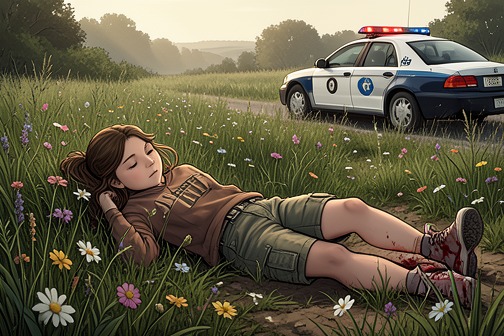
[Julie Selwyn’s murder](entity:event-recall-event-0f441c653980) is the turning point that made a seemingly isolated disappearance part of a larger pattern: by the end of [September 1981](entity:time-recall-time-1981-9-b076a49216a6), her death connected her to [Katherine Latchford](entity:character-recall-character-katherine-latchford-b303abca40f3) and [Sarah Johnson](entity:character-recall-character-sarah-johnson-fa8b9bb9dd9c) as the third known victim of the killer later called the Trawler. The case’s significance lies not only in that connection, but in how slowly it emerged. Rumor, incomplete reporting, withheld investigative details, and retrospective interpretation all shape the account of what happened and what could be known at the time.
## Disappearance and the emerging pattern
In late July, Selwyn disappeared after leaving a party on the outskirts of [Encino](entity:location-recall-location-encino-a8599cea4df0). At first, there was little reporting, and the narrator’s circle did not know her. Her absence might have remained an urban legend—the story of a teenage girl who vanished after a party—had it not been connected to two earlier cases, one from the summer of [1980](entity:time-recall-time-1980-87083d7775fd) and another from January [1981](entity:time-recall-time-1981-16063b32b4e5). When Selwyn’s body was found at the end of September, similarities among the victims and circumstances of their deaths began to link the cases.
The connection did not mean that the public knew what had happened. In 1981, the girls were understood to have been abducted and missing for months; Katherine Latchford’s and Sarah Johnson’s bodies had been found in remote locations. The injuries were not fully disclosed to the press, and investigators kept their public descriptions vague. The narrator emphasizes that most of the relevant details did not become known until nearly a year after the final victim of that period was found. In a pre-digital information environment, secrecy was not an exception but a condition of how the case reached the public.
## [The Trawler](entity:character-recall-character-the-trawler-8d8a25ce6371) and the delayed naming of the crimes
Selwyn was identified retrospectively as the third victim of the serial killer known as the Trawler. The nickname originated as a private, lewd joke among two investigators in the [Hollywood](entity:location-recall-location-hollywood-3ce8b1af5069) division of the [Los Angeles Police Department](entity:organization-recall-organization-c38071a69813). It alluded to fishing and to the crimes’ relationship to missing aquarium contents, including the use of rubber cement in the killing of Katherine Latchford. The name itself was not an official public label at the time Selwyn disappeared. A leaked memo later supplied the phrase to the press, and it appeared in a small number of articles; reports connecting the victims were published in the [Los Angeles](entity:location-recall-location-los-angeles-11eff639bdf5) Times in late September.
This lag separates the events as they happened from the story subsequently made of them. In summer 1981, the victims were only beginning to be linked, and no one in the narrator’s circle yet knew the killer’s name or history. In retrospect, Selwyn’s murder is both a discrete death and the moment when the case’s larger narrative became legible: the killer had been active since the summer of 1980, but the connections that gave the crimes a shared identity were assembled after the fact.
## Evidence, concealment, and public knowledge
The account distinguishes between what investigators knew, what the press reported, and what the public could infer. Some details were withheld because of the disturbing nature of the injuries and concern about frightening the public. Anonymous leaks circulated, but their claims were not equivalent to an official account. The reader encounters the case through this uneven flow of information rather than through a single complete disclosure.
The known pattern also extends beyond the three murders. In the earlier home invasions, pets disappeared in advance of attacks, sometimes from the victim’s household and sometimes from the surrounding neighborhood. The narrator later identifies missing animals as one of the clues associated with the Trawler, but stresses that the reason for their disappearance was not understood until late 1981. The case’s apparent coherence is therefore retrospective: clues existed before anyone had connected them, and even a recurring detail did not immediately explain the crimes.
## Selwyn’s discovery and the limits of the record
Selwyn’s body was discovered at the end of September on a public tennis court in a park near [Woodland Hills](entity:location-recall-location-woodland-hills-c558c46e2779). Her remains had been positioned against the net. The narrator describes the scene in broad terms while making clear that the most consequential information about the mutilations remained undisclosed until the end of the year, when a long Los Angeles Times article presented details that had previously been alluded to only because of their disturbing character. The withheld account marks a boundary between public knowledge and the full violence of the case.
The murder consequently becomes an example of how the novel builds knowledge through delay, partial records, and later reinterpretation. Selwyn’s disappearance initially carried the shape of a rumor; her discovery connected her to earlier victims; later reporting disclosed more of the pattern without erasing the uncertainty that surrounded it at the time. The narrative does not treat the name Trawler as a complete explanation. It is a label that helps organize the evidence, while the underlying crimes remain larger and more disturbing than the nickname can contain.
Event 7
Desecration of the Buckley Griffin

The desecration of the [Buckley](entity:organization-recall-organization-buckley-306f3c15107a) Griffin was a violent act of vandalism at Buckley that greeted students before the school year began. Its aftermath—blood and mutilated koi around the statue—made the campus’s polished routines feel suddenly unsafe, while the lack of proof left [Bret Ellis](entity:character-recall-character-bret-ellis-24db207b1483) caught between suspicion and self-protective explanations.
## Discovery and Immediate Context
When [Bret](entity:character-recall-character-bret-7b256fc8a433) first encountered the aftermath, a police car was parked behind the library, and blood and mutilated koi lay scattered around the Griffin in the courtyard. The scene coincided with [Robert Mallory](entity:character-recall-character-robert-mallory-ae01c493887e)’s arrival as a new student. Robert gave a composed account of family loss and relocation, but Bret found his emotionless manner unsettling; that impression, he acknowledged, was only a feeling, not evidence that Robert had harmed the statue.
The vandalism occurred on the night before school began. Bret later believed that a figure he had seen with a flashlight in the library courtyard had desecrated the statue, but the account provides no confirmed identification of the perpetrator. The event’s unanswered circumstances became part of a larger atmosphere of unease at Buckley.
## Bret’s Explanations and Suspicions
During the following September week, Bret tried to recast the vandalism as a harmless prank that had taken a ghoulish turn unintentionally. He also imagined that whoever had been in the courtyard realized the act had gone too far and regretted it. These explanations belonged to a larger effort to believe that Robert was sane, that Buckley’s students remained innocent and safe, and that privilege and status could protect them.
That reassuring account did not hold. Bret felt increasingly disconnected from school and the outside world, describing himself as no longer a tangible participant in either. His numbness and his need to construct a comforting narrative show how the vandalism persisted beyond the physical scene: it had disrupted his confidence in the order around him, even as he tried to make it seem containable.
## A Pattern Without a Name
The statue’s desecration also became entangled in Bret’s growing suspicion of Robert. After Robert pursued Bret’s car on Ventura Boulevard, and amid Robert’s connections to [Matt Kellner](entity:character-recall-character-matt-kellner-7d4c7c775d94) and [Susan Reynolds](entity:character-recall-character-susan-reynolds-b299ccba7f71), Bret concluded that Robert was probably the figure in the courtyard. Bret expressed certainty in that suspicion despite admitting that he had no proof. The narrative thus distinguishes his conviction from an established fact.
Reports of home invasions supplied a wider but still incomplete context. One newspaper account described a [Woodland Hills](entity:location-recall-location-woodland-hills-c558c46e2779) attack preceded by phone calls, rearranged furniture, and a missing neighborhood dog; the victim was assaulted by a masked intruder and left unaware that the incident fit a pattern. Bret briefly wondered whether the Riders of the Afterlife, a cult he had just read about, might be behind both the invasions and disappearances. Neither that speculation nor his suspicion about the statue established who had committed the vandalism.
## Meaning and Aftermath
In retrospect, the statue’s desecration sits alongside clues that would later be associated with the Trawler, including the recurring disappearance of household and neighborhood pets before attacks. At the time, however, the connections had not been made, and the Trawler had not yet been named. The Griffin incident therefore carries the tension of an early warning whose meaning remains unavailable to the people living through it.
Bret’s response gives the event its lasting narrative force. He alternately minimized the vandalism as a prank and treated it as evidence implicating Robert, while the available account confirms neither a harmless explanation nor Robert’s guilt. The bloodied statue marks the beginning of a widening breach between Buckley’s appearance of safety and Bret’s experience of fear, uncertainty, and emotional detachment.
Event 8
The home invasions
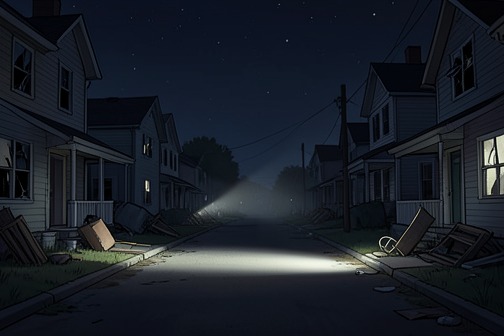
[The home invasions](entity:event-recall-event-f26e3e0e3fe1) are a serial campaign of intrusions across [Los Angeles](entity:location-recall-location-los-angeles-11eff639bdf5) that turns scattered neighborhoods into a connected field of threat. Beginning in May [1980](entity:time-recall-time-1980-87083d7775fd), the incidents develop from furtive signs of an unseen presence into a recognizable pattern involving missing animals, silent calls, and assaults; for [Bret Ellis](entity:character-recall-character-bret-ellis-24db207b1483), the pattern becomes both a warning and an obsession that drives him to follow [Robert Mallory](entity:character-recall-character-robert-mallory-ae01c493887e).
## Early Intrusions and Geographic Spread
The first wave began in May 1980, initially seeming like tests rather than full attacks. In June, someone recalled hearing veranda wind chimes on Oakfield Drive in [Sherman Oaks](entity:location-recall-location-sherman-oaks-1d36d906a807) on a night without a breeze. In July, a witness on Woodcliff Road reported a flashlight beam and a black-clad figure beside a pool, holding a butcher knife. During that summer the intruder’s appearance remained uncertain: witnesses variously described a tall or not-so-tall, lean or heavy figure, sometimes claiming to see strikingly different eye colors and sometimes no eyes at all. The black ski mask, jeans, and turtleneck obscured a stable identity.
The intrusions nevertheless formed a substantial geographic pattern. Twenty break-ins occurred in homes below Mulholland on the [San Fernando Valley](entity:location-recall-location-san-fernando-valley-692f05c00b47) side, stretching from Studio City through Sherman Oaks and [Encino](entity:location-recall-location-encino-a8599cea4df0), with brief incursions into [Bel Air](entity:location-recall-location-bel-air-721eb29dd6fc) and Benedict Canyon. Later incidents appeared in Pasadena, Glendale, and [Hollywood](entity:location-recall-location-hollywood-3ce8b1af5069) before the campaign abruptly stopped. It resumed in mid-December and continued through January [1981](entity:time-recall-time-1981-16063b32b4e5). The spread across residential districts, followed by pauses and sudden returns, made the threat difficult to reduce to one neighborhood or one continuous wave.
## The Pattern of Preparation
The invasions were linked to signs of advance preparation. In accounts later reported in the Los Angeles Times, targeted residents described calls in the preceding week, furniture moved, or household details changed. Some victims recalled that something in a kitchen, bathroom, or bedroom had been altered, leading investigators to suspect that the intruder had entered and familiarized himself with a home before attacking. Silent calls, sometimes made from phone booths along Ventura Boulevard, Burbank, or Reseda, and from locations across the canyons toward Sunset and Hollywood, added another form of surveillance: the caller listened as the person answering moved from confusion to annoyance and then fear.
Missing pets were another recurring warning. The pattern could involve a victim’s own animal and pets from elsewhere in the same neighborhood, including dogs, cats, birds, snakes, mice, rabbits, or guinea pigs. In some cases, three animals in a neighborhood were sacrificed before an assault. The reason for this practice and what was done with the remains only became clear in late fall 1981, so the early disappearances first appeared as a disturbing but unexplained accompaniment to the break-ins.
## Public Alarm and [Bret](entity:character-recall-character-bret-7b256fc8a433)’s Pursuit
By the autumn of 1981, the renewed attacks had entered the conversations of Bret and his friends. At a dinner, Bret insisted on keeping the house lights on and reported a break-in in [Century City](entity:location-recall-location-century-city-6364cc26b88c) the previous Sunday, followed by incidents in Rancho Park and Culver City that week. He noted that the previous invasion had been in June and the one before that in January, leaving nearly six months in which the attacks seemed to have stopped. The missing animals made the return of the pattern feel immediate, while [Julie Selwyn](entity:character-recall-character-julie-selwyn-e58c56f476b8)’s disappearance added a more personal and frightening uncertainty. [Debbie Schaffer](entity:character-recall-character-debbie-schaffer-23db255cf219) pointed out that a missing girl was more upsetting than a missing cat; Bret named Julie and said she had been gone for almost eight weeks, with no trace found.
The attacks also shaped Bret’s reading of later news. A report of another invasion in [Woodland Hills](entity:location-recall-location-woodland-hills-c558c46e2779) described the familiar combination of preceding phone calls, rearranged furniture, a missing neighborhood dog, and a masked assailant who tied a victim to a chair and knocked them unconscious. The victim had not recognized the incident as part of a wider pattern and had not gone to the police earlier. After reading the account alongside a report about the Riders of the Afterlife, Bret wondered whether the cult might be responsible for the invasions and disappearances. The connection remained speculation; the article’s details intensified his sense that the threat could be anywhere.
That fear fed Bret’s pursuit of Robert. After witnessing an intimate conversation between Robert and [Matt Kellner](entity:character-recall-character-matt-kellner-7d4c7c775d94) in the [Buckley](entity:organization-recall-organization-buckley-306f3c15107a) parking lot, Bret followed Robert’s black Porsche from Stansbury Avenue toward Ventura Boulevard, convinced in his anxious state that the drive might be connected to Matt. On a later pursuit through Benedict Canyon, Bret kept his distance as Robert turned into the driveway of a secluded two-story house, waited, and watched him leave about ten minutes later. The movements did not prove a connection to the invasions, but the campaign’s atmosphere of hidden entry and uncertain identity made Bret’s surveillance feel to him like an attempt to get ahead of danger.
The same impulse reached a breaking point when Bret saw a beige van idling several houses down the canyon road. He ran after it, fell on the asphalt, and approached again as it paused and then slowly drove away. Bret wondered whether the driver was taunting him, but he failed to see the license plate. He sped along the canyon road toward Sunset Boulevard without finding the van, then drove aimlessly instead of returning to Buckley. The encounter yielded no identification, only another unresolved sighting in a story already built around elusive figures and missed opportunities to see them clearly.
## Consequences and Narrative Significance
The home invasions’ effects extend beyond the immediate assaults. Missing animals, unexplained changes inside houses, silent calls, and uncertain sightings make ordinary domestic spaces seem compromised before any attack is confirmed. The pattern also draws Bret into a cycle of vigilance: news reports become clues, familiar routes become pursuit roads, and a van without a known connection to a specific incident can still reignite his need for an answer.
The threat persists beyond the events of 1981 in the adult Bret’s account. In 2006, attempting to write about the autumn of 1981 and the Trawler, he suffered a severe anxiety attack and went to the emergency room at [Cedars-Sinai Medical Center](entity:location-recall-location-cedars-sinai-medical-fef5a4e8542d). Years later, he recalled that the crisis began a prolonged period of anxiety, insomnia, and alienation. During the writing of the book, memories again became physically overwhelming, and arguments with his partner over what had happened made the act of narrating itself part of the aftermath. The invasions thus remain more than a sequence of crimes: their scattered clues and unfinished explanations recur in Bret’s memory as a pattern he can describe but cannot simply leave behind.
The narrative also keeps the campaign’s geography and identity unsettled. Its activity moves across the valley and beyond it; witnesses cannot agree on the intruder’s appearance; and Bret’s attempts to follow Robert or catch the van produce no decisive confirmation. This gap between repeated signs and conclusive knowledge is central to the invasions’ force: the threat becomes legible as a pattern before it becomes fully understandable.
Event 9
Disappearance of Julie Selwyn
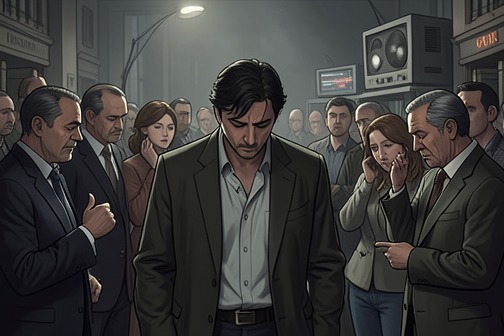
[Julie Selwyn](entity:character-recall-character-julie-selwyn-e58c56f476b8)’s disappearance is an unresolved absence that links a missing student to a wider pattern of animal disappearances and home invasions, while exposing how fear and uncertainty shape [Bret Ellis](entity:character-recall-character-bret-ellis-24db207b1483)’s understanding of events. The account supplies no confirmed explanation for what happened to Julie; instead, it shows her absence returning through news, conversation, and [Bret](entity:character-recall-character-bret-7b256fc8a433)’s solitary recollections.
## The Disappearance and the Emerging Pattern
By September, Julie had been missing for nearly eight weeks, and nothing had been found. In conversation with [Thom Wright](entity:character-recall-character-thom-wright-3c7fd30d0100), [Susan Reynolds](entity:character-recall-character-susan-reynolds-b299ccba7f71), and [Debbie Schaffer](entity:character-recall-character-debbie-schaffer-23db255cf219), Bret connected the case to the renewed reports of missing animals and asked whether the disappearances and break-ins might be related. His hope that Julie had run away was already weakening as time passed without news.
The broader pattern remained only partly understood. Home invasions had begun in May [1980](entity:time-recall-time-1980-87083d7775fd), and pets belonging to victims or neighbors disappeared beforehand. Bret later describes three animals in a neighborhood being sacrificed before some assaults, though the group did not understand the reason at the time. The connection places Julie’s disappearance amid a developing atmosphere of threat, but does not establish that the intruder took her or explain her fate.
## A Private Image of Absence
Julie’s disappearance returns in Bret’s account not only as a possible crime but as an image attached to music and memory. Driving alone through the canyons at night, he repeatedly listened to B-Movie’s “Nowhere Girl,” whose mood intensified his loneliness and numbness. The song brought Julie to mind as someone who might have vanished into the lights and movement of a dance floor, an imagined image rather than a report of what actually happened to her.
That association gives the missing-person case an emotional presence even where the facts remain sparse. Julie is absent from the scenes Bret recalls, yet her unresolved status becomes part of the atmosphere of his nights and of the city’s accumulating unease.
## Narrative Significance and Uncertainty
The narrative places Julie’s disappearance alongside a sequence of warning signs that were not initially recognized as connected. A later account of a [Woodland Hills](entity:location-recall-location-woodland-hills-c558c46e2779) home invasion describes preceding calls, rearranged furniture, and a missing neighborhood dog; the victim, unaware of any pattern, had not gone to the police earlier. Bret briefly wonders whether the Riders of the Afterlife, a cult described in the same newspaper, might be behind the break-ins and disappearances. This is speculation prompted by a disturbing article, not a confirmed explanation.
Julie’s case therefore functions as a measure of what the characters do not know. Animal disappearances, intrusions, and a missing young woman begin to occupy the same anxious field, but the narrative preserves the difference between suspicion and proof. The disappearance remains unresolved in the supplied evidence, and its significance lies partly in how the absence persists without a reliable account to close it.
Event 10
Abduction of Sarah Johnson
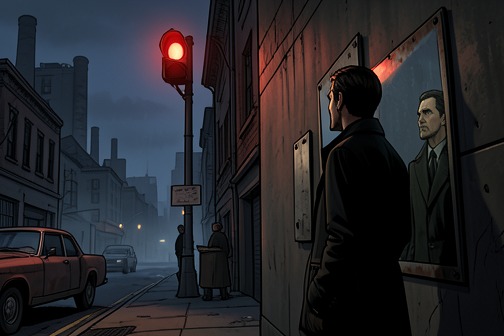
[Sarah Johnson](entity:character-recall-character-sarah-johnson-fa8b9bb9dd9c)’s abduction is a briefly recalled episode in the Trawler’s wider pattern of attacks and disappearances. The narrative links it to a specific [Los Angeles](entity:location-recall-location-los-angeles-11eff639bdf5) location—the parking lot by [Tower Records on Ventura Boulevard](entity:location-recall-location-tower-records-on-ven-9681dce6593b)—but does not provide a detailed account of how she was taken or what happened to her afterward. Its significance lies in the way the passing reference turns an ordinary point on [Bret](entity:character-recall-character-bret-7b256fc8a433)’s route into part of a larger geography of danger.
## Location and Retrospective Reference
While following [Robert Mallory](entity:character-recall-character-robert-mallory-ae01c493887e) along Ventura Boulevard, Bret passes Tower Records and remembers that Sarah Johnson was abducted from its parking lot one night in early January, eight months earlier. The recollection interrupts his immediate speculation about Robert’s destination and [Matt Kellner](entity:character-recall-character-matt-kellner-7d4c7c775d94), setting the present drive against an earlier crime in the same urban landscape.
The reference supplies a precise site and approximate time, but not the circumstances of the abduction itself. Sarah’s case enters the scene as remembered context rather than as a dramatized encounter, making the location—not a description of the crime—the concrete detail the narrative preserves.
## The Wider Pattern
Other passages describe a series of home invasions associated with the Trawler. Reports connected the attacks with missing neighborhood pets, silent calls to targeted homes, and signs that someone had entered a residence before an assault. The pattern extended across several Los Angeles neighborhoods and was initially difficult to recognize; victims and witnesses did not necessarily know that individual incidents belonged to a sequence.
A report about a later [Woodland Hills](entity:location-recall-location-woodland-hills-c558c46e2779) invasion likewise recites preceding calls, rearranged furniture, and a missing dog, then describes an assault by a masked intruder. Bret briefly wonders whether the Riders of the Afterlife might be responsible for the city’s break-ins and disappearances, but this is his speculation, not an established explanation of Sarah’s abduction. The account keeps the connection between her case and the broader campaign suggestive rather than fully documented.
## Narrative Significance
The abduction is disclosed in a short retrospective aside during Bret’s pursuit of Robert. That placement makes Sarah’s fate part of the city’s accumulated history of violence: as Bret follows a classmate through familiar streets, a commercial parking lot also carries the memory of an earlier disappearance. The novel provides enough to locate her case within the atmosphere and geography of the Trawler’s crimes, while withholding a full reconstruction of the event.
Event 11
Attack at the space on Melrose
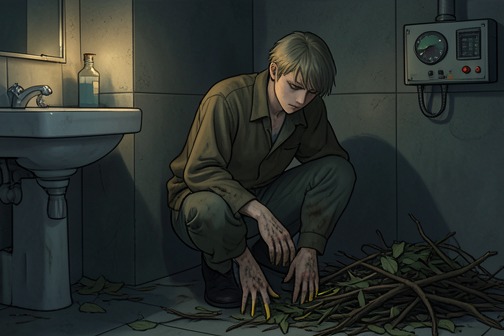
The [Attack at the space on Melrose](entity:event-recall-event-5727ef034ac4) is an assault by an intruder in a dark bathroom, witnessed by [Bret Ellis](entity:character-recall-character-bret-ellis-24db207b1483) and other clubgoers. A girl is scratched across the forehead; the intruder is subdued and taken away by police. The incident seems to end as an ordinary disturbance, but its stark mismatch between violence and the crowd’s composure gives it a longer life in [Bret](entity:character-recall-character-bret-7b256fc8a433)’s memory and, later, in his attempt to write about fear.
## Encounter in the Darkness
The encounter begins while Bret is alone in the bathroom. Still tense after speaking with [Robert Mallory](entity:character-recall-character-robert-mallory-ae01c493887e), he is trying to settle himself when he realizes someone else is present. A faint whisper comes from a dark corner, low to the floor, as if its source is crouching. Bret approaches with a candle and hears what first seems like an incantation in an unfamiliar language; listening longer, he recognizes it as gibberish rather than any language at all.
The candlelight reveals a barefoot, pale young man crouched in the corner. His matted blond hair is strewn with what looks like twigs and dead leaves; his dirt-stained hands end in long, yellowed nails. At first, Bret takes him for someone severely impaired. Then the man abruptly stops whispering, opens his eyes, and fixes Bret with a threatening expression. Bret drops the candle, which breaks and goes out. In the darkness, he scrambles along the wall to the door, unlocks it, and escapes the bathroom.
## The Scratch and the Club’s Response
Bret returns to the club’s main space and tells the bartender that someone—possibly a homeless man—has entered and is in the bathroom. The bartender fetches Junior, and the three head back through the darkness toward the curtained exit. Before they reach the restroom, a scream comes from the hallway. A blonde girl staggers toward them with her hands raised and blood spurting from a thin cut across her forehead; the intruder is still inside, gibbering. Junior guides her away and asks what happened. She says she had gone into the restroom looking for the lights when something swiped across her face.
The bartender enters without hesitation, switches on the light, and the intruder rushes at him, shrieking. The bartender pushes him against a wall, puts him in a headlock, and drags him into the hallway, where he throws him to the floor. Jon is told to call the police and an ambulance. The girl says she is all right and does not need medical help, although the scratch continues to bleed. Junior presses paper towels to her forehead as they quickly turn red. She repeats that it does not hurt, sounding annoyed rather than frightened; the injury is slight, but its persistent bleeding makes the violence visible even as she tries to dismiss it.
## An Abrupt Return to Normality
The officers arrive through the back door, handcuff the intruder, and take him to a squad car in the parking lot. The girl’s bleeding eventually stops; standing before a mirror, she has only a thin red scratch above her eyebrow. One of her friends urges her to go to the emergency room in case it becomes infected, but she declines and asks whether anyone has cocaine. The disturbance has been reduced, in a few minutes, to a minor injury and a police response.
That reduction is echoed by the club itself. Bret leaves the hallway with [Debbie Schaffer](entity:character-recall-character-debbie-schaffer-23db255cf219) and [Jeff Taylor](entity:character-recall-character-jeff-taylor-3284df352d5c), while the bartender resumes making drinks and the music continues. The room appears undisturbed, and seemingly no one there knows what happened at the back of the building. Bret gets a vodka and grapefruit drink; Debbie disappears into the darkness with a friend. Rather than registering the assault as a rupture in the night, the crowd and the venue absorb it into their ordinary routines.
Bret, by contrast, feels calmly elated as he sits alone in a room: the incident seems like something he can write about and place into the novel he is working on. His first response to the violence is therefore both witness and would-be narrator. He begins thinking about embellishing what happened, a turn that makes the episode important not only as an attack but as an early instance of his transforming frightening experience into material for a story.
## Afterlife in Memory and Writing
The incident’s apparent closure proves temporary. Nearly twenty years later, the adult Bret Ellis recalls the bathroom attack while describing how difficult it was to write about the violence and fear he and his friends experienced at [Buckley](entity:organization-recall-organization-buckley-306f3c15107a) in [1981](entity:time-recall-time-1981-16063b32b4e5). In 2006, back in [Los Angeles](entity:location-recall-location-los-angeles-11eff639bdf5) after more than two decades in New York, he tried to make notes about that autumn and the Trawler, the serial killer haunting the [San Fernando Valley](entity:location-recall-location-san-fernando-valley-692f05c00b47). The attempt precipitated such acute anxiety that he was taken to [Cedars-Sinai Medical Center](entity:location-recall-location-cedars-sinai-medical-fef5a4e8542d). The attack at the Melrose space belongs to the larger return of memories that writing was meant to confront, but could not immediately contain.
The adult narrator later connects that unfinished reckoning to a renewed encounter with the past: after seeing a girl outside the [Palihouse Hotel](entity:location-recall-location-palihouse-hotel-ecf6e01bb36d), a song from the 1981 parties brought back the fear associated with that period. He had thought that fiction published over the following decades had helped him work through the trauma; its sudden return showed him that he had not resolved it simply by turning experience into fiction. During a week in the desert, he slept only a few hours a night, even while taking benzodiazepines, and lay awake in panic. He describes the anxiety that began with his failed writing attempt as lasting roughly seven years, estranging him from people and contributing to a forty-pound weight loss, before therapy helped it subside.
The episode at the club also anticipates a recurring divide between an event’s bodily immediacy and the story made from it. At the time, Bret could sit down after the disturbance and treat it as usable material, already considering embellishment; much later, trying to write about the traumatic period left him physically overwhelmed. In the final account, neither the ordinary ending at the club nor the act of narration erases what happened. The memory returns through fear, sleeplessness, and the difficulty of telling, making the attack part of a wider pattern in which apparent composure and narrative control coexist with unresolved trauma.
## Afterlife in Memory and Writing
Nearly twenty years later, the adult Bret Ellis recalls the bathroom attack while describing how difficult it was to write about the violence and fear he and his friends experienced at Buckley in 1981. In 2006, back in Los Angeles after more than two decades in New York, he tried to make notes about that autumn and the Trawler, the serial killer haunting the San Fernando Valley. The attempt brought on an anxiety attack so severe that he was taken to Cedars-Sinai Medical Center. The assault at the Melrose space belongs to the larger return of memories that writing was meant to confront, but could not immediately contain.
The adult narrator connects that unfinished reckoning to another encounter with the past: after seeing a girl outside the Palihouse Hotel, a song associated with the 1981 parties revived the fear of that period. He had thought that fiction published over the following decades had helped him work through the trauma; its sudden return showed him that he had not resolved it simply by turning experience into fiction. During a week in the desert, he slept only a few hours each night despite taking benzodiazepines, lying awake in panic. He describes the anxiety that began with his failed writing attempt as lasting roughly seven years, estranging him from people and contributing to a forty-pound weight loss, before therapy helped it subside.
The club episode thus exposes a divide between an event’s bodily immediacy and the story made from it. At the time, Bret could sit down after the disturbance and treat it as usable material, already considering embellishment; much later, trying to write about the traumatic period left him physically overwhelmed. Neither the ordinary ending at the club nor the act of narration erases what happened. The memory returns through fear, sleeplessness, and the difficulty of telling, making the attack part of a wider pattern in which apparent composure and narrative control coexist with unresolved trauma.
## Afterlife in Memory and Writing
Nearly twenty years later, the adult Bret Ellis recalls the bathroom attack while describing how difficult it was to write about the violence and fear he and his friends experienced at Buckley in 1981. In 2006, back in Los Angeles after more than two decades in New York, he tried to make notes about that autumn and the Trawler, the serial killer haunting the San Fernando Valley. The attempt precipitated an anxiety attack so acute that he was taken to Cedars-Sinai Medical Center. The assault at [the space on Melrose](entity:location-recall-location-6d25c8059679) belongs to the wider return of memories that writing was meant to confront but could not immediately contain.
The adult narrator connects that unfinished reckoning to another encounter with the past. After seeing a girl outside the Palihouse Hotel, a song associated with the parties of 1981 revived the fear of that period. He had thought the fiction he published over the following decades had helped him work through the trauma; its return showed that turning experience into fiction had not resolved it. During a week in the desert, he slept only a few hours each night despite taking benzodiazepines, lying awake in panic. He describes the anxiety that began with his failed writing attempt as lasting roughly seven years, estranging him from people and contributing to a forty-pound weight loss, before therapy helped it subside.
The club episode exposes a divide between an event’s bodily immediacy and the story made from it. At the time, Bret could sit down after the disturbance and treat it as usable material, already considering embellishment; much later, trying to write about the traumatic period left him physically overwhelmed. Neither the ordinary ending at the club nor the act of narration erases what happened. The memory returns through fear, sleeplessness, and the difficulty of telling, making the attack part of a wider pattern in which apparent composure and narrative control coexist with unresolved trauma.
## Afterlife in Memory and Writing
Nearly twenty years later, the adult Bret Ellis recalls the bathroom attack while describing how difficult it was to write about the violence and fear he and his friends experienced at Buckley in 1981. In 2006, back in Los Angeles after more than two decades in New York, he tried to make notes about that autumn and the Trawler, the serial killer haunting the San Fernando Valley. The attempt brought on an anxiety attack so severe that he was taken to Cedars-Sinai Medical Center. The assault at the space on Melrose belongs to the larger return of memories that writing was meant to confront but could not immediately contain.
The adult narrator connects that unfinished reckoning to another encounter with the past. After seeing a girl outside the Palihouse Hotel, a song associated with the parties of 1981 revived the fear of that period. He had thought that fiction published over the following decades had helped him work through the trauma; its sudden return showed him that turning experience into fiction had not resolved it. During a week in the desert, he slept only a few hours each night despite taking benzodiazepines, lying awake in panic. He describes the anxiety that began with his failed writing attempt as lasting roughly seven years, estranging him from people and contributing to a forty-pound weight loss, before therapy helped it subside.
The club episode exposes a divide between an event’s bodily immediacy and the story made from it. At the time, Bret could sit down after the disturbance and treat it as usable material, already considering embellishment; much later, trying to write about the traumatic period left him physically overwhelmed. Neither the ordinary ending at the club nor the act of narration erases what happened. The memory returns through fear, sleeplessness, and the difficulty of telling, making the attack part of a wider pattern in which apparent composure and narrative control coexist with unresolved trauma.
Event 12
Lunch meeting between Bret and Terry Schaffer
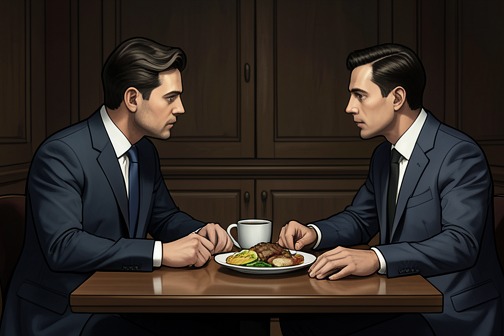
The lunch meeting between [Bret](entity:character-recall-character-bret-7b256fc8a433) and [Terry Schaffer](entity:character-recall-character-terry-schaffer-ac600a9ebce1) is a private encounter in which an offer of creative work becomes entangled with questions about Bret’s relationship with Terry’s daughter, Debbie, and Bret’s attraction to men. Terry’s measured manner and promise of a script give the meeting the shape of adult mentorship; his questions, however, make clear that he is also assessing what Bret has kept hidden.
## Background and invitation
On a Monday morning, while getting ready for school, Bret receives a call from [Steven Reinhardt](entity:character-recall-character-steven-reinhardt-1d7688e88402). Steven explains that Terry wants to know whether Bret is available for lunch during the week. The invitation excites Bret because he has not spoken with Terry since Debbie’s Labor Day barbecue, where Terry’s wife, Liz, had confronted him while drunk. Steven had witnessed Bret’s restrained response and relayed it to Terry.
Bret understands that Terry may be considering him for a scriptwriting job. The possibility is attractive in itself, but Terry has specifically asked that Bret not tell Debbie. Bret senses that the request carries an implication he has not yet fully acknowledged. The secrecy therefore precedes the lunch: the meeting is not simply a professional appointment but a private arrangement involving Debbie’s father and her boyfriend.
## Terry’s authority and Bret’s uncertainty
At the restaurant, Terry arrives with the confidence of someone accustomed to moving easily through adult public life. Bret notices his polished manner and professional appearance, and recalls that he regarded Terry as an adult to emulate. Terry greets him warmly, compliments his appearance, and studies him with an amusement Bret finds difficult to interpret. The contrast between Terry’s composure and Bret’s discomfort puts the seventeen-year-old in the position of being both welcomed and appraised.
The meeting also feels unreal to Bret. He is missing school to have lunch with a forty-year-old man who has offered him a possible writing opportunity. Terry’s world seems to make extraordinary introductions and professional possibilities feel ordinary. Yet the restaurant’s adult setting does not settle the question of what Terry wants from him; it makes the imbalance in age and authority more noticeable.
## Questions about Debbie and sexuality
Terry asks how serious Bret is about Debbie, who began dating him in June. Bret answers uncertainly that they are fairly serious. Terry says he wants Debbie to be happy, and Bret replies that he wants the same. The exchange frames Bret as her boyfriend while also inviting him to account for the relationship to her father.
Terry then asks whether Bret likes guys as well. Bret sits still and begins to deny it, but Terry presses him, asking whether he goes both ways. The question exposes the conflict between Bret’s public relationship with Debbie and the desire he has kept private. Rather than making a clear confession, Bret responds with embarrassment and evasion. The meeting thus turns the secret Terry had seemed to sense into the subject around which the conversation revolves.
## The offer and its unresolved meaning
As Bret prepares to leave, Terry catches him by the wrist and says that Steven will call to arrange a time to discuss the script Terry wants him to write. The offer remains real, but its timing and its proximity to Terry’s intimate questions make it difficult to separate professional encouragement from personal interest. Terry has not withdrawn the opportunity; instead, he closes the lunch by renewing it in a quiet, private gesture.
For Bret, the encounter leaves more than one possible meaning in play. Terry may be offering work, testing what Bret will admit, or combining the two. The meeting does not resolve that uncertainty. Its significance lies in the way an adult’s promise of access and mentorship becomes inseparable from the recognition of a concealed identity, while Bret is still trying to understand what has been asked of him.
Event 13
Ryan Vaughn’s weekend at the Mulholland house
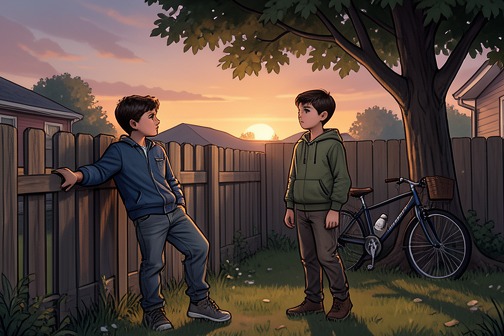
[Bret](entity:character-recall-character-bret-7b256fc8a433) and Ryan’s weekend at the Mulholland house is both the culmination of their guarded attraction and, in Bret’s later account, the last period of uncomplicated happiness before the violence of autumn [1981](entity:time-recall-time-1981-16063b32b4e5). The weekend brings the two boys into an intimacy that feels unusually mutual to Bret; its end, when Ryan leaves without waking him or saying goodbye, already exposes a difference in how seriously each has taken it.
## Background and Approach
By [September 1981](entity:time-recall-time-1981-9-b076a49216a6), Bret and Ryan had known each other since seventh grade but had only recently become close. Their connection gathered force through shared lunches at [Buckley](entity:organization-recall-organization-buckley-306f3c15107a) and private encounters made possible by driving around [Los Angeles](entity:location-recall-location-los-angeles-11eff639bdf5). Ryan had previously hesitated when Bret approached him, explaining that he wanted intimacy but not yet; later, he described their relationship as requiring secrecy. For both boys, keeping their attraction hidden was bound up with the hope of leaving high school and beginning again elsewhere.
The weekend began without elaborate arrangements. On a Friday afternoon at their lockers, Ryan simply told Bret he would spend the weekend at Bret’s house. The ease of the invitation contrasted with their earlier caution, but Bret’s physical nervousness showed how much the encounter mattered to him. In retrospect, he understood the weekend as being about desire and the hope attached to it: a brief experience of closeness before the events that would change how he remembered his youth.
## The Weekend at the House
Ryan arrived that evening in his Trans Am with a duffel bag. The two were nervous and awkward as they entered the house, where Bret’s dog, [Shingy](entity:character-recall-character-shingy-4b5bd07f40fa), provided a momentary distraction. They spent most of the weekend at the house, moving between the bedroom, pool, and living room rather than going out. Their one trip was to the Beverly Glen Centre market for beer and steaks; they grilled dinner on Saturday and otherwise relied on food already in the refrigerator. Football on television helped structure the quiet days.
Bret remembers their physical relationship as sustained and reciprocal. Unlike an earlier, hurried encounter, this time they had the privacy and time to be attentive to each other. He emphasizes that neither was confined to a fixed role and that they took turns initiating and receiving intimacy. For Bret, that balance made the experience different from his past relationship with [Matt Kellner](entity:character-recall-character-matt-kellner-7d4c7c775d94): he felt that Ryan’s presence temporarily displaced the grief and attachment associated with Matt.
The domestic quiet also made the weekend feel unusually unburdened. Bret ignored calls from Susan and his mother, who was away in Greece, and spoke only briefly with Debbie, assuring her that he was fine. Ryan and Bret watched films and television, listened to music, and spent time together at the house. The ordinary details matter in Bret’s recollection because the weekend was not defined by social performance or a dramatic declaration, but by privacy, time, and the ease of being together.
## A Brief Refuge and Its Unequal Meaning
As the weekend continued, Ryan’s relaxed manner and their shared intimacy encouraged Bret to invest the encounter with a larger significance. Bret later described it as the last weekend of his life that was not yet tainted by the past. It took place shortly before Matt disappeared and [Julie Selwyn](entity:character-recall-character-julie-selwyn-e58c56f476b8)’s body was found, and before the fear and paranoia that would dominate Bret’s memories of the fall. The calmness was real, but its later meaning was shaped by what followed.
The weekend also exposed a mismatch in expectation. After Ryan had been drinking, he spoke disparagingly of Thom, calling him unaware and privileged; Bret recognized that he had not fully understood Ryan’s resentment or the class differences Ryan experienced at Buckley. Ryan nevertheless remained someone Bret had often seen primarily through his physical appeal, a limitation Bret later acknowledged. The intimacy did not automatically give Bret a complete understanding of Ryan or guarantee a shared future.
On Sunday night, Ryan left after they had fallen asleep together. He knew the housekeeper would arrive in the morning and made sure Bret set an alarm, but when it rang, Ryan was already gone. He had not woken Bret, said goodbye, or kissed him. Bret’s first response was sadness and panic, followed by the painful suspicion that the encounter had affected him more deeply than it had affected Ryan. The quiet departure turned a weekend Bret experienced as mutual into an uncertain beginning rather than a promise.
## Retrospective Meaning
Bret’s adult narration places the weekend at a divide between innocence and corruption. He recalls it as the last calm interval before the events of 1981, while recognizing that later periods of pleasure would always carry knowledge of that year. In this structure, the weekend’s peace is not simply a contrast to later violence; it is also a measure of what Bret believes he lost and a memory through which he marks the end of youthful hope.
The relationship did not develop into the future Bret imagined. Ryan barely spoke to him for the rest of their senior year. At graduation in June 1982, they unexpectedly encountered one another in the boys’ bathroom at the Pavilion, both still in red robes and mortarboard caps. Bret began to address him, but Ryan interrupted with a brief farewell and their old shared expression. Decades later, Bret learned through a former classmate that Ryan was reportedly an architect living with a partner in San Francisco. The news wounded him despite the many years that had passed, showing how the weekend remained attached to the possibility of a life the two boys had once been unable to imagine openly.
Event 14
Trawler murders
[The Trawler](entity:character-recall-character-the-trawler-8d8a25ce6371) murders are the killings of [Katherine Latchford](entity:character-recall-character-katherine-latchford-b303abca40f3), [Sarah Johnson](entity:character-recall-character-sarah-johnson-fa8b9bb9dd9c), and [Julie Selwyn](entity:character-recall-character-julie-selwyn-e58c56f476b8), crimes that became intelligible to [Bret](entity:character-recall-character-bret-7b256fc8a433) only as scattered clues began to form a pattern. Their bodies were found in different places and their deaths were separated from their abductions by weeks; meanwhile, missing pets, silent calls, rearranged rooms, and ominous posters linked the killings to a broader campaign of home invasions. The case reveals both the Trawler’s effort to compose a public story through crime and the limits of the people around Bret in recognizing its significance.
## Background and Emerging Pattern
[The home invasions](entity:event-recall-event-f26e3e0e3fe1) began in May [1980](entity:time-recall-time-1980-87083d7775fd) in the hills above the [San Fernando Valley](entity:location-recall-location-san-fernando-valley-692f05c00b47). At first, they seemed indiscriminate: the targets included couples, people living alone, and families with children, and both boys and girls were attacked. The intruder’s descriptions were inconsistent, partly because witnesses had seen a figure in a black ski mask and dark clothing. The crimes seemed to offer no reliable way to identify who might be targeted next.
One recurring clue involved animals. Pets belonging to a victim or to neighbors disappeared before an invasion or assault; the animals could be dogs, cats, birds, snakes, mice, rabbits, or guinea pigs. In some neighborhoods, three animals were ultimately sacrificed before an attack. The connection was visible before its purpose was understood: the narrator recalls that the significance of the animals’ remains did not become clear until late [1981](entity:time-recall-time-1981-16063b32b4e5).
The early reports also moved through a shifting geography. During the summer of 1980, twenty break-ins were attributed to the intruder in neighborhoods below Mulholland, from Studio City through [Sherman Oaks](entity:location-recall-location-sherman-oaks-1d36d906a807) and [Encino](entity:location-recall-location-encino-a8599cea4df0), with brief extensions into [Bel Air](entity:location-recall-location-bel-air-721eb29dd6fc) and Benedict Canyon. Reports later appeared farther afield, including Pasadena, Glendale, and [Hollywood](entity:location-recall-location-hollywood-3ce8b1af5069), before the series abruptly stopped. In retrospect, this dispersal and interruption make the crimes look less like isolated incidents than fragments of a pattern whose connections had not yet been made.
## The Three Victims and Their Bodies
Katherine Latchford was found in a month-old dumpster behind a gas station near Redlands. Sarah Johnson’s body was concealed in a drainpipe at an abandoned construction site outside [Simi Valley](entity:location-recall-location-simi-valley-82c9d5c7f897). Julie Selwyn’s remains were discovered in a more public setting: two boys from Taft found her on a tennis court at [Shadow Ranch Park](entity:location-recall-location-5eab778543a0) in [Woodland Hills](entity:location-recall-location-woodland-hills-c558c46e2779) while arriving to play tennis early one morning. Her body had been positioned against the net and partly covered with newspapers. The unusual presentation suggested to the narrator that the killer had grown more confident in the story he was making and might have wanted a more immediate public effect.
The newspapers concealed what the narrator calls the Trawler’s alterations and remakings. Those changes were not fully described in the first reporting; later [Los Angeles](entity:location-recall-location-los-angeles-11eff639bdf5) Times articles supplied some answers but withheld detail because the material was considered too disturbing for a family newspaper. A separate, unverified report claimed that fish missing from Katherine’s aquarium had been used in the assault on her body. The narrator emphasizes that this claim was not confirmed at the time, making it part of the case’s rumor and uncertainty rather than an established public fact.
The public account left fundamental questions open. The three bodies had been found weeks after the victims disappeared, and the press asked where they had been kept, how they had been preserved, when the women had been killed, and what had caused their deaths. Reporting also connected the murders to the home-invasion series: before disappearing, all three victims had experienced silent phone calls, rearranged bedroom furniture, and unexplained gifts. Sarah had received a poster for Public Image Ltd’s Second Edition; Julie had received a promotional poster for the Cure’s Three Imaginary Boys. Missing pets in the surrounding neighborhoods were another shared warning sign. Yet the victims had not previously been attacked by the person responsible for the invasions, a distinction that complicated any simple account of how the pattern worked.
## Naming the Trawler and Building a Case
The week Julie Selwyn’s body was found, the [Los Angeles Police Department](entity:organization-recall-organization-c38071a69813) confirmed that the suspected killer, or killers, had made two calls. Newspaper accounts later described a disguised voice that claimed responsibility for crimes and threatened further ones. The nickname Trawler appeared twice as a joke in a redacted Hollywood-division police file before it became prominent in the press. A letter reproduced in the Los Angeles Times, written in childlike handwriting, claimed that the writer and friends had abducted Julie while she walked to her car after a party on a hillside street in Encino. The letter’s unreleased details about damage to her body were known only to the perpetrator, providing confirmation of his guilt that the public account did not otherwise contain.
For Bret, the disclosures turned the murders into an unfolding narrative. He became frightened by the confirmation that the Trawler was real, but also found himself drawn into the crimes’ heightened atmosphere, imagining that he was being watched at his empty house on Mulholland. That sense of danger did not last as a sustained drama: fear returned when he went to bed, and he tried to blunt it by using drugs to sleep. The case thus entered his private life not simply as news, but as a source of fear that he repeatedly tried to narrate and contain.
The Trawler’s crime story also arrived through fragments of media: police-file references, newspaper reports, photographs, and claims that remained unverified. Bret’s later suspicions about the deaths were shaped by this uneven flow of information. Evidence, rumor, and interpretation did not arrive together, and the account never made every question answerable merely by naming the killer.
## [Matt Kellner](entity:character-recall-character-matt-kellner-7d4c7c775d94) and the Expanding Pattern
When Matt Kellner disappeared, Bret immediately connected his absence to the three murders. Matt’s parents had assumed his routine remained unchanged: he lived in a pool house, drove a red Datsun to [Buckley](entity:organization-recall-organization-buckley-306f3c15107a), and sometimes left a note when he went to the beach. By Wednesday, his father, Ronald, had not seen him since the previous Thursday; the school confirmed that Matt had left alone at about 3:15 p.m. on Friday. His parents had not checked the separate garage until they learned that he had missed school for three days, and his absence from the pool house was initially difficult to distinguish from his established habit of keeping apart from the family.
For Bret, the missing car, unlit pool house, silent aquarium, and missing cat echoed the Trawler’s earlier signs: silent calls, rearranged furniture, vanished fish, and the cat’s disappearance. He also recognized the problem with his own inference. Matt was male, while the three confirmed murder victims were young women; earlier invasions, however, had targeted both sexes. Bret wondered whether he was seeing a real pattern or forcing disparate events into one, and whether there might be male victims who had not yet been identified.
Ronald’s account of the car later challenged the idea that Matt had simply driven away. He had recorded the Datsun’s mileage when a Nissan dealership in Encino replaced its headlight and serviced it the Thursday before Matt disappeared. A week later, the mileage showed that it had not made the long journey to [Crystal Cove](entity:location-recall-location-crystal-cove-c96e89d49b4e) that the official account implied. Ronald also showed Bret crime-scene photographs of Matt’s body, including visible bruising and a serious wound to the arm. He said that blood had been found on the Datsun’s front seat and dashboard, and described the authorities’ theory: a drug-induced psychotic episode, a self-inflicted wound, and drowning in the pool. The autopsy report, as Ronald relayed it, also recorded the largely undigested contents of [Matt’s aquarium](entity:object-recall-object-matt-s-aquarium-110a3b3e8b02) in his stomach. Bret knew the aquarium had been empty for weeks, leaving the official explanation in conflict with what he understood of Matt’s circumstances.
A Maxell cassette later added another piece to the disturbing record. Bret found it marked with his name misspelled and played it, first hearing recorded wind, distant waves, and a fire before making out voices. One voice repeatedly instructed another to eat, while the other resisted and wept. The recording’s sounds linked the case’s clues to Matt’s final night without resolving every question about how or by whom the recording had been made. Across the photographs, mileage, autopsy account, and tape, the investigation accumulates evidence but does not become a clean, closed chain of proof.
## Public Indifference and Narrative Significance
Bret was disturbed that Julie’s discovery and its connection to the other two killings attracted little attention at Buckley. When he raised the case, [Susan Reynolds](entity:character-recall-character-susan-reynolds-b299ccba7f71) and [Debbie Schaffer](entity:character-recall-character-debbie-schaffer-23db255cf219) knew Julie had been found but did not engage with the broader connection; their attention returned to schoolwork, music, and plans for a party. Bret felt isolated in his concern. He also understood the indifference in the context of a decade in which serial killers had moved across California and committed large numbers of murders, before modern surveillance and forensic methods. Against that grim backdrop, three confirmed victims could fail to command sustained attention, while the students’ sense of youth and invulnerability further dulled the warnings.
The contrast between the case’s scattered signs and the community’s limited attention is central to its significance. Missing animals, unexplained gifts, telephone calls, and disturbed rooms were signs of a campaign, but they did not announce their connection to everyone at once. The murders made that pattern more visible without making it complete: the reports still left gaps, the victims had not been attacked in advance, and some claims remained unverified. For Bret, the case became both a criminal investigation and a story he was trying to assemble from incomplete evidence, a process that sharpened his fear even as it exposed the danger of treating a compelling narrative as proof.
Event 15
Trawler home-invasion campaign
[The Trawler](entity:character-recall-character-the-trawler-8d8a25ce6371) home-invasion campaign is a recurring series of intrusions and assaults in [Los Angeles](entity:location-recall-location-los-angeles-11eff639bdf5) that gradually becomes linked to missing pets, anonymous calls, and the abductions and murders of teenage girls. Its significance lies not only in the violence itself, but in the pattern that takes shape slowly: ordinary domestic spaces are entered and subtly altered before an attack, while scattered clues encourage [Bret](entity:character-recall-character-bret-7b256fc8a433) to read both public crimes and private losses as parts of the same design.
## Origins and Pattern
The campaign began in May [1980](entity:time-recall-time-1980-87083d7775fd), first appearing as a series of reports about a shadowy presence around homes. During the summer, witnesses described a masked figure in inconsistent terms, making it difficult to establish a stable image of the intruder. Twenty break-ins were attributed to the campaign that summer, concentrated in communities below Mulholland, including Studio City, [Sherman Oaks](entity:location-recall-location-sherman-oaks-1d36d906a807), and [Encino](entity:location-recall-location-encino-a8599cea4df0), with incidents also reported in [Bel Air](entity:location-recall-location-bel-air-721eb29dd6fc) and Benedict Canyon. The attacks later appeared elsewhere, including Pasadena, Glendale, and [Hollywood](entity:location-recall-location-hollywood-3ce8b1af5069), before stopping and then resuming in December and continuing into January [1981](entity:time-recall-time-1981-16063b32b4e5).
The intrusions were connected by a sequence of warnings and disturbances rather than by a clear, continuous trail. Calls to targeted homes could arrive days before an attack; a victim might answer to silence. In some cases, residents later recalled that something in a kitchen, bathroom, or bedroom had been moved or changed, suggesting that someone had entered earlier and familiarized himself with the house. Pets also disappeared, sometimes from the victim’s home and sometimes from the surrounding neighborhood. The pattern made a familiar residence feel newly uncertain before an assault even began.
## Connection to the Murders
By [September 1981](entity:time-recall-time-1981-9-b076a49216a6), newspaper accounts confirmed that the home invasions were connected to the murders of [Katherine Latchford](entity:character-recall-character-katherine-latchford-b303abca40f3), [Sarah Johnson](entity:character-recall-character-sarah-johnson-fa8b9bb9dd9c), and [Julie Selwyn](entity:character-recall-character-julie-selwyn-e58c56f476b8). In the weeks before their disappearances, all three had reportedly experienced silent calls, rearranged bedroom furniture, or unexplained gifts. Pets had vanished from nearby homes, and the missing animals were later associated with the crimes. The victims had not themselves been attacked during earlier home invasions, a distinction that complicated any simple account of how the campaign operated.
The reporting also exposed how much remained unknown. Investigators and readers lacked answers about where the victims had been kept, when they had died, and how their bodies had been preserved. What had first seemed like separate incidents—a break-in, a missing animal, an unanswered call—now appeared to belong to a larger chain. Yet the link did not make the sequence fully intelligible; it intensified the questions surrounding the crimes.
## [Matt Kellner](entity:character-recall-character-matt-kellner-7d4c7c775d94) and Bret’s Suspicions
When Matt Kellner disappeared, Bret immediately recognized echoes of the campaign. Matt had been receiving anonymous silent calls; furniture in his residence had been rearranged; fish from his aquarium and a cat had gone missing. These details led Bret to fear that Matt had become another target, even though the known murder victims were girls and Matt was male. Bret also considered competing explanations: Matt might have left voluntarily, and the apparent pattern might not reliably predict who was in danger. The campaign therefore becomes a test of Bret’s interpretation as much as a source of fear.
Bret’s suspicions sharpen when he searches Matt’s emptied room and finds a telephone number marked with the initials RM on a notepad. He associates the initials with [Robert Mallory](entity:character-recall-character-robert-mallory-ae01c493887e), but the phone line is disconnected, and Bret cannot determine whether the number was private or simply copied from a school roster. The note is a concrete link between Matt and Robert, not proof of what their relationship involved. Its ambiguity mirrors the broader investigation, in which clues invite connection without settling the truth.
## News, Objects, and the Limits of Evidence
The campaign reaches Bret through the era’s everyday media. A newspaper report about another [Woodland Hills](entity:location-recall-location-woodland-hills-c558c46e2779) invasion repeats the familiar sequence of prior calls, rearranged furniture, a missing neighborhood dog, and an assault. Reading it, Bret briefly wonders whether the Riders of the Afterlife cult might be involved, but the report does not establish such a connection. His fear that someone is in his own house follows the article, yet searches with a kitchen knife reveal no intruder. Public information and private alarm blur together without becoming equivalent evidence.
Later, Bret receives a cassette that begins with recorded wind and faint sounds before a voice becomes audible. The recording turns an ordinary object into a possible message and threat, but its meaning is not immediately clear. In December, an envelope addressed to Bret arrives with his name misspelled and contains roughly forty black-and-white photographs, including images of him with Robert at school, at the house on Benedict Canyon, and with Matt at Haskell Avenue. One photograph appears to have been taken from a van parked down the street. The photographs demonstrate that someone observed and documented Bret’s movements; they deepen the campaign’s atmosphere of surveillance without, by themselves, identifying the photographer or proving every suspicion Bret has formed.
## Consequences and Narrative Significance
The campaign’s pattern changes the meaning of ordinary spaces and routines: a phone call, a moved object, a missing pet, or a car waiting on a canyon road can become a possible warning. Bret’s own pursuit of Robert through Los Angeles reflects this pressure. After an intimate conversation between Robert and Matt in the [Buckley](entity:organization-recall-organization-buckley-306f3c15107a) parking lot, Bret follows Robert’s Porsche; on another occasion, he trails it into Benedict Canyon and watches Robert stop at a house. These actions show how the campaign’s unresolved clues draw Bret into surveillance of his own, even when he cannot establish what the observed encounters mean.
By the time Bret tries to approach a beige van idling on Benedict Canyon, his need for an answer has overtaken caution. He falls while pursuing it, fails to see the license plate, and then drives after it without finding it. The episode ends without an identification or resolution: the campaign remains a framework of recurring clues, partial records, and uncertain inference. Its power in the narrative comes from that gap between an increasingly recognizable pattern and the inability to prove exactly how each person or incident belongs to it.
Event 16
Discovery of Julie Selwyn’s body
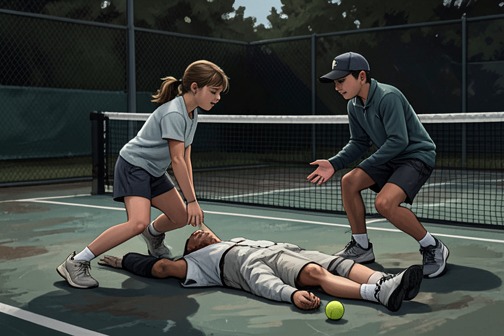
[Julie Selwyn](entity:character-recall-character-julie-selwyn-e58c56f476b8)’s body is discovered on a tennis court at [Shadow Ranch Park](entity:location-recall-location-5eab778543a0) in [Woodland Hills](entity:location-recall-location-woodland-hills-c558c46e2779), a public presentation that makes the Trawler’s crimes harder to treat as disconnected disappearances or isolated break-ins. The discovery links Julie’s death to two earlier murders and to a wider pattern of home invasions, while revealing how evidence reaches the public piecemeal through police statements and newspaper coverage. For [Bret Ellis](entity:character-recall-character-bret-ellis-24db207b1483), the report becomes both a turning point in understanding the case and a measure of his classmates’ indifference to it.
## Background and Discovery
Julie’s remains are found by two Taft students who arrive early to play tennis. At first, they mistake what they see on the court for a mannequin or a grotesque prank; the discovery soon proves to be the body of a missing teenager. The location and arrangement make this discovery more public than the earlier finds: [Katherine Latchford](entity:character-recall-character-katherine-latchford-b303abca40f3) had been found in a dumpster behind a gas station near Redlands, and [Sarah Johnson](entity:character-recall-character-sarah-johnson-fa8b9bb9dd9c) in a drainpipe at an abandoned construction site outside [Simi Valley](entity:location-recall-location-simi-valley-82c9d5c7f897). The contrast suggests a change in how boldly the killer is staging the aftermath, although the account presents that interpretation as a possibility rather than a confirmed motive.
Newspaper reports describe Julie’s body as propped against the net and covered with newspapers. The wrapping conceals evidence of what investigators and later coverage call the Trawler’s alterations and remakings. Those details are not fully reported: the [Los Angeles](entity:location-recall-location-los-angeles-11eff639bdf5) Times withholds a complete description, presenting the crimes as too disturbing for a family newspaper. The public therefore encounters the discovery through a partial account, in which the conspicuous placement is visible but the extent of the violence remains obscured.
## [The Trawler](entity:character-recall-character-the-trawler-8d8a25ce6371) and the Emerging Case
During the week Julie is found, the [Los Angeles Police Department](entity:organization-recall-organization-c38071a69813) confirms that it has received two calls from the suspect or suspects. Later newspaper articles characterize the caller’s voice as a groaning drawl and report that it was fake. A nickname associated with the suspect, the Trawler, appears in a redacted [Hollywood](entity:location-recall-location-hollywood-3ce8b1af5069) division file and is repeated in connection with the case. The name gives the crimes a label, but does not establish that there was only one offender: the account continues to allow for a suspect or suspects.
A letter attributed to the suspect is reproduced in the Los Angeles Times. Written in childlike handwriting, it claims that the writer and his friends abducted Julie as she walked to her car after leaving a party on a hillside street in [Encino](entity:location-recall-location-encino-a8599cea4df0). The published letter has its obscenities blacked out. More consequentially, it includes information about what was done to Julie that would not have been visible to the two boys who found her, supporting the narrator’s conclusion that its writer was responsible. The details of that information are not printed, keeping the newspaper’s public evidence incomplete even as it strengthens the link between the letter and the crime.
The discovery also changes the status of the home invasions. Reports connect the murders to the break-ins that began in [1980](entity:time-recall-time-1980-87083d7775fd), paused and resumed at intervals, and were occurring again by September. The three victims had complained, in the weeks before their disappearances, of silent phone calls, rearranged bedroom furniture, and unexplained gifts. Earlier patterns included pets vanishing before attacks, sometimes in the victim’s home and sometimes elsewhere in the neighborhood. These details make the attacks appear planned and connected, but their significance only becomes legible retrospectively; victims and observers had not necessarily recognized a pattern in time to act on it.
## [Bret](entity:character-recall-character-bret-7b256fc8a433)’s Response and [Buckley](entity:organization-recall-organization-buckley-306f3c15107a)
Bret follows the newspaper coverage closely and expects Julie’s discovery, together with its connection to Katherine and Sarah, to command more attention at Buckley. Instead, he finds that his friends [Susan Reynolds](entity:character-recall-character-susan-reynolds-b299ccba7f71) and [Debbie Schaffer](entity:character-recall-character-debbie-schaffer-23db255cf219) are only marginally engaged. They recognize Julie from the news and acknowledge that she was pretty, but Debbie returns to her homework and Susan turns back to a Rolling Stone article. They know a body was found on the tennis court, yet do not pursue the connection to the other murders or the home invasions.
The contrast leaves Bret feeling isolated: the crimes that dominate his attention remain peripheral to the ordinary rhythms of school and friendship. His focus is further complicated by [Robert Mallory](entity:character-recall-character-robert-mallory-ae01c493887e)’s presence with [Matt Kellner](entity:character-recall-character-matt-kellner-7d4c7c775d94) nearby. Bret watches Robert and Matt at lunch and, in retrospect, recognizes details that may have belonged to the established pattern: [Matt’s aquarium](entity:object-recall-object-matt-s-aquarium-110a3b3e8b02) had been tampered with, furniture moved, and cat missing. At the time, however, Bret does not connect these signs to the Trawler, whose known victims are women, and his preoccupation with Robert and Ryan Vaughn distracts him from Matt’s circumstances. The later recognition makes the discovery of Julie’s body not only a public revelation but a missed opportunity to interpret earlier warnings.
## Narrative Significance
The scene’s information arrives in stages: the body is found, police confirm calls, a suspect’s nickname surfaces, a letter claims responsibility, and newspaper reports connect the murders to the home invasions. Each disclosure clarifies the pattern while leaving important gaps, including the complete nature of the alterations and the precise circumstances of the victims’ deaths. The case is therefore built from partial public evidence rather than a single definitive explanation.
That structure also sharpens the novel’s contrast between an expanding criminal pattern and the social ease with which it can be overlooked. At school, attention returns to homework, music, parties, and Robert’s arrival; in the newspaper, Julie’s death becomes part of a series that readers are only beginning to understand. For Bret, the disparity intensifies his sense that he is the only one watching closely, but his retrospective failure to connect the signs around Matt cautions that attention alone does not guarantee understanding. The discovery marks a decisive change in the case’s visibility, while preserving uncertainty about how much anyone can truly know from the evidence available.
Event 17
Matt Kellner’s disappearance and death
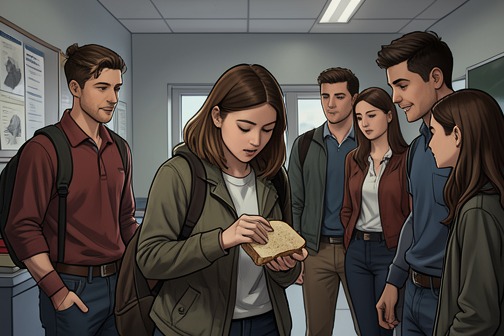
[Matt Kellner’s disappearance and death](entity:event-recall-event-matt-kellner-s-disappea-71261aa784cb) turn a missing classmate’s absence into one of the novel’s central unresolved mysteries. First explained at [Buckley](entity:organization-recall-organization-buckley-306f3c15107a) as an accidental drowning, Matt’s death is surrounded by signs of a possible staged scene and by a trail of details that connect, in [Bret Ellis](entity:character-recall-character-bret-ellis-24db207b1483)’s mind, to the Trawler’s pattern. The evidence undermines the school’s clean account, but the story withholds a conclusive explanation of who caused Matt’s death or exactly what happened to him.
## Disappearance and Initial Alarm
Matt’s absence becomes official when [Susan Reynolds](entity:character-recall-character-susan-reynolds-b299ccba7f71) tells their lunch group that he is missing. She has just emerged from a meeting with [Dr. Croft](entity:character-recall-character-dr-croft-22b935baf720) and Headmaster Walters, and her announcement confirms [Bret](entity:character-recall-character-bret-7b256fc8a433)’s growing unease: Matt has not appeared at Buckley for two days, and his red Datsun is no longer in its usual senior-parking-lot space. The school plans to announce the disappearance at an assembly the following morning. Bret is so alarmed that he drops his sandwich and struggles to keep his body from revealing his fear, while the other students look to Susan for information.
The circumstances at Matt’s home make the absence harder to date precisely. Ron and [Sheila Kellner](entity:character-recall-character-sheila-kellner-a38b9d54cbd6) describe a familiar routine: Matt generally swam before school, drove his Datsun to Buckley, and returned to his pool house by late afternoon. On weekends he sometimes went to the beach alone, but he ordinarily left a note saying where he had gone and when he would return. This time there is no note. Sheila notices that the pool house has remained dark, without the aquarium’s usual glow or the candles Matt sometimes lit beside the pool; the pool and Jacuzzi also appear unused. The Kellners begin cooperating with the [Los Angeles Police Department](entity:organization-recall-organization-c38071a69813) after realizing that several days have passed without anyone seeing him.
The last confirmed sightings do not establish where Matt went. Ron last saw him the previous Thursday, when he asked about the Datsun’s faulty headlight. Ron took the car to a Nissan dealership in [Encino](entity:location-recall-location-encino-a8599cea4df0), had it serviced and the headlight replaced, then returned it to the pool-house garage. Matt was confirmed at Buckley the following Friday: the head of security remembered him leaving alone at about 3:15 p.m., and the housekeeper saw him return to Haskell Avenue. His absence over the weekend initially seems compatible with his occasional solitary beach trips, but the missing note, unused pool, and unaccounted-for car eventually make that explanation less reassuring.
## Signs of a Possible Pattern
Bret connects Matt’s disappearance to the Trawler’s known crimes before he has proof. Earlier home invasions had appeared random, with victims of different ages and genders, but one recurring warning sign involved animals: pets belonging to a targeted household or other animals in the neighborhood would disappear before an assault. In some areas, three animals were sacrificed. The connection between that pattern and the use of the animals’ remains would only become clear later, but the repeated disappearances had already become significant to Bret.
Matt’s circumstances seem to Bret to echo some of those signs. Before he vanished, there had been anonymous silent phone calls, furniture rearranged inside the residence, aquarium fish missing, and Matt’s cat Alex gone. Bret recognizes the possibility that the pattern may be closing around Matt, but also tries to discount it: Matt is male, and the Trawler’s pattern is not a dependable rule. The earlier invasions had affected men as well as women, leaving Bret uncertain whether gender excludes Matt from danger or whether the apparent pattern is incomplete. His suspicion grows out of particular clues, but he repeatedly acknowledges that he has no proof and may be reading events through fear.
The first major physical clue appears when a ranger finds Matt’s backpack in a parking lot at [Crystal Cove State Park](entity:location-recall-location-3cbc159a56c4), above a bluff overlooking the ocean. An identification tag links it to Matt, and blood on the bag brings it to the attention of Orange County authorities, who connect it to the missing-person report filed by the Kellners with the Los Angeles Police Department. Dr. Croft considers the information too upsetting to share with younger students, so Susan tells the student body only that Matt is still missing and asks anyone with information to contact the administration confidentially.
For Bret, the backpack intensifies the possibility that Matt is dead, but the group’s response is muted. His classmates ask questions about the blood and the backpack’s location, yet nobody has answers, and the discussion quickly ebbs. Bret notices that neither [Robert Mallory](entity:character-recall-character-robert-mallory-ae01c493887e) nor Ryan Vaughn asks about Matt. Classes continue, students go to physical education, and Bret tries to maintain the appearance of an ordinary school day. The contrast between the ominous evidence and the routine response becomes part of the event: the missing student is briefly a subject of attention, then school life resumes without an equivalent public reckoning.
## Discovery at Haskell Avenue
A week after Matt probably disappeared, a gardener arrives at the Kellner property unaware of the missing-person case. While working in the backyard near the pool house, he encounters evidence of deliberate animal mutilation and then finds Matt’s body in the pool. Matt’s red Datsun is parked in the pool-house garage; the gardener would not have seen the blood on its passenger seat and dashboard. The garden and pool-house setting, previously associated with Matt’s private routines, has become a crime scene.
Matt is found naked and motionless in the water. The gardener recognizes him from his build, hair, and height. Alex’s separated head has been placed at the edge of the pool, while the cat’s body is secured to a pool-house column. The arrangement recalls the earlier animal-related warning signs and makes the death difficult to reconcile with an uncomplicated accident. The gardener runs to the main house, and the discovery changes the case from a disappearance with a bloodstained backpack into a death accompanied by evidence of staging or ritualized cruelty.
At Monday’s mid-morning assembly, Dr. Croft tells the Buckley student body that Matt has died over the weekend. The school presents the death as an accident: Matt supposedly returned home after leaving the area, slipped into the pool, hit his head, and drowned, with drugs suggested as a possible factor. The announcement does not remind students that Matt had been missing for a week or that his bloodstained backpack had been found far from [Los Angeles](entity:location-recall-location-los-angeles-11eff639bdf5). This simplified account arrives as a surprise, even to Susan, and its suddenness helps it pass initially without challenge.
Bret feels relief at first because the announcement appears to disconnect Matt’s death from the Trawler. That relief does not last as certainty. Once the shock begins to recede, Bret senses that something in the explanation is wrong. He skips physical education and returns to his house on Mulholland, numb and unwilling to be near Robert, whom he regards as the person closest to Matt in the days before his death. The initial announcement closes the immediate suspense for the school, but for Bret it begins a different phase of doubt.
## Official Account and Conflicting Evidence
In the days following the announcement, rumors shift from accidental drowning to suicide. Bret rejects both versions. He believes Matt may have fled because he feared the unexplained phone calls, rearranged furniture, and missing cat. In this reconstruction, Matt leaves Encino without telling anyone so that he cannot be tracked, drives down the coast, pays cash, and sleeps in his car. Bret regards this as plausible given Matt’s habits and his growing paranoia, but it remains an inference rather than a confirmed account. The bloodstained backpack and the question of how Matt could have returned home remain unexplained.
Later, Ron Kellner shares crime-scene photographs and information from the autopsy report with Bret. The photographs show bruising on Matt’s body and a substantial wound to his arm, as well as an injury to his forehead. Ron questions whether the head injury could have been caused by a fall into the pool. He also states that blood covered the front seat and dashboard of the Datsun, apparently where Matt was said to have cut himself. These photographs and observations complicate the idea of a simple fall, but they do not by themselves establish who inflicted the injuries or when.
The Datsun’s mileage provides a separate challenge to the story that Matt drove to [Crystal Cove](entity:location-recall-location-crystal-cove-c96e89d49b4e). Ron had noted the mileage when he took the car for service on the Thursday before Matt disappeared, then checked it again when the car was back in the garage a week later. On that basis, he insists that it had not been driven the roughly 140 miles to Crystal Cove. He allows that it may have been driven a short distance, but says it did not make the journey to the state park. The backpack’s discovery location and the car’s mileage therefore point in different directions from the suggestion that Matt simply drove away and later returned.
Ron also recounts the authorities’ drug-related explanation. They theorized that Matt had taken a large quantity of drugs, experienced a psychotic episode, injured himself, and fallen into the pool. The autopsy report, however, did not establish marijuana levels, and the explanation relied on the drug paraphernalia found in the backpack. Ron further tells Bret that the report lists mostly undigested contents from [Matt’s aquarium](entity:object-recall-object-matt-s-aquarium-110a3b3e8b02) in his stomach. Bret knows the aquarium had been empty for weeks and that Matt did not know what had happened to its fish. The report records an official conclusion, but its details leave Bret unable to reconcile that conclusion with what he knew of Matt’s circumstances.
The photographs of Alex’s remains compound the contradiction. Ron shows Bret images of the cat’s body secured to the column and of its head at the pool’s edge. The killing and arrangement of the animal match the evidence discovered by the gardener, but sit uneasily beside the suggestion that Matt, incapacitated by drugs and then accidentally drowned, performed the elaborate acts himself. Bret doubts that account on the basis of his experience of Matt and the drug quantities Ron describes. That doubt supports suspicion, not a final identification of the person responsible.
## Aftermath and Continuing Uncertainty
The official explanation and the public response keep Matt’s death small. It receives a brief newspaper item identifying him as a 17-year-old from Encino who drowned in a pool, and a short obituary with his junior-yearbook photograph. There is no funeral or memorial service. At Buckley, where a student death should have been a significant occasion, Matt’s death does not become one. Bret observes that Matt had become socially invisible, and that the school’s limited response makes it easier for the story to settle into the unremarkable form of an accident.
That public forgetting contrasts with the evidence Bret continues to assemble. At a later school assembly, he sees Robert sitting calmly while Susan speaks and notices that Matt’s name is no longer being mentioned. Bret’s suspicion that Robert killed Matt persists, but he recognizes that he cannot substantiate it: Robert was said to have been in [Palm Springs](entity:location-recall-location-palm-springs-b902d708edd3) during the disappearance, and Bret had also seen him at school that week. A phone number marked with the initials RM, found in Matt’s pool-house desk, becomes another unresolved clue. Bret compares it with the number listed for Robert’s [Century City](entity:location-recall-location-century-city-6364cc26b88c) address and finds that they do not match. He keeps calling the number, but nobody answers and there is no answering machine.
Ron’s account of the Datsun mileage later intensifies Bret’s suspicion of a house where he believes the number may be located. He imagines that Matt may have been taken there and kept there, but the scene presents this as a fearful conclusion Bret reaches from a combination of clues, not a verified discovery. His own repeated reminder that he may be hearing things that are not there does not dispel the dread; instead, the evidence seems to revive it. The narrative thus distinguishes between concrete contradictions—the mileage, the blood, the autopsy details—and Bret’s unconfirmed reconstruction of what they mean.
Matt’s death remains consequential beyond the school’s initial account. Bret refers to it again in a conversation with [Terry Schaffer](entity:character-recall-character-terry-schaffer-ac600a9ebce1), describing himself as having thought about Matt and finding the loss difficult. When asked how Matt died, Bret can offer no settled answer: he says the school’s view was accidental drowning, while admitting that an overdose might also have been involved and that nobody knows. The uncertainty is not resolved by the additional evidence; it is made more exact. Matt’s disappearance, the discovery at Haskell Avenue, and the official account form a case in which each explanation leaves material facts unanswered, while Bret’s grief and suspicion persist without becoming proof.
Event 18
Bret’s visit to the Kellner residence
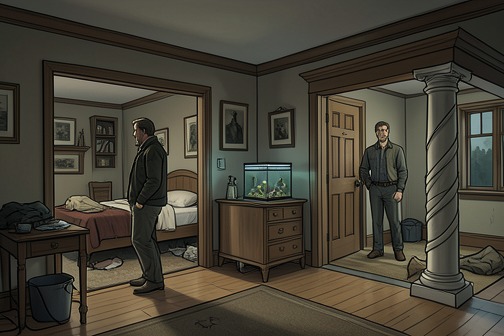
[Bret’s visit to the Kellner residence](entity:event-recall-event-bret-s-visit-to-the-kel-019631eb3560) is the moment [Matt Kellner](entity:character-recall-character-matt-kellner-7d4c7c775d94)’s death ceases to fit the simple explanation of an accident. Drawn back to the place where their relationship had unfolded, [Bret](entity:character-recall-character-bret-7b256fc8a433) finds Matt’s parents still unable to explain their son’s death. The photographs and details [Ronald Kellner](entity:character-recall-character-ronald-kellner-f2c83421c463) shares point toward violence and possible staging, while the encounter leaves Bret carrying both a disturbing new suspicion and a private reminder of his connection to Matt.
## The Return to Haskell Avenue
After leaving Susan’s car, Bret gets into the Mercedes and drives toward Matt’s house without knowing why. He passes through the [Buckley](entity:organization-recall-organization-buckley-306f3c15107a) parking lot and continues to Haskell Avenue in a daze. The familiar street and house appear unchanged, but Bret’s knowledge that Matt is dead transforms the journey: the place he once approached with erotic anticipation now draws fear from him, and the pool house becomes inseparable from loss.
Bret finds the gate and the pool-house door unlocked. Inside, the room is unusually bare: the bed has been stripped, the aquarium is empty, and the surfboards and shellacked dolphin remain as reminders of the space Matt inhabited. The column by the entrance is wrapped in blue plastic. Bret does not yet know what it conceals, but its presence suggests that the death may involve something more than the accident he has been led to expect. Standing in the fading light, he recognizes that the pool house has become part of his past, a place whose meaning survives even though Matt is gone.
## An Unresolved Death
Bret encounters [Sheila Kellner](entity:character-recall-character-sheila-kellner-a38b9d54cbd6) in the gazebo. When she asks whether she can help, he explains that he was Matt’s friend, correcting himself from the present tense to the past. Sheila says that the family does not know exactly what happened to her son. She recalls that Matt was badly bruised, including on his face, chest, back, and legs. Bret tentatively suggests that the injuries could have come from a fall into the pool, but Sheila’s account makes that explanation difficult to accept.
Ronald Kellner also rejects certainty. He tells Bret that he and Sheila do not know what really happened and invites him to look at photographs taken by a crime-scene photographer. The images show Matt’s body beside the pool, with bruising and other wounds that do not readily support a simple drowning. Bret recognizes Matt, but the photographs make their familiar intimacy collide with the evidence of an unexplained death. The encounter shifts the visit from an awkward attempt to understand what happened into a confrontation with the possibility that Matt was harmed.
## Evidence Against the Official Account
Ronald describes the official explanation assembled from the scene and the autopsy report: Matt may have taken drugs, experienced a psychotic episode, injured himself, and then fallen into the pool and drowned. The account includes a reported six thousand milligrams of methaqualone in Matt’s system and blood in the front seat and on the dashboard of his red Datsun. Ronald says the authorities treated the blood as evidence of a suicide attempt during a psychotic episode.
The account is unsettled by the animal remains at the pool house. Ronald shows Bret photographs of Alex, Matt’s cat, whose body had been fastened to the entrance column and whose head had been placed by the pool. The scene recalls a wider pattern in which pets and other neighborhood animals disappeared before attacks attributed to the Trawler. But the photographs alone do not establish who killed Alex or how the cat’s death relates to Matt’s. Bret’s disbelief rests partly on his own experience of Matt: he doubts that Matt, who could be too stoned to get up and reach a television remote, could have carried out the elaborate acts described in the official scenario.
## Ronald’s Suspicions and Bret’s Retreat
Ronald offers an alternative explanation as a suspicion, not a proven account. He believes someone may have been with Matt, supplied him with drugs, struck him, and put him in the pool. He also thinks the death was staged and raises the possibility that someone drove Matt to [Crystal Cove](entity:location-recall-location-crystal-cove-c96e89d49b4e), or drove there and left his backpack. Ronald says he first mistook Bret for [Robert Mallory](entity:character-recall-character-robert-mallory-ae01c493887e) because Matt had mentioned possibly spending time with someone named Robert. His recollection gives Bret a new lead, but it does not establish Robert’s responsibility.
The following morning, Bret decides to act as if life is normal. He makes a schedule and resolves to reduce his drug use and drinking, using routine to recover a sense of control. Yet the visit cannot be cleanly put away: he finds Matt’s jockey shorts in his pocket and hides them in a desk drawer, while a note bearing the initials RM and a phone number becomes another unresolved trace. His outward plan is to erase the past; the objects he carries home show how the visit has made that impossible.
## What the Visit Leaves Behind
The visit does not resolve Matt’s death; it changes the shape of what Bret can ignore. The next morning, after sleeping through the night, Bret decides to perform normality through a strict routine and to stop letting fear govern him. But the clothing he took from the pool house remains in his pocket, and he puts Matt’s jockey shorts away in a drawer rather than confronting their significance. He also keeps a note from Matt’s desk bearing the initials RM and a phone number. The two objects register different parts of the encounter: the shorts preserve Bret’s private connection to Matt, while the note points toward Robert Mallory and the possibility that Matt’s final days involved someone Bret does not yet understand.
## What the Visit Leaves Behind
The visit does not resolve Matt Kellner’s death; it changes what Bret can continue to dismiss. The next morning, after sleeping through the night, Bret decides to perform normality through a strict routine and to stop letting fear govern him. Yet the objects he brought back from the pool house remain: Matt’s jockey shorts, which Bret hides in a desk drawer, and a note from Matt’s desk bearing the initials RM and a phone number, which he slips into his jacket. The shorts preserve a private connection Bret tries to erase; the note points toward Robert Mallory and a question about Matt’s final days that the visit has opened but cannot answer.
Event 19
Bret follows Robert and enters the Benedict Canyon house
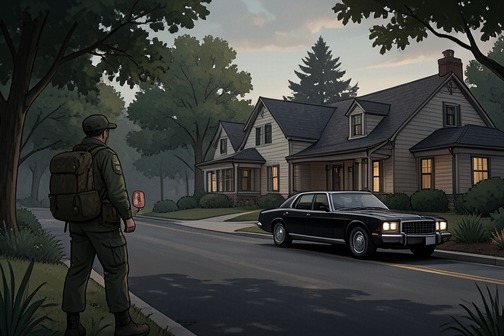
[Bret follows Robert and enters the Benedict Canyon house](entity:event-recall-event-bbc83f4428a6) is a pivotal episode in the fall of [1981](entity:time-recall-time-1981-16063b32b4e5): [Bret](entity:character-recall-character-bret-7b256fc8a433)’s routine of tailing a classmate shifts into trespass, and an apparently empty property becomes, in his mind, a possible link to [Matt Kellner’s disappearance and death](entity:event-recall-event-matt-kellner-s-disappea-71261aa784cb). The visit produces no proof. Instead, its darkened, neglected setting and Bret’s conviction that someone is watching him sharpen the uncertainty that drives his investigation.
## From routine surveillance to a detour
After school, Bret repeatedly follows Robert’s black Porsche from [Buckley](entity:organization-recall-organization-buckley-306f3c15107a) toward [Century City](entity:location-recall-location-century-city-6364cc26b88c), keeping several cars behind and watching him enter [Century Towers](entity:location-recall-location-century-towers-d9532f10cd35). The pursuit has become part of Bret’s new schedule; he describes becoming addicted to it, even as the route initially seems to lead only to ordinary, uneventful afternoons. By the fourth day, however, Robert turns away from his usual route and drives through Benedict Canyon. Bret follows, unsettled by the possibility that Robert might be heading to his own house, then relieved when the Porsche continues elsewhere.
Robert pulls into a secluded property several houses beyond the Hutton stoplight. Bret waits, drives past, turns around, and watches from farther up the road. Robert stays for about ten minutes, then leaves. Bret does not follow him again that afternoon. The unexplained visit has already changed the meaning of the pursuit: Robert’s destination, rather than his familiar commute, is now what matters.
## The house and the intrusion
After Robert drives away, Bret returns to the property and goes up its open driveway. A crooked, mud-streaked no-trespassing sign hangs from wrought-iron gates. The house is white with green shutters, set back from the canyon road and partly hidden by trees. Bret finds no visible sign that anyone is living there. He tests the locked front door, then moves around to the backyard.
There he sees a tennis court with a sagging net and fallen leaves, an empty pool partly filled with brackish water, and a brick patio. The shaded windows and rising hillside add to the sense of isolation; Bret observes that the trees and slope leave the house in shadow. He does not find evidence of Robert or Matt, and the visit gives him no tangible confirmation of what he is seeking.
## Fear, inference, and Matt’s Datsun
While beside the deteriorated tennis court, Bret feels that a presence on the hillside is watching him. He imagines a hidden observer and associates it in succession with the Riders of the Afterlife, the Trawler, and Matt’s ghost. A rustle seems to come from the hillside, and he leaves the backyard in alarm. The episode does not establish that anyone is actually there: the watcher belongs to Bret’s fearful interpretation of the scene.
What gives the visit a more specific investigative meaning is a remark by [Ronald Kellner](entity:character-recall-character-ronald-kellner-f2c83421c463) about Matt’s Datsun. Bret connects the car’s mileage with the house and with the telephone number Matt had written on a notepad, which Bret had found in Matt’s desk. He becomes convinced that the house may be where Matt disappeared during the week before his death, and wonders whether Matt was kept there. This is Bret’s conclusion, not a confirmed discovery; the house yields no evidence that proves it.
## The return and the unresolved clue
Later, unable to sleep, Bret drives back to the property at night. The gates are now closed, and he sees a faint, wavering light in an upstairs room. He cannot tell whether Robert’s car is present. As if someone inside has noticed the car idling on the canyon road below, the light goes out and the window darkens; Bret then drives away quickly.
The nighttime visit intensifies the pattern established by the first: Bret sees an ambiguous sign, reads it as evidence of a hidden connection, and retreats without knowing what happened inside. The house remains an unresolved location rather than a solved crime scene. Its importance lies in the way it binds Bret’s surveillance of Robert to his suspicions about Matt, while leaving the crucial question—whether Matt was ever taken there—open.
Event 20
Bret and Terry Schaffer meet at the Beverly Hills Hotel
The meeting between [Bret Ellis](entity:character-recall-character-bret-ellis-24db207b1483) and [Terry Schaffer](entity:character-recall-character-terry-schaffer-ac600a9ebce1) at the [Beverly Hills Hotel](entity:location-recall-location-beverly-hills-hotel-0dea1cb87dab) begins as a hoped-for business appointment and turns into an unequal sexual bargain. [Bret](entity:character-recall-character-bret-7b256fc8a433) arrives believing he will pitch a screenplay in the Polo Lounge; instead, he is led to Terry’s private bungalow, where the combination of privacy, Terry’s advances, and an implied exchange makes the encounter’s real stakes difficult to ignore. Bret leaves with Terry’s tentative interest in the script, but also with evidence that the afternoon was being watched: an unseen photographer records his arrival and the encounter through the bedroom shutters. The scene’s apparent negotiation thus becomes both a personal boundary-crossing and a concealed episode in the book’s larger pattern of surveillance and later revelation.
## The Appointment and Its Misdirection
By three-thirty on a Sunday afternoon in early October [1981](entity:time-recall-time-1981-16063b32b4e5), Bret is already anxious about meeting Terry at the Beverly Hills Hotel. He takes a Valium, changes his mind repeatedly about what to wear, calls the hotel to ask whether jeans are acceptable, and paces while imagining that Terry might take him seriously enough to make a deal for his script. At seventeen, Bret wants to appear confident and casual, but his preparations reveal how much the meeting matters to him. He hopes for professional recognition, while also entertaining the possibility that the meeting may follow a different course.
The change in venue makes that possibility harder to dismiss. Bret expects the Polo Lounge, but [Steven Reinhardt](entity:character-recall-character-steven-reinhardt-1d7688e88402) instead tells him he is taking him to Terry. When Bret asks where the meeting will be, Steven leads him along a pink path beside the lounge and toward a bungalow. The route, with its banana palms and bougainvillea, replaces a public business setting with a secluded one. Steven challenges Bret’s understanding of what he has agreed to by pointing out that Bret has dressed up, arrived eagerly, and ignored earlier warnings not to take the situation too seriously. The meeting’s ambiguity is not simply a misunderstanding: Steven’s remarks make clear that Bret has been given reason to anticipate an ulterior purpose, even as he continues to hope for a script discussion.
## The Bungalow and the Bargain
Inside, Bret finds a carefully appointed suite: thick white carpeting, pale-green walls, champagne on a room-service cart, pink curtains patterned with banana palms, sofas facing across a glass table, and a bedroom with a king-sized bed. Ashtrays are placed throughout, although Terry does not smoke tobacco. Bret follows Terry’s voice through the bungalow and finds him on the patio, wearing a short robe and sunglasses, with champagne and a joint. The room’s comforts and staged privacy sharpen the contrast with the business meeting Bret thought he had come to attend.
Bret tries to establish a limit by insisting that he is there to talk about the script and that nothing else will happen. Terry challenges the premise of that limit rather than reassuring him. The exchange leaves Bret to confront the mismatch between the professional purpose he wants and the sexual meaning he understands the appointment to carry. After Bret presents his idea, Terry says he likes it and asks whether they can make a deal. Bret is relieved that the script has received approval; Terry then defines the price of that approval as thirty minutes of Bret’s time in return for thirty minutes of his own. The language of reciprocal business turns the proposed sexual encounter into a quid pro quo, making the professional opportunity inseparable from Terry’s demand.
## The Encounter and Its Immediate Aftermath
Bret participates in the encounter, but his account emphasizes uncertainty and reluctant accommodation rather than uncomplicated desire. He describes moments when he resists what Terry is doing and says no, while also noting that he goes along with other parts of the encounter. The scene does not resolve that tension into a simple account of either enthusiastic consent or outright refusal. What is clear is that Bret had come hoping for a script deal, recognized the sexual expectation, and found himself navigating Terry’s demands within a private space arranged by Terry.
Afterward, Bret goes to the bathroom, composes himself, and returns dressed. Terry has gone back to the patio, where he is again on the phone with champagne and a newly lit joint. Bret signals that he needs to leave; Terry thanks him and says they will talk soon. Bret exits through the darkened living room, passes the Polo Lounge, tips the valet, and drives without direction before returning to the empty house on Mulholland. He has left the hotel before five o’clock, less than an hour after arriving. The brisk return to ordinary movement does not settle what happened: Terry has expressed interest in the screenplay, but the deal has been joined to a personal transaction that Bret had not wanted to treat as its price.
## The Photograph and the Scene’s Wider Significance
Neither Bret nor Terry knows that a photographer is hidden in the hotel grounds while they are inside. From deep in the landscaping, the photographer captures Bret walking into Terry’s bungalow and photographs the two men in the bedroom through the shutters’ open slats. The hidden camera turns an already private and unequal encounter into material prepared for later use. Its presence also changes the meaning of the setting: the bungalow is secluded from ordinary hotel life, but not from the unseen observer who can convert its privacy into evidence.
The photographs are not discovered by the participants that afternoon. The narrative says they will learn of them later, as the fall of 1981 moves toward its tragic conclusion. This deferred revelation makes the meeting a hinge between a seemingly contained personal episode and the wider chain of exposure surrounding Bret. The encounter’s immediate outcome is limited—Terry has shown interest in the script, Bret has left the hotel—but its concealed documentation gives it consequences beyond the hour in which it occurred. The scene joins the book’s concerns with performance, secrecy, and surveillance: Bret tries to present himself as a composed young writer, Terry frames sexual access as the return owed for a professional favor, and an unseen camera records both men without their knowledge.
Event 21
Susan and Thom's homecoming dispute and coronation
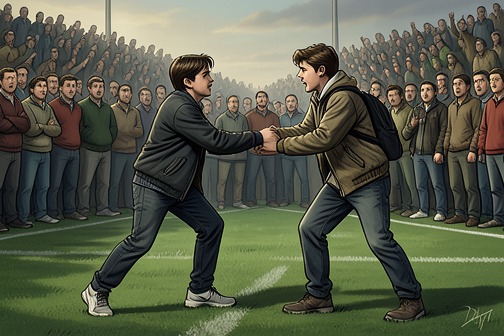
[Susan and Thom's homecoming dispute and coronation](entity:event-recall-event-a04894aad31d) turns [Buckley](entity:organization-recall-organization-buckley-306f3c15107a)’s familiar celebration into a public test of a relationship its students had regarded as untroubled. On [Gilley Field](entity:location-recall-location-gilley-field-6c98e4389ba1), Susan resists being made Homecoming Queen, Thom insists they follow the expected script, and their argument culminates in her slapping him. By the following morning, the two accept their crowns and present themselves as a couple again. The ceremony restores appearances, but the episode makes visible the fracture beneath them and signals the decline of Buckley’s golden couple.
## Background and expectations
Thom and Susan had been together since they were sophomores. By senior year they were among the most popular students at Buckley, moving through school as a nearly inseparable pair. Their relationship seemed to fit the school’s image of effortless youth and privilege: both came from wealthy [Los Angeles](entity:location-recall-location-los-angeles-11eff639bdf5) families, and both were treated as naturally attractive, sociable figures. The narrator had been close to Susan since seventh grade and had long been infatuated with her and Thom, which makes the couple’s apparent unity both a familiar social fact and a private source of longing.
Homecoming gave that couple a highly visible role to perform. The school’s festivities included a game, parade and dinner, and Thom expected Susan to participate as queen if they were elected. For Susan, the ceremony had ceased to feel like a harmless tradition. She had told Thom throughout the week that she did not want to be nominated and would not take part, and she wanted another pair of students to have the opportunity instead. The conflict therefore concerned more than a float or a title: Susan rejected the assumption that the couple should continue to enact the school’s expected version of them simply because they had done so before.
## The argument on Gilley Field
The disagreement first becomes legible from a distance. While other students work on the senior float under the stadium lights, Thom gestures at Susan as she stands with her arms crossed. She listens without answering; he appears increasingly upset, while she shifts her stance and grows less patient. The narrator and the students nearby can see the tension but cannot initially make out the words. The scene’s distance turns their private trouble into a spectacle that the surrounding group watches without understanding.
The exchange breaks into public view when Susan calls across the field to ask why any of it matters. Thom answers that it matters because he loves her. Susan insists that this is not what she means. He argues that it would look strange if she were not with him when they won; she objects to the importance he gives appearances. His appeal to love cannot resolve the dispute because the argument is also about whether their relationship and its public image should dictate Susan’s choices.
When Susan starts to walk away, Thom grabs her arm and turns her back toward him. She slaps his face. The students gathered by the float gasp; Thom releases her, stunned, and watches as she crosses the dark patches of lawn and passes the group on her way to the restroom. The slap punctures the couple’s reputation for ease and good nature. For the witnesses, it is not an ordinary disagreement but a sudden revelation that the relationship’s damage has become impossible to conceal.
## The restroom and the attempted repair
Susan explains to the narrator and Debbie that she has refused the queen role all week. Last year’s ceremony had been acceptable to her, but she does not want to repeat it; she says she does not want to be Homecoming Queen this year and will not do it. She had proposed that other students, including Jeff and Tracy or Jeff and Debbie, be allowed to take the roles. Thom, she says, could not accept that she did not care how their possible win would look. She plans to turn down the title after the announcement, even if she has to invent an excuse.
The narrator responds with frustration, urging Susan to endure one more year and accusing her of treating Thom badly. Susan corrects him: when she had spoken of one more year, she meant his situation, not hers or theirs. Her answer exposes a limit in their friendship as well as in the conversation: he has presumed that her advice to him should apply to her own life. Debbie also urges Susan to go through with the event, arguing that refusing would create needless drama and make her look bad. Susan counters that the prospect of causing drama merely by declining the crown says something about the pressures surrounding her.
The narrator realizes that he is present for a conversation between Susan and Debbie that they cannot have freely while he remains there. He leaves the restroom; their voices become urgent and muffled behind him. His withdrawal is charged with resentment: he is disturbed that the group’s attention is consumed by the queen dispute while [Matt Kellner](entity:character-recall-character-matt-kellner-7d4c7c775d94)’s mysterious death remains unknown to, or unacknowledged by, those around him. When the narrator returns to the field, Thom and Robert are walking together toward the float while the other students resume their work as if nothing has happened.
Susan and Debbie later return. Susan apologizes to Thom and agrees to take part. Thom hugs her, lifts her briefly from the ground and kisses her; the students around the float applaud, and Robert joins them. The applause lasts only seconds, but it gives the group a way to treat the immediate crisis as resolved. The narrator sees the couple holding hands as they leave the field, while Debbie reaches for his hand. The gestures restore the evening’s social order without undoing what the argument revealed.
## Coronation and its afterimage
The next morning, Thom and Susan are announced as Homecoming King and Queen before the cheering school. Thom thanks the voters and appears not to carry the previous night’s conflict into the ceremony. Susan returns to a composed, distant manner, and the pair stand together at the microphone beneath the Pavilion. Their public performance is convincing enough to satisfy the crowd, but the narrator reads the ceremony against the slap and the argument that preceded it.
Robert is not initially clapping. He watches the crowned couple, then looks toward the narrator and begins to applaud. The narrator interprets Robert’s expression as sadness and anger, though this remains his own reading of the moment. The episode thus places the audience’s celebration beside reactions that do not fit its uncomplicated mood: the school cheers, while the narrator and a few others carry knowledge of the rupture on Gilley Field.
The senior float, repaired overnight, supplies a further image of the school’s capacity to turn disruption into a polished show. It carries the head of the Statue of Liberty with Thom’s face, a replica Los Angeles street with palm trees, and a readable banner declaring escape from buckley high. Thom and Susan ride it together, waving to the crowd; Thom’s smile appears genuine, Susan’s less emphatic, while Debbie watches coldly. The parade proceeds, the Griffins win their game, and the public festivities continue. The smooth performance does not cancel the previous night’s conflict; it places the couple’s visible role back inside a school ritual that rewards coherence and spectacle.
## Significance
The dispute marks a decisive change in how the relationship can be seen. Until then, Thom and Susan had seemed so easygoing and well matched that few recognized the tension accumulating between them. The narrator understands the slap as proof of damage and the field as the place where a gradual estrangement finally becomes public. Susan’s refusal to care about appearances clashes with Thom’s insistence on the couple’s expected role, while the eventual coronation shows how quickly the surrounding community can resume its familiar story once the pair agree to perform it.
The episode’s reversal is deliberately incomplete: an argument gives way to an apology, an embrace and a public crowning, but not to evidence that the underlying conflict has been settled. The narrator later describes the night on Gilley Field as the beginning of the end of Thom and Susan’s reign as Buckley’s golden couple, while recognizing that their decline had begun earlier. The event therefore functions both as a rupture and as a concealment: the couple’s trouble becomes visible, then the school’s ceremony absorbs it into a reassuring image of continuity.
Event 22
Audrey Barbour goes missing
[Audrey Barbour goes missing](entity:event-recall-event-4c7b0c0123f9) after leaving a group of friends at a [Woodland Hills](entity:location-recall-location-woodland-hills-c558c46e2779) shopping mall, and her disappearance brings the Trawler’s suspected pattern into sharper focus without resolving whether he took her. The account sets the ordinary details of her planned evening against the clues that emerge afterward: an empty car park, previously unreported calls, and a record poster left at her home. For [Bret](entity:character-recall-character-bret-7b256fc8a433), these details make Audrey’s absence feel like a developing narrative; for her classmates, it barely interrupts the week.
## Background and the First Report
Audrey’s disappearance enters the story in the week before [Susan Reynolds](entity:character-recall-character-susan-reynolds-b299ccba7f71)’s party. Bret had been preoccupied with preparations for the gathering and had scarcely noticed Ryan Vaughn or [Matt Kellner](entity:character-recall-character-matt-kellner-7d4c7c775d94)’s absence; the news of another missing girl displaced those concerns. He learns of it on Monday morning from the [Los Angeles](entity:location-recall-location-los-angeles-11eff639bdf5) Times, which reports that seventeen-year-old Audrey has been missing for three days. The article’s photograph and brief announcement prompt him to wonder whether she is already in danger, though at this point the paper has not established a connection to the Trawler.
The reported timeline is specific. On Friday night Audrey had been with friends at the Promenade mall in Woodland Hills. She left around nine, saying she wanted to get home for the fifth-season premiere of Dallas, which she planned to watch as it aired rather than on a recording. A couple entering Robinson’s at the mall’s south end saw her leaving, supporting the friends’ account of when she departed. Audrey did not arrive at her parents’ house in Calabasas by the time she expected; she had said she would be home by nine-thirty, with time to shower before the ten o’clock broadcast. Nor did she call to say she would be late and ask her father to record the show.
When Audrey’s parents could not reach her friends, they drove to the mall after it had closed. Her white Volkswagen Rabbit was still in the vast parking lot, but Audrey had never reached it. The car’s presence gives the disappearance a stark physical endpoint: her planned journey home stopped before the drive began. In the first account of the event, however, no one can say where she went after leaving her friends or what happened to her.
## Clues and Competing Explanations
The early uncertainty matters because the signs associated with the Trawler had not yet been assembled into a confirmed explanation. Audrey’s parents recalled no rearranged furniture, no indication that anyone had entered the house, and no sense that their daughter had been singled out. Later that week, two dogs were reported missing in Bell Canyon, near where Audrey lived, but the family had not recognized a disturbance at home. The closest known home invasion in the area had occurred in the summer of [1980](entity:time-recall-time-1980-87083d7775fd). These details connected Audrey’s case to an emerging pattern only gradually, rather than proving at once that the same offender was responsible.
Friends added another clue: Audrey had received calls on her private telephone line but had not told her parents about them. At first she found the silent calls irritating. The pauses and heavy breathing eventually became, in her view, an opening for her to talk to the unknown caller. She chatted about her day and the boys she found attractive, and told friends that she thought she could hear the caller—or possibly more than one person—on the other end. The caller never spoke in an ordinary conversation. Audrey’s willingness to address the silence made the calls seem to her less like a simple nuisance, though their identity and purpose remained unknown.
A further detail in the newspaper account was a poster left as a “gift” on the front porch of the Barbour home: the cover of Entertainment!, an album by Gang of Four, a band Audrey barely knew and did not particularly like. She had interpreted it as a present from a “secret admirer.” The article presented the poster as an unexplained oddity, and nobody had yet connected it to posters received by other potential targets. Bret immediately thought of a poster left for Matt at his home and wondered whether receiving one marked someone for death, or whether the Trawler left posters for teenagers he did not ultimately kill. The clue expands the field of suspicion while offering no answer about Audrey’s fate.
## Public Suspicion and Private Fear
As Bret follows coverage in the Los Angeles Times and the Herald Examiner, the local press increasingly links Audrey’s disappearance to the Trawler. The suspect had not called the police or the newspaper that week to claim responsibility, though such calls often came after bodies were found. Reports about earlier missing victims included calls during the disappearances of [Julie Selwyn](entity:character-recall-character-julie-selwyn-e58c56f476b8) and [Sarah Johnson](entity:character-recall-character-sarah-johnson-fa8b9bb9dd9c), but not [Katherine Latchford](entity:character-recall-character-katherine-latchford-b303abca40f3). The differing pattern of communication leaves room for doubt even as the press’s account becomes more confident.
The police publicly resisted treating the connection as established, emphasizing that it was too early in the investigation and that they were not reaching that conclusion. Bret, by contrast, finds the possibility difficult to dismiss: Audrey resembles the teenage girls already linked in the public imagination to the killer, and the missing dogs, private calls, and poster make the case seem to fit. Yet the account preserves the distinction between suspicion and confirmation. The evidence changes how Bret reads the disappearance, but it does not establish who took Audrey or what happened after she left the mall.
The contrast between the mounting news and the response at [Buckley](entity:organization-recall-organization-buckley-306f3c15107a) is especially sharp. Bret expects Audrey’s disappearance to alarm his classmates, but nobody seems to discuss it. He reads that silence against the repeated disappearance of girls—some who run away, some later found dead, and some who never return—and against the confidence of teenagers who feel protected by their youth. The school’s apparent indifference does not make the danger smaller; it shows how easily another missing girl can be absorbed into the background of ordinary adolescent life.
## Narrative Significance and Unresolved Outcome
The episode gathers clues without converting them into certainty. The abandoned car, missing dogs, silent telephone calls, and poster each acquire possible significance through their resemblance to earlier signs, but their meaning is not yet known to the characters. Bret’s thinking moves from a newspaper report to a theory of patterned targeting, while the police maintain caution and Audrey’s peers largely carry on as before. The difference between these responses makes the episode as much about how people recognize danger as about the disappearance itself.
Audrey’s absence also redirects the week leading to Susan’s party. Bret’s attention remains fixed on the case, and the report that [Robert Mallory](entity:character-recall-character-robert-mallory-ae01c493887e) had left school preparations early becomes newly charged in his mind, although the account does not establish a connection between Robert and Audrey’s disappearance. The missing girl’s case thus intensifies the atmosphere of suspicion around the events unfolding at Buckley without supplying a definitive culprit.
Within the available account, Audrey’s fate remains unresolved. The press treats the Trawler as a plausible explanation, the police do not confirm it, and the clues remain suggestive rather than conclusive. That unfinished status is central to the event’s effect: the reader encounters a disappearance at the point when ordinary details begin to look like evidence, but before anyone can know whether the pattern is real in this particular case.
Event 23
Susan's party for Robert and Robert's poolside breakdown

[Susan Reynolds](entity:character-recall-character-susan-reynolds-b299ccba7f71)’s party for [Robert Mallory](entity:character-recall-character-robert-mallory-ae01c493887e) and Robert’s poolside breakdown mark the point when a carefully staged welcome becomes a crisis the students agree to conceal. Planned to make Robert feel accepted at [Buckley](entity:organization-recall-organization-buckley-306f3c15107a), the mid-October gathering instead exposes how little the group understands about his condition, how close Susan has become to him, and how readily its members turn a disturbing event into a shared secret.
## A Welcome Party with an Unspoken Purpose
The party had been postponed twice: first after [Matt Kellner](entity:character-recall-character-matt-kellner-7d4c7c775d94)’s death, and again for Homecoming. Susan had first told [Thom Wright](entity:character-recall-character-thom-wright-3c7fd30d0100), [Debbie Schaffer](entity:character-recall-character-debbie-schaffer-23db255cf219), and [Bret Ellis](entity:character-recall-character-bret-ellis-24db207b1483) in early September that she wanted to throw a party specifically to help the new student feel comfortable among his classmates. By the time it finally took place on a Saturday in mid-October, however, Robert’s history had changed the meaning of the gesture. The students knew he had spent six months in a mental institution outside [Jacksonville, Illinois](entity:location-recall-location-jacksonville-illinoi-9192c705760a), and [Bret](entity:character-recall-character-bret-7b256fc8a433) saw the party less as simple hospitality than as an attempt to disarm someone they did not know how to approach.
That unease sits beside the school’s polished social order. Buckley’s small classes, uniforms, and quiet campus were meant to discourage overt status contests, but certain students still commanded disproportionate attention. At Susan’s party, the gathered classmates’ enthusiasm for the setting and the social occasion briefly makes the welcome seem successful. Underneath it, though, Robert’s uncertain awareness of the event and the group’s speculation about his past remain unresolved.
## The Party’s Social Fault Lines
Susan’s appearance in the backyard gives the gathering one of its most composed moments. As Elvis Costello’s “Clubland” plays, she moves between Thom and Robert and greets Bret with a kiss on the cheek, telling him she is happy he came. The gesture presents the party’s intimacy as easy and public, but the evening soon makes clear that the relationships among the three are less settled than the scene suggests.
A small exchange over a margarita reveals Susan’s private attentiveness to Robert. When he reaches for a drink, she quietly reminds him that he had said he would not drink. Robert answers her familiarly, calling her babe, then drinks anyway. Bret registers the ease between them as evidence of something he does not want to confront. Around them, plans form for a beach outing before Thom leaves to visit colleges in New York; another party, hosted by [Terry Schaffer](entity:character-recall-character-terry-schaffer-ac600a9ebce1), is also mentioned. The ordinary forward motion of school and social life continues even as the evening’s more troubling undercurrents gather.
Later, the party’s mood shifts when Thom confronts Susan in front of the others, demanding to know where she has been. Red-faced and furious, he is restrained by [Jeff Taylor](entity:character-recall-character-jeff-taylor-3284df352d5c) and Dominic while Debbie leads Susan inside. Robert approaches Thom, helps ease him away from the confrontation, and remains with him as the crowd parts around them. The episode briefly places Robert in the role of mediator, but it does not settle the strain between Thom and Susan; it only moves the argument out of the center of the gathering.
## Robert’s Crisis in the Pool
As the night goes on, the party becomes increasingly disorderly. More guests arrive, margaritas continue to circulate, and cocaine is openly shared. The narrator describes a call to a dealer and the arrival of a further supply. Amid this escalating intoxication, Robert’s behavior becomes alarming enough that the people present realize the situation is not a joke.
Susan explains that she had told Robert not to drink because he was taking Thorazine and three other medications. She goes to help Thom bring him out of the pool. Robert’s distress makes the rescue difficult: he struggles, then becomes briefly still as Susan approaches, and Thom and Susan guide him toward the steps. Robert turns between them and tries to kiss them; Thom does not react with hostility, but keeps directing him toward safety. The scene shifts the party’s attention from gossip and status to the practical need to get Robert out of the water.
Once they reach the poolside, Susan tells Thom to get a towel. Thom, confused by the instruction, fetches one and covers Robert. He then carries Robert into the house and places him on the living-room couch, where Robert has already passed out. The episode ends not with a confrontation or explanation, but with Robert unconscious and the party’s remaining guests trying to manage what has happened.
## Secrecy and the Morning After
Susan and Debbie stay up, continue cleaning, and keep watch over Robert. According to Debbie the following day, he continues shivering and occasionally moaning, apparently caught in nightmares. The account offers no clear explanation for the crisis, but it records a consequence that the party cannot simply absorb into its festivities: Robert remains unwell after being taken inside.
The group makes a deliberate choice not to turn the episode into school gossip. Thom, Susan, Debbie, Bret, Jeff, and Tracy Goldman are identified as witnesses; most of the other guests had already left. When Robert returns to school, he seems cheerful and mingles with classmates. The witnesses say nothing, and Robert remembers the party only up to a certain point. Susan assures him that they will not tell anyone, while failing to mention that Bret had also seen what happened. Her promise protects Robert from public exposure, but the incomplete account also shows how secrecy is shaped by what each person chooses to disclose.
The next plan—to take Robert to the beach club before school lets out on Thursday—offers a return to ordinary group life. Yet it follows directly from a night the witnesses have agreed to erase from public conversation. The party’s decisive outcome is therefore double: Robert is rescued and the students preserve his privacy, while their silence prevents the crisis from becoming shared knowledge at Buckley. The welcome succeeds socially only by concealing the moment that most clearly reveals the group’s vulnerability and its competing loyalties.
Event 24
October trip to the Jonathan Club beach

The [October trip to the Jonathan Club beach](entity:event-recall-event-e5eaf5dee675) is a deceptively quiet turning point: an effort by a small group of [Buckley](entity:organization-recall-organization-buckley-306f3c15107a) students to resume ordinary social life after [Robert Mallory](entity:character-recall-character-robert-mallory-ae01c493887e)’s breakdown becomes a study in secrecy, unease, and the limits of their apparent safety. At a deserted private beach, news of recent break-ins and harassment shadows the outing, while the narrator watches Robert and [Thom Wright](entity:character-recall-character-thom-wright-3c7fd30d0100) speak alone by the water and recognizes a troubling echo of Robert’s earlier conversation with [Matt Kellner](entity:character-recall-character-matt-kellner-7d4c7c775d94).
## Causes and Background
In October [1981](entity:time-recall-time-1981-16063b32b4e5), the narrator identifies an afternoon at the [Jonathan Club](entity:location-recall-location-jonathan-club-4936498b8043) as the beginning of the end of the group’s former world. The secret surrounding Matt’s fate has already marked a loss of innocence, and the narrator understands that the friends are approaching events they cannot control. In retrospect, this beach outing becomes a hinge in the story: what precedes it leads toward the group’s exposure to violence, while what follows is shaped by that exposure.
The outing follows Robert’s crisis at Susan’s party. Only a small group of friends witnessed his erratic behavior, and they agreed not to tell their classmates. Robert remembered the party only up to a point; after hearing what had happened, he was humiliated and cried. Susan reassured him that the witnesses would keep it private. The trip to the beach club was therefore not simply a social excursion: it took place under a shared promise of silence, while Robert himself had no complete memory of the episode that prompted the group’s concern.
The group left Buckley during lunch and drove through the Sepulveda Pass toward Santa Monica. Susan and Thom took the Corvette; [Debbie Schaffer](entity:character-recall-character-debbie-schaffer-23db255cf219) had picked up the narrator in her BMW, and Robert followed in a Porsche. The destination carried its own history and contradictions. The Jonathan Club was an invitation-only institution whose discriminatory reputation—particularly its exclusion of Black and Jewish people and its refusal to admit women as members—had become an open joke to the teenagers. Their social world treated such exclusion as distant and abstract, a posture the retrospective narrator connects to their broader numbness.
## The Empty Club and Its Warning
The club’s near-empty parking lot immediately unsettled the group. A valet explained that the Riders of the Afterlife had broken in two nights earlier, vandalized the property, taken food from the cafeteria, and continued to harass people leaving the lot. He added that the group had been active around Santa Monica and Venice, where there had been break-ins, vandalism, and missing pets. With no other cars in the lot and the club considering an early closure, the report made the supposed refuge feel exposed.
Debbie insisted that they had already come too far to turn back. When the narrator recalled an earlier attack at [the space on Melrose](entity:location-recall-location-6d25c8059679), Debbie dismissed the danger as the work of a foolish hippie. Susan then signed the group in using Donald’s account number; that day, the staff did not check identification against the membership roster. Their entry depended less on security than on the ordinary assumptions that usually made the club feel protected.
The wind, the deserted courts, and the silence between the friends changed the mood as they crossed toward the locker rooms. The narrator noticed that Susan and Thom had become distant during the short drive from Buckley, though the reason was not stated. Robert followed Debbie, carrying a large black duffel bag, and thanked the others for bringing him. Thom, meanwhile, complained about the cold and the possibility of encountering members of the cult. Their different responses—Robert’s eagerness, Thom’s irritation, and the narrator’s growing alertness—made the group’s unease visible without resolving what had happened between Susan and Thom.
## An Outing Without Its Usual Ease
The customary comforts of the beach club were present, but the scene was stripped of its usual crowd. The friends changed in the otherwise quiet locker room, then collected towels, chairs, and an umbrella from the staff. They chose a spot between the shore and the club. The beach was nearly empty in both directions, and a lifeguard booth stood unmanned nearby. Though the sun was out, gusts from the Pacific made the group complain of the cold.
They sat in a row facing the ocean: Thom and Susan at one end, Robert between them and the narrator, and Debbie beside the narrator at the other end. KROQ played as the group settled beneath the umbrella, which Susan and Robert preferred. Thom and Susan barely acknowledged one another. The narrator tried to ask Thom about his upcoming college visits, but Thom answered dismissively, deepening the narrator’s sense of distance. Robert was the one who repeatedly got up, saying he might visit the indoor pool and joking that he could be left unsupervised. The joke went unanswered.
The afternoon’s small details underline how little the group manages to reconnect. Thom read Sports Illustrated; Debbie leafed through Interview; the narrator returned to Joan Didion’s The White Album; Susan stared out to sea. The radio played subdued songs, and the cold kept interrupting the expected pleasures of a day at the beach. When Thom went to the café for food, Debbie accompanied him and brought Susan iced tea on their return. The narrator and Susan said nothing to each other while they were gone, and Robert did not return to his chair. The narrator thought of [Audrey Barbour](entity:character-recall-character-audrey-barbour-96d09b8a3fa9), who was missing, and wondered what Robert’s duffel bag contained, but did not see it.
## Robert and Thom at the Water’s Edge
When the narrator looked up again, the light had changed and someone was approaching across the shore. At first the narrator feared it might be a member of the Riders of the Afterlife; then the figure’s purple swimsuit identified him as Robert. Thom met him by the water. From a distance, the two stood facing one another as the waves reached their ankles, with Thom listening and nodding while Robert spoke. The narrator could not hear their conversation.
The meeting recalled a scene the narrator had previously witnessed at Buckley: Robert speaking with Matt Kellner in the school parking lot. The location and participants had changed, but Robert’s position and Thom’s attentive response seemed to repeat the earlier pattern. The narrator felt sickened by the resemblance and experienced it as a premonition, not as proof of what the boys discussed. Susan also watched them, lowering her sunglasses; the narrator sensed her fear, though its cause remained unclear. She eventually turned away with a curt remark.
The beach outing thus closes not with a confrontation or an explanation but with an image that rearranges the group’s quiet afternoon into something ominous. Its empty setting, the cult’s reported activity, the friends’ guarded silences, and the echo of Robert’s earlier contact with Matt accumulate without delivering certainty. In the larger narrative, the day marks the point at which the narrator begins to see more clearly what may be coming, while the young people remain inside a social world that has taught them to treat danger as distant, manageable, or not worth discussing.
Event 25
Jonathan Club locker-room sacrifice tableau

The [Jonathan Club locker-room sacrifice tableau](entity:event-recall-event-jonathan-club-locker-ro-11c93a683b33) is a cult-related display discovered during a beach outing at the [Jonathan Club](entity:location-recall-location-jonathan-club-4936498b8043). A candle, a red pentagram, a dead seagull, and a werewolf mask are arranged together in an otherwise empty locker room. The scene confirms that someone from the cult has entered the club and leaves the narrator searching for a message he cannot decipher.
## Setting and Discovery
The locker room is usually busy with men of different ages, but on this visit it is empty. In the dim light, the narrator approaches an open toilet stall, where a candle has been placed on the closed toilet. The isolated stall and unfamiliar quiet make the display stand out from the ordinary club setting.
Above the toilet, the narrator makes out a red pentagram. A dead seagull lies in the corner, and he concludes that its blood was used to draw the symbol. The tableau transforms a private locker-room stall into a deliberately staged scene; the evidence does not identify who arranged it.
## The Objects and Their Possible Meaning
A hard object beneath the toilet first seems to the narrator like another dead animal, but it is a werewolf mask. The cheap Halloween mask is lightly spattered with blood from the seagull. Its presence alongside the pentagram and candle persuades him that it was placed deliberately to complete the tableau, rather than left there by chance.
The narrator cannot determine what the mask adds to the display or how it relates to the cult’s beliefs. He reads the arrangement as a warning, but its specific meaning remains unresolved. The mask therefore functions both as a concrete clue and as an opaque sign: it sharpens the sense of intention without explaining the threat.
## Consequences and Significance
The narrator recognizes that someone from the cult has gained access to the Jonathan Club while the group was there. Anger arrives alongside genuine fear, and the scene prompts him to consider whether [Robert Mallory](entity:character-recall-character-robert-mallory-ae01c493887e) may have staged it; that is a suspicion, not an established attribution.
The tableau’s force comes from the collision between its recognizable objects and their uncertain message. A candle, a familiar Halloween mask, and a dead bird become parts of a staged warning, making the club’s normally ordinary locker room feel vulnerable to intrusion. The narrator leaves the discovery without a confirmed culprit or a decoded explanation.
Event 26
Thom asks Bret to look after Susan
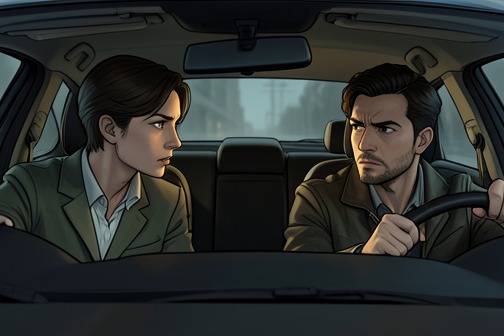
[Thom asks Bret to look after Susan](entity:event-recall-event-thom-bret-susan-5b651ce22691) is a pivotal conversation during a drive toward [Los Angeles](entity:location-recall-location-los-angeles-11eff639bdf5) International Airport. Thom frames his request as a favor between friends, but [Bret](entity:character-recall-character-bret-7b256fc8a433) hears an invitation to monitor Susan and a test of what he thinks about Robert. As Thom explains that Robert believes he is being stalked, the exchange turns from casual concern into a collision between friendship, secrecy, and suspicion. Bret does not disclose what he fears Robert may have done, and his view of Thom changes in the silence between them.
## Background and Stakes
Thom and Susan had been together since their sophomore year and were among the most popular students at [Buckley](entity:organization-recall-organization-buckley-306f3c15107a). They had moved through school and social life as a couple, and Bret had long been close to both: Susan was his closest female friend, while his feelings for Thom were complicated by an unspoken attraction. Their apparent ease as a couple concealed a relationship that would begin to fracture in the fall of [1981](entity:time-recall-time-1981-16063b32b4e5).
That history makes Thom’s request more charged than its practical wording suggests. He asks Bret to spend time with Susan while he is away, but Bret hears a wish that he keep watch on Thom’s girlfriend. The request pulls Bret into the couple’s private strain and confronts him with the possibility that the friendship he valued is also shaped by distrust.
## The Request and Bret’s Response
In the Mercedes, as they travel past [Westwood](entity:location-recall-location-westwood-538fe26718d7) toward the freeway, [Thom asks Bret to keep an eye on Susan](entity:action-recall-action-thom-asks-bret-to-keep-0b1ec0c14182) and encourages him to make a concentrated effort to spend time with her: go to the movies, hang out, and generally be around her more. Bret initially manages a casual response, but internally he feels himself go cold. He interprets the favor as an instruction to act like a secret agent and make sure Susan is behaving, an interpretation that makes the request seem weak and distrustful rather than friendly.
Bret says directly that Thom means for him to spy on Susan. Thom denies that this is what he wants, then repeats that Bret should simply do what he usually does. Bret questions that assumption. The request now seems to carry the weight of unspoken knowledge: Susan may want someone else, may feel numb, or may be trying to leave the relationship. Bret is also aware that there are matters around Robert that Thom does not know, or that Bret cannot bring himself to explain.
## Robert and the Question of Trust
Thom hesitates before asking what Bret thinks of Robert now, after Robert has spent a couple of months at Buckley. He wants to know whether Bret likes him. Bret experiences the question as a test. He considers speaking openly about his suspicion that Robert is connected to Matt’s death and to the circumstances surrounding Matt’s final days, but keeps those fears to himself.
Instead, Bret gives a guarded answer: he says he does not really know Robert, acknowledges that Robert has issues and has received treatment, and calls the breakdown at Susan’s party disturbing. He then asks why Thom wants to know. The exchange exposes the distance between Bret’s private suspicions and the version of himself he presents to his longtime friend. His silence is not simply lack of information; it is an active concealment of what he believes may connect Robert to Matt.
## Robert’s Report of Being Followed
Thom explains that Robert had told him on the beach that he was grateful to have friends, then spoke of a person who had followed him since he first began coming to Los Angeles. Robert had described someone watching him and sending him things, without knowing who it was. Thom does not know whether to believe the story. Robert might be making it up, Thom suggests, or imagining it; his earlier institutional treatment makes Thom uncertain how to interpret the claim.
Bret recognizes that Robert’s alleged pursuer is not himself, despite his own preoccupation with Robert. Thom’s account therefore introduces a separate uncertainty: Robert may be experiencing genuine surveillance, or his report may reflect his unstable state. Thom has no clear answer, and Bret cannot offer the reassurance Thom seems to want. The conversation leaves the possibility of a real watcher unresolved rather than resolving it as either fact or delusion.
## Turning Point and Narrative Significance
The scene changes Bret’s understanding of Thom. Earlier, Bret had regarded him as easygoing, agreeable, and largely unaware of the tensions around him. Now Thom’s request seems to Bret childish and marked by suspicion; Bret is surprised and disappointed to find himself looking at his friend from a different angle. The shift is quiet, but decisive: the person Bret had wanted to please is no longer beyond criticism.
The request also binds together the story’s competing secrets. Thom is concerned about Susan and uncertain about Robert; Bret is asked to watch Susan while concealing his suspicions about Robert and Matt. His divided responses—to perform the dependable friend and to resist being drawn into surveillance—make the car conversation a small but consequential test of loyalty. The appeal to keep an eye on Susan does not settle what is happening between her and Thom, or whether Robert is being followed. Instead, it makes the characters’ uncertainty and guardedness newly visible.
Event 27
The Los Angeles Times publishes the Trawler's letter
The [Los Angeles](entity:location-recall-location-los-angeles-11eff639bdf5) Times’s publication of the Trawler’s letter makes the serial killer’s own account of his crimes public, transforming scattered reports of break-ins, assaults, and disappearances into a declared pattern. [Bret](entity:character-recall-character-bret-7b256fc8a433) reads the extensive article at [Buckley](entity:organization-recall-organization-buckley-306f3c15107a) and encounters both an explanation of the Trawler’s routines and a disturbing uncertainty: the letter describes a system, but the newspaper cannot establish every victim’s fate or connect the account to every disappearance that troubles Bret.
## Causes and Background
For about a year, the city had seen break-ins and assaults followed by disappearances. By [1981](entity:time-recall-time-1981-16063b32b4e5), the body of a second missing teenage girl had been found; the first had been discovered in [1980](entity:time-recall-time-1980-87083d7775fd). The cases were ultimately connected to the home invasions. The growing sequence of incidents supplied the background against which the letter appeared: it did not introduce violence into an otherwise undisturbed world, but gave an existing series of crimes a self-declared author and an apparent organizing logic.
The article appeared on the front page of the Los Angeles Times, alongside black-and-white photographs of [Katherine Latchford](entity:character-recall-character-katherine-latchford-b303abca40f3), [Sarah Johnson](entity:character-recall-character-sarah-johnson-fa8b9bb9dd9c), [Julie Selwyn](entity:character-recall-character-julie-selwyn-e58c56f476b8), and [Audrey Barbour](entity:character-recall-character-audrey-barbour-96d09b8a3fa9). It reported that the newspaper and the [Los Angeles Police Department](entity:organization-recall-organization-c38071a69813) had verified the letter as coming from the Trawler. Its publication therefore carried an authority different from rumor, even as the contents remained the statements of a killer rather than a complete investigative account.
## What the Letter Reveals
The article continued across a full page in the Metro section, combining photographs of places where the girls’ bodies had been found with excerpts from the letter. Some passages were typed and redacted; others were handwritten in different-colored pens. The mixture presented the letter as a material document with editorial limits: readers could see portions of the writer’s account, but the newspaper did not disclose everything it contained.
In the published excerpts, the Trawler described himself and his companions wandering through an abandoned mill in search of what he called an appropriate dumping ground. He also recounted stealing a dog from a neighborhood where a future target lived, calling the target a sacrifice destined for “the God.” The language recast murder as a ritual and victims as offerings within the killer’s private system of belief.
The account sketched a recurring method of movement and surveillance. [The Trawler](entity:character-recall-character-the-trawler-8d8a25ce6371) and his companions, it said, lived in motels and crossed the city at night, “following the moon.” They selected neighborhoods, assessed homes for access, and tracked potential victims to decide who was suitable for sacrifice. The letter described watching young women jog alone, following them through a mall food court, or waiting in a public parking lot near a beach. The varied settings point to a practice built around observation and opportunity rather than a single fixed location.
The Trawler called the bodies “paradises” and associated them with “the alterations.” According to the excerpts, he had been carrying out alterations for years before coming to Los Angeles and regarded the city as another step in a longer continuum. The newspaper withheld the materials used and did not fully explain what the alterations involved. It did report the writer’s references to bleach, a hacksaw, and Polaroids, leaving the objects visible in the account while their exact uses remained undisclosed.
The letter also distinguished between people the Trawler physically attacked and those he selected for sacrifice: he claimed never to have sacrificed a target he had attacked. Between murders, he described renewed home invasions as “tests” of whether a target was viable. His stated sequence moved from driving around and choosing a neighborhood to selecting a house and teenager, watching the residence, and searching for animals. In the account, following people and waiting helped keep him in control; the repeated project distracted him from what he called his pain and quelled his paranoia.
The article attributed further details to the letter, including the recording of victims’ screams and the killer’s stated use of violence to silence them and prevent them from seeing him and his companions. The Trawler described the process as an “ultimate annihilation” and said the final assemblage could take up to a week. These excerpts made the letter’s ritual vocabulary part of the public report, but did not fill every gap in what could be known about particular victims.
## Bret’s Reading and Its Limits
Bret came upon the report in the Buckley library after arriving late at school. The photographs and the headline about the serial killer in the [San Fernando Valley](entity:location-recall-location-san-fernando-valley-692f05c00b47) seized his attention; he turned to the Metro continuation and read the account as a revelation of what he calls the world’s concealed madness. The article repelled him, yet he read it intently, searching its details for a motive and for an explanation of the violence he had already associated with [Robert Mallory](entity:character-recall-character-robert-mallory-ae01c493887e) and the wider climate of fear.
The article’s organization helps explain that response. It places named victims, photographs of recovered bodies, and excerpts from the Trawler’s letter beside one another, allowing the killer’s narrative to impose a pattern on distinct crimes. But it also preserves visible absences: redactions interrupt the letter, and the report does not clarify the exact nature of the alterations. Its force comes partly from this tension between disclosure and withholding. The text offers enough detail to make the crimes seem structured while leaving readers to confront what the publication cannot confirm.
The omissions matter especially to Bret. The article says nothing confirmed about Audrey Barbour and does not mention [Matt Kellner](entity:character-recall-character-matt-kellner-7d4c7c775d94) or any male victims. Thus the public account neither settles Audrey’s status nor explains Matt’s death. Bret’s reading supplies an interpretive frame for the crimes, but the article’s limits prevent that frame from becoming proof of a connection to every event he fears is related.
## Consequences and Significance
After finishing the article, Bret feels unable to remain at school or follow an ordinary conversation. He leaves Buckley, drives to the empty house on Mulholland, and spends the afternoon away from the school day, unsettled by what he has read. The newspaper report has become more than news to him: it reorganizes his perception of Los Angeles, Robert Mallory, and the Trawler into a single field of threat, even where the published evidence does not establish a direct link.
The publication marks a shift from rumors and partial discoveries to the killer’s own public account, but not to complete understanding. The letter claims a repeating structure—surveillance, selection, invasion, and ritual—and the newspaper’s verified attribution lends that claim credibility. At the same time, its redactions, unanswered questions, and silence about Audrey and Matt expose the limits of treating a perpetrator’s account as a comprehensive record. For Bret, the article sharpens fear rather than resolving it: it supplies a pattern, while leaving the most personal uncertainties intact.
Event 28
Susan and Robert's secret date in Palm Springs

[Susan and Robert's secret date in Palm Springs](entity:event-recall-event-susan-robert-fd52cf17ffcf) is the moment [Bret](entity:character-recall-character-bret-7b256fc8a433) sees [Susan Reynolds and Robert Mallory](entity:relation-recall-relation-susan-reynolds-and-r-4978f86faf12) together and recognizes their relationship as romantic rather than merely friendly. After watching them leave Susan’s grandparents’ house, he follows them to [Las Casuelas Terraza](entity:location-recall-location-las-casuelas-terraza-68e5b686e1da), where their intimacy confirms what he had suspected for weeks. The discovery answers one uncertainty but deepens another: Susan’s relationship with [Thom Wright](entity:character-recall-character-thom-wright-3c7fd30d0100) is already coming apart, and Robert has become the catalyst for its end.
## Background and Stakes
Susan and Thom had been together for about two years, having started dating in the fall of 1979. They were among [Buckley](entity:organization-recall-organization-buckley-306f3c15107a)’s most popular students, and their relationship carried the appearance of an established high-school romance. Bret, Susan’s closest male friend, had long been in love with her; he was also closely attached to Thom, whose appeal and easygoing manner had sustained Bret’s unreturned feelings. By [September 1981](entity:time-recall-time-1981-9-b076a49216a6), however, Bret sensed a change in Susan. Their friendship remained close, but a general unease had crept in, and the couple’s former certainty no longer seemed secure.
Bret’s own relationship with Ryan Vaughn supplies a parallel to the secrecy surrounding Susan and Robert. Ryan and Bret had gradually recognized their mutual attraction, but Ryan was private and planned to leave [Los Angeles](entity:location-recall-location-los-angeles-11eff639bdf5) after high school and begin again elsewhere. He had already asked Bret to keep their connection concealed, describing the need for subterfuge. In retrospect, Bret remembers a weekend with Ryan at the house on Mulholland as the last one untainted by what followed. That hidden relationship makes Bret especially alert to the difference between appearances and private attachment, even as he struggles to interpret Susan’s.
## Bret Follows Them
In [Palm Springs](entity:location-recall-location-palm-springs-b902d708edd3), Bret first sees Susan’s BMW and a white Cadillac outside her grandparents’ mid-century modern house on Silverado. The discovery briefly eases his concern that she might be elsewhere. Then he notices a black Porsche at the curb. He parks across the street, switches off the headlights, and waits in his car as the hours pass. His watchful pause reflects a fear he says has followed him since the beginning of September, though he does not know exactly what he expects to witness.
Susan and Robert eventually leave the house together. Robert opens the passenger door for Susan, then pauses to scan the neighborhood before getting into the Porsche. Bret follows them into town, circles the parking lot at La Plaza, and parks at the other end. He expects them to be heading to Las Casuelas Terraza, a familiar restaurant on North Palm Canyon Drive, and enters after approaching from the opposite side of the street. He takes a seat at the bar before moving into the cantina, where he can see them without sitting openly beside them.
## The Date Revealed
Susan and Robert are seated together at a table for two overlooking Palm Canyon Drive. A candle and a single unopened menu sit between them; Susan has ordered a margarita, while Robert appears to have a Coke. The scene looks ordinary, but Bret recognizes that ordinary appearance as part of what makes the discovery decisive. Susan is relaxed, Robert is listening and laughing, and they seem absorbed in one another. To Bret, the intimacy makes clear that this is a date, not a casual meeting between friends.
The sight brings relief because it resolves a question that has been troubling Bret, but relief quickly gives way to sadness. Robert seems happier with Susan than Bret has seen him elsewhere, and Bret perceives no obvious performance in their ease together. Their mutual attention makes the surrounding restaurant feel irrelevant: they appear to notice only each other. The date gives Bret the evidence he had lacked, while making the consequence harder to avoid. Susan and Robert are not merely rumored to be close; they have formed a couple.
## Consequences and Significance
Bret understands the meeting against the longer deterioration of Susan and Thom’s relationship. He recalls earlier clues: Susan pulling away, an unfinished kiss, an [Icehouse](entity:organization-recall-organization-icehouse-3b7e9288bfea) song, and a moment involving a bikini in a supermarket. In his reading, these details had accumulated before Robert entered their lives. Robert did not create Susan’s distance from Thom; he gave it a direction and helped bring a break that had been developing for months into view. Bret’s sadness is tied in part to the pain he expects Thom to suffer, and to his conviction that Thom does not deserve the betrayal.
The scene changes Bret’s knowledge without restoring his sense of control. He has followed Susan and Robert to a public restaurant and watched them together, but what he learns is not a solution: it is confirmation that the relationships he cares about are shifting beyond his power to preserve. The novel’s later account of Thom’s distress at school underscores the approaching cost of the breakup. For Bret, the Palm Springs date thus stands at the intersection of secrecy, desire, and loss: one concealed relationship becomes visible to him just as another, once treated as secure, is nearing its end.
Event 29
Bret confronts Susan at Las Casuelas
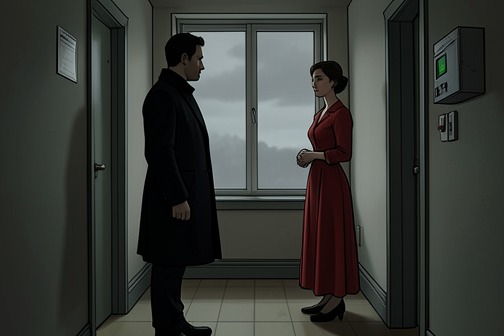
[Bret confronts Susan at Las Casuelas](entity:event-recall-event-bret-las-casuelas-susan-c33e7280abe5) after discovering that she is involved with Robert while keeping the relationship from Thom. The conversation shifts from accusation to mutual secrecy: Susan asks [Bret](entity:character-recall-character-bret-7b256fc8a433) not to expose her to Thom, and Bret agrees, even as he voices his fear that Robert could hurt her. The exchange binds the two friends to a secret neither can resolve in the moment.
## Background and Discovery
Susan and Thom’s relationship had a public history at [Buckley](entity:organization-recall-organization-buckley-306f3c15107a), where both had attended since seventh grade. Thom’s return from a summer in New York in 1979 marked a change in how other students saw him: his former cuteness gave way to a more mature and sexualized image. Ryan, who knew Thom’s status and character, later described him as a wealthy, sheltered boy who did not understand much about the world. Those details frame the tension Bret encounters: Susan’s concealed relationship is not an isolated private matter but a breach within a close school community where friendships and romantic ties overlap.
Bret’s confrontation begins when a voice asks what he is doing there. Susan stands still, trying to compose herself, and asks how Bret found out. Her question confirms that he has uncovered something she had hoped to keep hidden. Bret names the situation plainly: what she is doing with Robert, and the fact that she has kept it from Thom. The scene does not establish every detail of how Bret learned about the relationship; its focus is the moment discovery makes concealment impossible between him and Susan.
## The Confrontation
Susan’s first response is defensive and distressed. She asks Bret whether he wants to ruin everything, then moves from that accusation to a direct plea: he must not tell Thom. Her composure gives way to an appeal that Bret experiences as a change in her manner, from hard and numb to vulnerable. She says she is begging him to keep the information from Thom. The request turns the encounter from an inquiry into a test of loyalty.
Bret does not simply accept her account or treat the affair as harmless. He tells Susan that he thinks Robert is dangerous and may hurt her. This warning places a second concern beside the immediate risk of betraying Thom: Bret believes Susan may herself be in danger. Susan, however, does not respond by agreeing to end the relationship or by disclosing what she knows about Robert. Instead, she tells Bret that she loves him and asks whether he loves her too. Her declaration deepens the personal stakes of the secret, making clear that their friendship is part of what she is trying to preserve.
## The Promise and Its Limits
Bret closes his eyes, shakes his head, and agrees not to tell Thom. His promise answers Susan’s plea, but it does not settle his concern about Robert. Before the conversation ends, Bret asks Susan not to tell Robert that she encountered or spoke with him. The exchange therefore produces reciprocal concealment: Bret will withhold the secret from Thom, while Susan is asked to withhold the meeting from Robert.
Bret echoes Susan’s assurance that her secret is safe with him. The repeated language gives the scene its compact resolution, but not a clean one. The promise preserves Susan’s confidence and prevents an immediate disclosure to Thom; at the same time, it leaves the suspected danger unaddressed and ties Bret more tightly to the situation he fears. His warning and his pledge coexist without reconciling.
## Consequences and Narrative Significance
The encounter makes Bret an active keeper of Susan’s secret rather than a bystander to her relationship with Robert. His concern for her does not overcome his promise, and the promise does not erase his suspicion. The scene’s decisive shift is from discovery to complicity: once Bret agrees to silence, the secret becomes something shared between the friends, with Robert’s possible threat still unresolved.
That tension echoes the novel’s wider pattern of concealed relationships and performed normality. At Buckley, uniforms and a small student body could mute visible differences without preventing students from fixating on particular people or forming hidden attachments. Here, the same close social world gives a secret immediate consequences: revealing it could damage Susan’s relationship with Thom, while keeping it carries Bret’s fear that Susan is placing herself at risk. The conversation ends not with certainty but with a carefully negotiated silence.
Event 30
Nighttime intrusion at the Toledo Avenue house
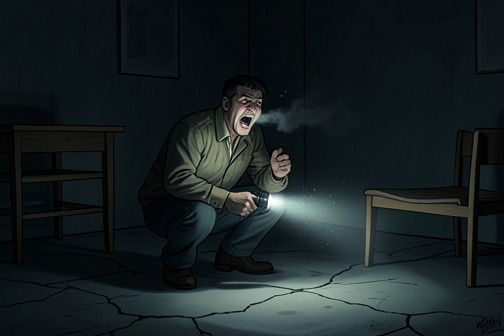
The nighttime intrusion at the Toledo Avenue house turns a weekend [Bret](entity:character-recall-character-bret-7b256fc8a433) remembers as a rare interval of uncomplicated desire into an episode of fear and flight. Alone in the dark after the house’s lights and telephone stop working, he watches an unknown person search the rooms with a flashlight. When he calls out [Robert Mallory](entity:character-recall-character-robert-mallory-ae01c493887e)’s name, the light disappears; Bret escapes [Palm Springs](entity:location-recall-location-palm-springs-b902d708edd3) before dawn, with no confirmation of who entered or why.
## Background and Setting
Bret later remembers his September weekend with Ryan Vaughn as the last one untainted by the past. He describes its basis as desire and the hope attached to it, and recalls that the two spent most of their time at the empty house on Mulholland together. That recollection places the weekend within a secret relationship shaped by concealment: Ryan had previously said that their arrangement required subterfuge, and both young men imagined leaving [Buckley](entity:organization-recall-organization-buckley-306f3c15107a) and [Los Angeles](entity:location-recall-location-los-angeles-11eff639bdf5) to begin again elsewhere.
The intrusion takes place in a different house, on Toledo Avenue in Palm Springs. Bret is asleep there when a crash outside wakes him. He initially considers whether the wind has knocked one of the large, empty terra-cotta pots onto the patio. The Santa Ana winds are strong, but the first explanation does not account for what he finds next: the house is dark, the telephone line is dead, and the streetlights and other entrances outside remain lit.
## The Search Through the House
Bret checks the light switches, but none works. At about three-thirty, the house is almost completely dark; faint light from outside and the moon lets him make out the pool and the backyard. He starts back toward the bedroom, thinking he can return to sleep, when a beam begins crossing the living room.
The unseen person appears to be outside near the pool. The flashlight moves over the living room’s furniture, coffee table, rug, and bookshelves, then enters the bedroom and falls on the empty bed. It moves back and forth as if searching, pauses on Bret’s Gucci backpack, and continues around the yard and house. Bret briefly wonders whether the person could be a security guard, but doubts it: the intruder has not rung the doorbell and is moving through the backyard.
When the beam jerks toward where Bret is standing, he drops to the floor. From there, he tries to follow its progress as it crosses the room and lingers in corners. The search changes the meaning of the ordinary signs of occupancy. Bret sees that a car is in the driveway and the bed is unmade; he concludes that the intruder chose this particular house because someone was inside. Though he had noticed other possible break-ins and robberies in the area, he understands this as a search for a person, not simply for property.
## The Name Bret Calls Out
The beam returns to the bedroom and traces the headboard and wall above the bed. Then Bret hears slow, even tapping: the intruder is striking the flashlight against the glass sliding door. Bret understands the action as a warning or provocation, as though the person is waiting for him to reveal himself or move toward the keys.
Terrified, Bret shouts Robert’s name twice. The name connects the intrusion to his apprehensions about Robert, but Bret is explicit that he is not sure he actually believed Robert was outside; it is the name panic supplies in the moment. There is no confirmation that Robert is involved. At the first shout, the flashlight clicks off, and the person does not reappear.
## Escape and Significance
Bret remains unable to move for what feels like an hour, listening to the wind and trying to calm himself. When he checks his watch, only seven minutes have passed since he woke. The sharp difference between the ordeal’s felt duration and its measured time concentrates the scene’s disorientation: a brief search has made the house, its doors, and its familiar objects feel unsafe.
Bret takes his backpack and car keys and drives out of Palm Springs, wearing only a T-shirt and underwear. He reaches Los Angeles at dawn. The intruder’s identity and purpose remain unresolved, so the escape is the event’s only definite outcome. In the larger pattern of Bret’s growing suspicions, the call to Robert’s name marks a moment when fear attaches itself to a person without proof; the scene intensifies the uncertainty rather than resolving it.
Event 31
Matt Kellner’s last night at Crystal Cove
[Matt Kellner’s last night at Crystal Cove](entity:event-recall-event-matt-kellner-crystal-co-f2e4c3587888) is reconstructed through a recording that turns an unexplained death into evidence of deliberate abuse. As [Bret Ellis](entity:character-recall-character-bret-ellis-24db207b1483) listens to the Maxell cassette, the sounds of surf and wind give way to a disguised voice directing Matt to eat fish from his aquarium. The recording identifies [Crystal Cove](entity:location-recall-location-crystal-cove-c96e89d49b4e) as the setting, connects the aquarium’s disappearance to Matt’s ordeal, and makes the official account of his death increasingly difficult to accept.
## The Recording Emerges
The cassette arrives in [Bret](entity:character-recall-character-bret-7b256fc8a433)’s bedroom with his name misspelled as “brett,” in handwriting that is not [Debbie Schaffer](entity:character-recall-character-debbie-schaffer-23db255cf219)’s. At first he hopes it might have come from Ryan Vaughn, but the unexplained tape feels wrong. After leaving it untouched for a time, he returns to the room, puts it in his stereo, and then moves it to a Walkman when the recorded sounds are difficult to distinguish from the wind outside.
For the first three minutes, the tape holds only distant waves, gusting wind, and the muted crackle of a fire. A voice follows, at first indistinct, then clear enough for Bret to hear the command “Eat it … eat it …” The recording’s delayed revelation makes the ordinary cassette a vehicle for a scene Bret cannot witness directly but is compelled to hear through to its end.
## Coercion on the Beach
The voice issuing the commands sounds deliberately theatrical, like a Halloween monster. Matt answers in tears, asks for the mask to be removed, and says that he is afraid and cold. The exchange does not sound to Bret like a performance: the fear in Matt’s voice convinces him that the recording is genuine. The episode’s central shift is from uncertainty about a strange tape to the recognition that it preserves an actual encounter.
As the recording continues, Bret realizes Matt is being made to eat the fish that had disappeared from his aquarium. The coercion lasts for about twenty minutes. Matt becomes increasingly disoriented, and the voice keeps repeating its demand even as he pleads and weeps. The tape later plays [“Year of the Cat”](entity:expression-recall-expression-year-of-the-cat-fe567772ba2e); the disguised speaker asks Matt degrading questions, while Matt tries to sing and cannot manage the lyrics coherently. Bret hears the recording as both evidence and an assault preserved in sound: the commands, music, and Matt’s helpless responses expose a staged encounter whose apparent playfulness has become violence.
The background sounds place the scene on a beach beside a fire, and Bret identifies it as Crystal Cove. He hears impacts against Matt while the song continues and connects them to the bruises shown in photographs of Matt’s body. Matt’s mention of lights becomes another detail in the recording, but the tape ends abruptly before the scene is explained or resolved. Bret is left sickened by what he has heard.
## From Recording to Death Evidence
Bret’s later encounter with the Kellners’ account of Matt’s death makes the cassette harder to dismiss. Matt’s parents had assumed that his routine continued: he usually swam before school, drove his red Datsun to [Buckley](entity:organization-recall-organization-buckley-306f3c15107a), and often returned to the pool house by late afternoon. He had also made a habit of leaving notes when he went away for a weekend. When the car was found missing and Matt had not been seen for several days, that absence of a note became a significant break in his pattern. His father last saw him the previous Thursday; Matt was back at school on Friday and was seen leaving alone at about 3:15 p.m. No one could establish exactly when he left afterward.
[Ronald Kellner](entity:character-recall-character-ronald-kellner-f2c83421c463) showed Bret crime-scene photographs of Matt’s body, which bore bruises as well as a deep cut to the left arm and a serious wound to the forehead. The photographs and the recording offer separate forms of evidence: the images document injuries, while the tape preserves an encounter that helps explain them. Ronald said there had been blood across the front seat and dashboard of the Datsun, where authorities believed Matt had cut himself. The official account treated the death as a suicide attempt during a psychotic episode: investigators presumed drug use, concluded that Matt had taken a large amount of LSD and Quaaludes, and said he fell into the pool and drowned. Ronald related that marijuana was not found in the autopsy, though drug paraphernalia in Matt’s backpack informed the theory.
The aquarium complicated that explanation. The autopsy report stated that Matt’s stomach contained mostly undigested material from its contents, which the official account attributed to his supposed psychotic break. Bret knew the aquarium had been empty for weeks and remembered that Matt had not known what had happened to its fish. The recording supplies a possible link: it captures Matt being ordered to eat fish, and Bret recognizes the ordeal as connected to the vanished aquarium animals. Yet the tape does not by itself settle every question about the death or prove the identity of the disguised voice.
The crime-scene photographs also showed Alex, Matt’s cat, killed and displayed at the pool house. Bret found the arrangement impossible to reconcile with the official story of Matt’s actions and accidental drowning, particularly given Matt’s usual incapacity even when only lightly stoned. The cat’s treatment echoed a pattern already associated with the Trawler: animals disappeared before attacks, and their remains were later used in acts of sacrifice or display. In a separate later discovery, [Spirit](entity:character-recall-character-spirit-06d78331de5f), Debbie Schaffer’s horse, was found mutilated in a similarly staged tableau, recalling the treatment of Alex. The recurrence extends the animal violence beyond Matt’s death, while the recording narrows the distance between a reported pattern and Matt’s final night.
## Bret’s Decision to Keep the Tape
After listening, Bret considered burning the cassette before he considered taking it to the police. He drove to Haskell Avenue intending to leave it in Ronald and [Sheila Kellner](entity:character-recall-character-sheila-kellner-a38b9d54cbd6)’s mailbox, but changed his mind before doing so. He could not explain his reluctance to share it; he only felt that the evidence was tainted and kept it with him. Instead, he contacted [Jeff Taylor](entity:character-recall-character-jeff-taylor-3284df352d5c) to obtain drugs, then returned to the empty house on Mulholland Drive and used them to erase his thoughts and sleep.
Bret became convinced that [Robert Mallory](entity:character-recall-character-robert-mallory-ae01c493887e) had made the recording and that what began as a game between Robert and Matt had escalated beyond control. That conclusion was Bret’s interpretation, not something the tape directly established: the speaker remains disguised, and the recording does not identify its maker. Bret’s certainty nonetheless connects Matt’s ordeal to his suspicions about Robert, whose instability and earlier institutionalization form part of Bret’s understanding of the events. The cassette thus reveals the cruelty inflicted on Matt while preserving a gap at the center of the evidence: what can be heard is unmistakable to Bret, but who recorded it and precisely how Matt died remain entangled with conjecture and the official account.
## Bret’s Decision to Keep the Tape
After listening, Bret considered burning the cassette before he considered taking it to the police. He drove to Haskell Avenue intending to leave it in Ronald and Sheila Kellner’s mailbox, but changed his mind before doing so. He could not explain his reluctance to share it; he only felt that the evidence was tainted and kept it with him. Instead, he contacted Jeff Taylor to obtain drugs, then returned to the empty house on Mulholland Drive and used them to erase his thoughts and sleep.
Bret became convinced that Robert Mallory had made the recording and that what began as a game between Robert and Matt had escalated beyond control. That conclusion was Bret’s interpretation, not something the tape directly established: the speaker remains disguised, and the recording does not identify its maker. Bret’s certainty nonetheless connects Matt’s ordeal to his suspicions about Robert, whose instability and earlier institutionalization form part of Bret’s understanding of the events. The cassette thus reveals the cruelty inflicted on Matt while preserving a gap at the center of the evidence: what can be heard is unmistakable to Bret, but who recorded it and precisely how Matt died remain entangled with conjecture and the official account.
## Bret’s Decision to Keep the Tape
After listening, Bret considered burning the cassette before he considered taking it to the police. He drove to Haskell Avenue intending to leave it in Ronald and Sheila Kellner’s mailbox, but changed his mind before doing so. He could not explain his reluctance to share it; he only felt that the evidence was tainted and kept it with him. Instead, he contacted Jeff Taylor to obtain drugs, then returned to the empty house on Mulholland Drive and used them to erase his thoughts and sleep.
Bret became convinced that Robert Mallory had made the recording and that what began as a game between Robert and Matt had escalated beyond control. That conclusion was Bret’s interpretation, not something the tape directly established: the speaker remains disguised, and the recording does not identify its maker. Bret’s certainty connects Matt’s ordeal to his suspicions about Robert, whom he understood to be unstable and previously institutionalized. The cassette reveals the cruelty inflicted on Matt while preserving a gap at the center of the evidence: what Bret hears is unmistakable to him, but the recording neither identifies its maker nor settles precisely how Matt died.
Event 32
Bret confronts Robert at Hamburger Hamlet
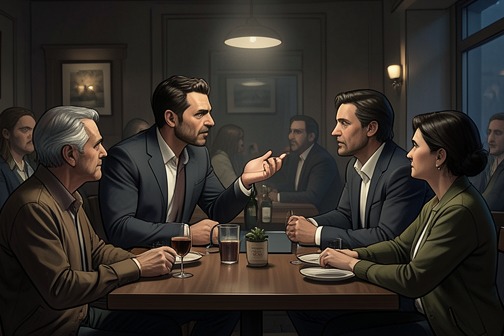
[Bret confronts Robert at Hamburger Hamlet](entity:event-recall-event-bret-hamburger-hamlet-r-f8866059b858) during a dinner with Ryan Vaughn, turning a social meeting into an interrogation about [Matt Kellner](entity:character-recall-character-matt-kellner-7d4c7c775d94)’s death and the missing girls. The scene brings [Bret](entity:character-recall-character-bret-7b256fc8a433)’s private suspicions into direct conflict with Ryan’s wish for an ordinary evening and Robert’s denials. Although Bret laughs off the confrontation and the meal resumes, the central questions remain unanswered; the next day, Robert’s aunt Abigail contacts Bret, saying there is something he needs to know about Robert.
## The Dinner Turns into a Test
The confrontation begins on the walk to Hamburger Hamlet. Ryan asks whether Bret minds if Robert joins them, and Bret stops, surprised that Robert is already part of the plan. Ryan asks if Bret has a problem with Robert. Bret says Robert is crazy and warns Ryan against spending time with him. Ryan challenges the claim, asking how Robert is crazy, and then questions why Bret would care whether they were associating.
Bret presses Ryan about whether he is seeing Robert, treating Ryan’s denial and impatience as evasions. The disagreement is not merely about Robert: Bret is trying to make Ryan accept a theory that Ryan does not share, while Ryan sees Bret as manufacturing drama and says he only wants to have a good time. The two friends’ different readings of the situation make the dinner tense before Robert’s role in it has even been fully discussed.
## Bret’s Accusations and Robert’s Denials
Bret tells Ryan that Robert had something to do with Matt’s death and was with Matt when he died. He also connects Robert to the missing girls and to the Trawler, telling Ryan that a tape contains Robert’s voice. Ryan recoils and asks what Bret is talking about, then walks toward the restaurant entrance as Bret’s agitation becomes apparent. The accusation puts the evidence Bret believes he possesses into words, but it does not persuade Ryan; it risks breaking their friendship instead.
At the table, Bret tests Robert’s account of his relationship with Matt. Robert says he tried to get to know Matt and that they sometimes ate lunch together and talked at school. Bret asks whether Robert ever visited Matt’s house on Haskell Avenue; Robert says he did not. When Bret asks whether Robert saw Matt during the week he disappeared or had any contact with him, Robert says they had not spoken and Matt had not contacted him.
Bret then asks whether Robert and Matt drove to [Crystal Cove](entity:location-recall-location-crystal-cove-c96e89d49b4e) together or recorded tapes there. Robert says he has never been to Crystal Cove and asks what Bret means by tapes. Ryan warns Bret again, but Bret continues. Robert turns the subject toward Bret’s relationship with Matt, saying that whatever happened between them is none of his business and acknowledging that it must have been hard for Bret. His careful response does not settle the accusations; instead, it underscores that Robert knows the relationship was intimate while withholding any admission of involvement in Matt’s death.
## A Joke Covers the Unresolved Questions
After a silence, Bret starts laughing and presents the exchange as a joke. He reaches across the table to Robert’s wrist, apologizes for fooling around, and asks if Robert is all right. Ryan follows Bret’s cue, and Robert smiles uneasily. Dinner arrives, and the three resume a relaxed social performance. The shift restores enough ease for the meal to continue, but it is a tactical retreat rather than a resolution.
Bret later acknowledges that only part of the tension had broken. He has not told Robert that he knows Robert lied about being in [Palm Springs](entity:location-recall-location-palm-springs-b902d708edd3) with [Susan Reynolds](entity:character-recall-character-susan-reynolds-b299ccba7f71), or that he followed Robert to an abandoned house on Benedict Canyon. Nor has he disclosed that he possesses a recording of Matt’s final night, on which the taunting voice is Robert’s. The joke allows Bret to keep those suspicions concealed while Robert’s answers about Matt remain unverified.
## Abigail’s Call and the Scene’s Consequence
The following Wednesday morning, Bret learns that a message has been left for him on his mother’s answering machine. The caller is [Abigail Mallory](entity:character-recall-character-abigail-mallory-efa7797b6926), Robert’s aunt. She knows Bret had dinner with Robert and Ryan the previous night and says Robert told her some of what Bret said. Asking to meet privately, she insists she does not want Robert to know she called and says there is something about him that needs clarification. Bret calls her back, and they arrange to meet at [La Scala Boutique](entity:location-recall-location-la-scala-boutique-324dda5e4328) that afternoon.
The confrontation therefore changes the course of Bret’s investigation without providing a confession or proof. Robert’s denials, Ryan’s resistance, and Bret’s concealed recording preserve the uncertainty around Matt’s death, while Abigail’s intervention opens a new source of information. In the scene, the apparently restored dinner is only a temporary cover: the secrets survive the joke and move into the next encounter.
## Narrative Frame and Dramatic Function
The event is presented as a remembered scene in Bret’s first-person account, but it remains a chronological episode within the [1981](entity:time-recall-time-1981-16063b32b4e5) story. Its dramatic movement runs from Ryan’s unexpected invitation to Bret’s accusation, Robert’s denials, and Bret’s retreat into humor. Each shift changes what the others know: Ryan hears Bret’s theory, Robert faces questions about Matt, and Bret conceals how much evidence and surveillance he already has.
The scene also distinguishes public performance from private belief. The three men can return to an easy dinner, but the surface normality does not make the unresolved claims disappear. Bret’s later account makes the gap explicit by listing what he kept to himself, and Abigail’s call confirms that the conversation has reached beyond the table. The confrontation’s decisive outcome is not an answer about Robert, but a new, secret channel through which Bret may learn more.
Event 33
Robert Mallory’s institutionalization in Jacksonville
[Robert Mallory’s institutionalization in Jacksonville](entity:event-recall-event-robert-mallory-jacksonv-28ba2d502832), from January until May, is a disputed episode reconstructed through others’ accounts rather than a complete record. The disclosure begins with the euphemism [“developmental center”](entity:expression-recall-expression-developmental-cent-4296417f5c13) and gradually yields a family history of bereavement, conflict, substance use, an overdose, and an accusation involving his stepsister. Its significance lies not only in why Robert was sent away, but in how the uncertainty around his treatment later becomes entangled with [Bret Ellis](entity:character-recall-character-bret-ellis-24db207b1483)’s accusations and the wider struggle over who can be believed.
## Disclosure and duration
[Susan Reynolds](entity:character-recall-character-susan-reynolds-b299ccba7f71) first tells [Bret](entity:character-recall-character-bret-7b256fc8a433) that Robert spent the previous spring being treated at what [Dr. Croft](entity:character-recall-character-dr-croft-22b935baf720) called a “developmental center,” for depression and other issues. Bret translates that phrase into “mental institution” and then “asylum,” pressing the group to acknowledge what he believes the euphemism conceals. Susan resists his wording, calling it dramatic and describing Bret as someone who embellishes. The exchange establishes two competing frames before the circumstances are known: clinical language that limits what can be inferred, and Bret’s more emphatic label, which risks turning an incomplete disclosure into a verdict.
Later, [Abigail Mallory](entity:character-recall-character-abigail-mallory-efa7797b6926) gives Bret a fuller but still qualified account. Robert’s father, [William](entity:character-recall-character-william-e8cff1bb251f), put him in the facility; Abigail says Robert had been there only once and specifies that the stay lasted about four and a half months, from January to May. She speaks from what she heard, not from direct observation, repeatedly marking the limits of her knowledge. The narrative therefore supplies a duration and a reported cause for the placement without presenting an authoritative account of Robert’s treatment or a settled explanation for every event that preceded it.
## Family conflict and the reported precipitating events
Abigail links Robert’s difficulties to the death of his mother, which she believes hit him exceptionally hard and intensified problems that may already have been present. She also describes escalating trouble between Robert and his father and stepmother, Diane. Robert had returned to Roycemore in January, was reportedly not doing well, and, according to what Abigail heard, had used peyote and LSD—something Robert admitted to. The family had been unable to find a boarding school he would agree to, and tensions continued to rise.
The account’s most consequential allegation concerns [Ashley](entity:character-recall-character-ashley-224b76ee9d90), Robert’s stepsister. Abigail reports that Ashley said something had happened between them and suspects, based on things [Carol](entity:character-recall-character-carol-b3a9cb930038) had mentioned, that Ashley may have had a crush on Robert. She believes Ashley accused him of sexual misconduct that he denied. Abigail relays a specific claim: Ashley developed a rash and blamed Robert, and there was an insinuation that he had instructed her to shave. The account remains explicitly hearsay, and Abigail does not claim to know exactly what happened. Robert disputed the accusation; the novel supplies no independent confirmation that it was true.
Abigail says Robert then overdosed. She does not think it was a serious attempt, suggesting instead that it may have been a way to make William feel guilty for believing Ashley; this, too, is her interpretation, not an established motive. William reportedly said the placement was intended both to get Robert clean and to provide a complete psychiatric evaluation. The sequence, as Abigail recounts it, moved quickly: after Robert returned to [Chicago](entity:location-recall-location-73935e623d95), he was placed in Jacksonville a week later.
## Release, relocation, and contested interpretations
By the time Robert was discharged in May, the decision had been made that he should move west and live with Abigail. She urges Bret to understand that her nephew has been through a great deal and, in her view, has been treated unfairly. Her defense does not resolve the allegations; it places them beside Robert’s bereavement, family conflict, substance use, and institutional treatment, while emphasizing that the information available to her is partial.
Bret rejects Abigail’s appeal by invoking [Matt Kellner](entity:character-recall-character-matt-kellner-7d4c7c775d94)’s disappearance and a recording he believes was made on the night Matt died. He says Robert knew where Matt was and that the other voice on the tape was probably Robert’s, then accuses him of helping kill Matt. The juxtaposition is crucial: the Jacksonville history explains why Robert had been absent from his former life and why his family regarded him as vulnerable, but it does not establish his role in Matt’s death. Later, Dr. Croft questions Bret about whether Robert had done something to him and asks whether Bret and Matt might have had active imaginations. Bret calls Robert a liar; Croft counters that [Ronald Kellner](entity:character-recall-character-ronald-kellner-f2c83421c463) did not believe Robert was involved in Matt’s death. The competing claims remain unresolved at this point.
## The episode’s narrative role
The institutionalization is conveyed retrospectively through shifting terms and secondhand testimony. Susan’s initial disclosure names treatment but withholds its causes; Abigail adds a chronology and family allegations while repeatedly qualifying what she knows. This layered account makes uncertainty part of the event’s meaning. Robert is labeled and interpreted by family members, Bret, and Dr. Croft, but the treatment itself cannot serve as proof of the accusations later attached to him.
That distinction becomes decisive after the Trawler’s letters reveal a prolonged campaign of stalking and manipulation around Robert. Abigail publicly disputes Bret’s forceful account of his confrontation with Robert, while Bret’s version initially becomes a central explanation for what happened. When the Trawler abducts [Leslie Slavin](entity:character-recall-character-leslie-slavin-6d526e25984b) and claims responsibility for [Audrey Barbour](entity:character-recall-character-audrey-barbour-96d09b8a3fa9)’s death, Robert is recognized as a victim of the Trawler’s fixation rather than the killer Bret had insisted he was. Bret’s resulting isolation shows the consequences of converting uncertain accounts into certainty. The Jacksonville episode thus foreshadows a larger conflict in the novel: the difference between being treated as dangerous, being accused of violence, and being shown to have committed it.
Event 34
Katherine Latchford’s disappearance and murder
[Katherine Latchford’s disappearance and murder](entity:event-recall-event-katherine-latchford-a73c2f4352df) are the first known killing in the Trawler’s sequence and a turning point in the novel’s reconstruction of [Robert Mallory](entity:character-recall-character-robert-mallory-ae01c493887e)’s past. Robert had dated Katherine shortly before she vanished, but [Abigail Mallory](entity:character-recall-character-abigail-mallory-efa7797b6926) says the relationship was casual and that Robert denied knowing anything about her disappearance. The distinction matters: the evidence links him to Katherine and to the period of her disappearance, while also revealing that someone else was responsible for the threatening calls, disturbances in Katherine’s bedroom, and the poster she suspected Robert of leaving.
## The Disappearance and Robert’s Connection
In a later conversation with Abigail, [Bret Ellis](entity:character-recall-character-bret-ellis-24db207b1483) learns that Robert was at a [Westwood](entity:location-recall-location-westwood-538fe26718d7) theater on a Saturday in May with Katherine, whose nickname was Kathy. [Bret](entity:character-recall-character-bret-7b256fc8a433) had previously seen Robert there; Abigail’s confirmation establishes that his recollection was accurate and explains why Robert had denied being at the theater. Robert and Katherine had gone to movies and a concert, but Abigail describes their involvement as casual: Katherine was seeing other people, and Robert expected to return to [Chicago](entity:location-recall-location-73935e623d95) in September.
Katherine disappeared in [1980](entity:time-recall-time-1980-87083d7775fd), during the period when Robert was staying in [Los Angeles](entity:location-recall-location-los-angeles-11eff639bdf5) with Abigail. Abigail says the disappearance preceded a change in Robert’s behavior: he began vanishing for days, sometimes as long as a week, and claimed that someone had started following him. In retrospect, she identifies Katherine’s disappearance as the point after which his paranoia began. Bret later connects the timing of the Trawler’s early home invasions and assaults to Robert’s periods in Los Angeles, but that chronology is his suspicion rather than proof that Robert committed the crimes.
## Harassment and the False Suspect
Before Katherine vanished, she reportedly told Robert about a series of unsettling incidents. Someone called her and hung up; someone seemed to have entered her bedroom and rearranged a shelf of books and searched a drawer containing her clothes. She also noticed that several pairs of underwear were missing. Katherine suspected that Robert had left her a poster as a gift, a detail that later drew police interest, but Abigail explicitly says Robert had left no poster: someone else had.
That correction complicates the apparent connection between Robert and Katherine’s case. Robert had been seeing her, and he withheld that association after she disappeared, but the threatening calls and intrusion described by Abigail point toward another person’s attention to Katherine. Bret recognizes the poster as a Madness poster for One Step Beyond. The account does not identify the person who left it, but Abigail’s statement separates that act from Robert and makes the poster part of the Trawler’s developing pattern rather than evidence of Robert’s courtship.
## Robert’s Silence and the Trawler’s First Victim
After Katherine went missing, Robert told Abigail that someone was following him. He also reported silent calls to his private telephone line and a sense of being watched in public. According to Abigail, the feeling continued through the summer in Los Angeles, while Katherine was missing and before her body was found. Robert sometimes joked about it, but Abigail understood that he was distressed. He later said the following stopped when he returned to Chicago, only to begin again when he came back to Los Angeles for the holidays; anonymous letters and renewed calls preceded another breakdown.
Robert did not come forward to discuss his relationship with Katherine or volunteer information to investigators. Abigail says he maintained that he knew nothing, and that she and Robert’s father agreed he should stay out of the inquiry because of his recent problems. She says she believed him. Bret, by contrast, understands Robert’s silence as an effort to prevent others from connecting him to Katherine after she disappeared. The account leaves both the reader and Bret with a consequential gap: Robert’s association with the victim is established, but the evidence presented here does not establish that he knew who killed her or that he took part in the crime.
## Discovery, Records, and Narrative Significance
Abigail confirms that Katherine was the first victim associated with the Trawler. Her body was found in August, after the period in which she had been missing. In later recounting the case, Bret identifies her as the first girl killed and places her disappearance within the broader series of home invasions, assaults, and disappearances. That larger chronology makes Katherine’s case an origin point for the novel’s investigation, while preserving the difference between a documented relationship and Bret’s increasingly elaborate suspicions about Robert.
The case returns not only through recollection but through objects that preserve different versions of it. While searching an abandoned house associated with Robert, Bret finds newspaper clippings about Katherine in a notebook: reports on her disappearance, social and academic life, the weeks she was missing, interviews with those who knew her, the calls and bedroom disturbances, the discovery of her body, and subsequent coverage of the murder. A November 1980 issue of Los Angeles Magazine also contains an article about the case. The notebook holds no comparable clippings about the other girls Bret names, including [Sarah Johnson](entity:character-recall-character-sarah-johnson-fa8b9bb9dd9c), [Julie Selwyn](entity:character-recall-character-julie-selwyn-e58c56f476b8), and [Audrey Barbour](entity:character-recall-character-audrey-barbour-96d09b8a3fa9). Its concentration on Katherine records Robert’s attention to the case, but by itself does not explain why he collected the material or what he believed it proved.
The case is therefore reconstructed through delayed and partial disclosures: Abigail’s account corrects Bret’s memory of the theater and separates Robert from the poster, while the clippings establish how the disappearance and murder were reported over time. Katherine’s story exposes the danger of treating proximity as guilt. Robert concealed a real connection to her, and his silence helped sustain suspicion; yet the evidence Abigail supplies also indicates that the person harassing Katherine was someone else. The novel keeps that tension alive, using the first victim’s case to set the terms of an investigation in which records, recollection, and inference do not yield a complete answer.
Event 35
Bret meets Abigail Mallory at La Scala
[Bret meets Abigail Mallory at La Scala](entity:event-recall-event-bret-abigail-mallory-la-50d69eab3b19) | [La Scala Boutique](entity:location-recall-location-la-scala-boutique-324dda5e4328) becomes the setting for a private, increasingly acrimonious confrontation between [Bret](entity:character-recall-character-bret-7b256fc8a433) and [Abigail Mallory](entity:character-recall-character-abigail-mallory-efa7797b6926). She confirms that Robert had dated [Katherine Latchford](entity:character-recall-character-katherine-latchford-b303abca40f3), the first girl associated with the Trawler, while Bret sets out a wider timeline connecting Robert to multiple disappearances and to [Matt Kellner](entity:character-recall-character-matt-kellner-7d4c7c775d94)’s death. Abigail offers a different account of Robert’s history: he had reported being followed and watched, and his family had arranged a psychiatric evaluation after a crisis in [Chicago](entity:location-recall-location-73935e623d95). The meeting supplies crucial facts but no verdict; it leaves Bret’s suspicions and Abigail’s defense in direct conflict.
## The Request for a Meeting
On a Wednesday morning, Bret learns from Rosa that a woman has left a message on his mother’s answering machine. The caller identifies herself as Abby Mallory, Robert’s aunt, and refers to a recent conversation with Bret about Robert’s whereabouts. Robert has already left for school, she explains, and has told her things Bret said the previous night. Abigail wants to speak in person, does not want Robert to know she called, and says there is something about him that Bret needs to understand. She proposes meeting that afternoon after school, around five, at a place in [Beverly Hills](entity:location-recall-location-beverly-hills-402f2fd74857).
Bret phones her back, and she asks him to meet at La Scala Boutique. He drives there in the 450SL still wearing his school uniform. Abigail is waiting alone in a booth near the kitchen, dressed in a cream blouse and black blazer, with sunglasses and a glass of white wine. She has just come from an appointment with her attorney and explains that she is in the midst of a difficult divorce. The setting is ordinary and public, but the secrecy of the call and her insistence that Robert not be told make the meeting feel like a disclosure held apart from his account.
## Abigail’s Account of Robert
Abigail confirms Bret’s recollection of Robert at a theater in [Westwood](entity:location-recall-location-westwood-538fe26718d7) on a Saturday in May: Robert was there with a girl. She names her as Kathy Latchford, whom Bret recognizes as Katherine Latchford, the first Trawler victim. The confirmation gives Bret a specific link between Robert and Katherine, but it does not establish that Robert had anything to do with her disappearance or death.
Abigail recounts that Katherine had described unexplained intrusions into her privacy: someone called and hung up, her books had been rearranged, and clothing had gone missing from a drawer. Katherine believed Robert had left her a poster that later drew police interest, but Abigail says he had not. Bret identifies the poster as one by Madness for the album *One Step Beyond*. Abigail’s account therefore separates the suspicious gift from Robert while preserving the broader pattern of harassment that Katherine had experienced.
She also describes the sequence of Robert’s reported fears. After Katherine disappeared, Robert initially assumed she was hiding out. When it became clear she was missing, he said that someone had started following him. Abigail says he received silent calls on his private line and felt watched in public throughout the summer in [Los Angeles](entity:location-recall-location-los-angeles-11eff639bdf5), while Katherine was missing and before her body was found in August. Robert sometimes joked about the attention, but Abigail believed it was affecting him. She says he continued to feel followed later: the sense stopped while he was in Chicago, returned when he came back to Los Angeles in December, and was accompanied by anonymous letters he never showed her and renewed calls around Christmas. In her account, the pressure culminated in Robert’s breakdown.
## Bret’s Timeline and Accusations
Bret asks whether Abigail believes Robert had nothing to do with Katherine’s disappearance and death. She objects that this kind of suspicion is precisely why Robert did not go to the police. She says he was panicked after returning to school in September because someone from [Buckley](entity:organization-recall-organization-buckley-306f3c15107a) had seen him at the movie with Katherine. Robert did not remember seeing Bret there, Abigail adds, and had been looking for Katherine after her mother dropped her off. Her defense does not erase the connection Bret is trying to establish; it disputes what that connection proves.
Bret insists that timing matters. He says Katherine disappeared while Robert was in Los Angeles and her body was found before he left. He also points to [Sarah Johnson](entity:character-recall-character-sarah-johnson-fa8b9bb9dd9c) and [Julie Selwyn](entity:character-recall-character-julie-selwyn-e58c56f476b8), whose disappearances he places during periods when Robert was present, and says Robert was not on the school field on the night [Audrey Barbour](entity:character-recall-character-audrey-barbour-96d09b8a3fa9) disappeared. He further alleges that Robert had stalked Audrey at the Promenade in [Woodland Hills](entity:location-recall-location-woodland-hills-c558c46e2779). Abigail responds that she does not know these other girls well and has not followed the cases as closely as Bret. She resists his effort to turn a sequence of associations into proof, while Bret sees the accumulating dates and locations as a coherent pattern.
The argument extends to Matt Kellner. Bret tells Abigail that Robert knew where Matt was during the week Matt disappeared and says he has a recording from the night Matt died on which he believes Robert’s voice can be heard. He alleges that Robert drugged Matt at the [Benedict Canyon house](entity:object-recall-object-db47df9df84c), took him to [Crystal Cove](entity:location-recall-location-crystal-cove-c96e89d49b4e), assaulted him, and brought him back. He also accuses Robert of killing Matt’s cat and fastening its head to a column. Abigail says Robert has already spoken to [Ronald Kellner](entity:character-recall-character-ronald-kellner-f2c83421c463). Her response does not settle Bret’s allegations, but it shows that the Kellner family has already been drawn into Robert’s account of events.
## Family History and Unresolved Doubt
Abigail adds a separate account of Robert’s earlier crisis in Chicago. She says Robert’s twelve-year-old stepsister, [Ashley](entity:character-recall-character-ashley-224b76ee9d90), developed a rash and blamed Robert, alleging that he had instructed her to shave and implying that he had behaved sexually toward her. Robert denied the accusation. Abigail says he then overdosed, perhaps not as a serious attempt but as a way to make his father, [William](entity:character-recall-character-william-e8cff1bb251f), feel guilty for believing Ashley. William arranged for Robert to be placed in a facility for treatment and a full psychiatric evaluation. Robert entered the facility in Jacksonville about a week after returning to Chicago; by the time he was released, the family had decided he should move to Los Angeles to live with Abigail. She urges Bret to consider what Robert had endured and calls it unfair and dangerous to assume the worst of him.
The meeting leaves neither side with a settled account. Abigail asks Bret to get to know Robert, arguing that familiarity would make the crimes Bret describes seem impossible. Bret, meanwhile, has already followed Robert to the house on Benedict Canyon and searched its grounds. When Abigail asks how he knew about the house, he lies that Robert must have mentioned it to a group at lunch. Abigail explains that she and her husband first lived there, that her estranged husband is now in Scottsdale, and that Robert keeps some belongings upstairs and has a key. Bret’s concealed knowledge reinforces the distance between what he tells Abigail and what he has been doing on his own.
La Scala brings together two incompatible readings of the same warning signs. For Abigail, the calls, surveillance fears, family accusations, overdose, and treatment show a young man damaged and unfairly suspected. For Bret, the theater sighting, the timing of the disappearances, the house on Benedict Canyon, and the recording involving Matt form a case against Robert. Abigail confirms a consequential connection to Katherine and supplies a history that complicates Bret’s theory, but she cannot account for every point in his timeline, and Bret does not accept her appeal to Robert’s vulnerability as an answer to the evidence he cites. The encounter narrows the mystery without resolving it.
Event 36
Trawler serial murders
[The Trawler](entity:character-recall-character-the-trawler-8d8a25ce6371) serial murders emerge not as a single solved case but as a pattern pieced together from scattered reports, missing animals, and deaths whose meaning remains contested. In [Bret Ellis](entity:character-recall-character-bret-ellis-24db207b1483)’s account, the investigation’s central tension is between clues that appear to converge and the uncertainty of what they actually prove: the murders connect to an earlier series of home invasions, while [Matt Kellner](entity:character-recall-character-matt-kellner-7d4c7c775d94)’s disappearance draws [Bret](entity:character-recall-character-bret-7b256fc8a433) into a chain of evidence that challenges the official explanation of Matt’s death without conclusively identifying the killer.
## Origins and Pattern
[The home invasions](entity:event-recall-event-f26e3e0e3fe1) began in May [1980](entity:time-recall-time-1980-87083d7775fd) in the hills above the [San Fernando Valley](entity:location-recall-location-san-fernando-valley-692f05c00b47). At first, the apparent randomness of the targets made the threat seem universal: the affected households included young and older couples, people living alone, families with children, and both boys and girls. The intruder’s early presence was sometimes reported indirectly, through a disturbance or a glimpse of someone outside, before reports of break-ins became more frequent. Witness descriptions varied, offering no stable identification.
The accounts of the intruder’s appearance were sharply inconsistent. Some witnesses described a tall, lean figure; others recalled someone heavier or built. A ski mask and dark clothing obscured his features, and reports of his eyes contradicted one another. The pattern made the person seem elusive, but the narrative also emphasizes the limits of the available testimony: descriptions could not establish who the intruder was.
One recurring clue involved pets. Animals belonging to a prospective victim or to other households in the same neighborhood disappeared before an invasion. The types of animals varied, and the pattern was not limited to one species or one household. In some cases, three animals in a neighborhood were ultimately sacrificed before an assault. The reason for this practice—and what was done with the animals’ remains—was not understood until late [1981](entity:time-recall-time-1981-16063b32b4e5), so early observers could register the disappearances without knowing their full significance.
During the summer of 1980, the reported invasions ranged across communities below Mulholland, including Studio City, [Sherman Oaks](entity:location-recall-location-sherman-oaks-1d36d906a807), and [Encino](entity:location-recall-location-encino-a8599cea4df0), with brief appearances in [Bel Air](entity:location-recall-location-bel-air-721eb29dd6fc) and Benedict Canyon. The activity later spread more sporadically to places including Pasadena, Glendale, and [Hollywood](entity:location-recall-location-hollywood-3ce8b1af5069), then stopped abruptly. In retrospect, Bret recognizes these incidents as part of a pattern, but stresses that the connections had not yet been made when the events were unfolding. The killer’s name and history were still unknown to those witnessing the early signs.
## Matt Kellner’s Disappearance
Matt’s disappearance made the older pattern newly alarming to Bret. Matt’s parents expected him to follow a familiar routine: he lived in the pool house, went to [Buckley](entity:organization-recall-organization-buckley-306f3c15107a), and drove his red Datsun. On some weekends he went to the beach alone and left a note saying where he had gone and when he expected to return. The absence of that usual message, together with the dark guesthouse and unused pool, became significant only after his family realized he had missed several days of school and could not be located.
The last confirmed sightings offered a partial timeline, not an explanation. Matt’s father had seen him the previous Thursday, when they discussed the Datsun’s faulty headlight. Matt was at school the following Friday and was seen leaving alone at about 3:15 p.m.; the housekeeper saw him return to Haskell Avenue that afternoon. His parents did not immediately treat his absence over the weekend as unusual, and the car’s separate garage was not checked until Wednesday, when the missing vehicle and lack of signs of activity in the pool house sharpened their concern. The family then cooperated with the [Los Angeles Police Department](entity:organization-recall-organization-c38071a69813).
Bret read the disappearance against the details already associated with the Trawler: anonymous silent calls, rearranged furniture, missing aquarium fish, and a missing cat. Those clues led him to fear that Matt had become another victim, even though Matt was male and the murders most visible in the news involved teenage girls. Bret also questioned whether the apparent pattern was reliable at all. Earlier invasions had affected both sexes, and he entertained the possibility that other male victims had gone unnoticed. At the same time, he considered less sinister explanations, including that Matt might simply have left town without telling anyone. The competing possibilities are important: suspicion grows, but it does not itself settle what happened.
## The Evidence and the Official Account
When Matt’s father showed Bret crime-scene photographs, they documented that Matt’s body had been found beside the pool and bore injuries. The images made Bret recognize the dead person as someone he had known intimately, intensifying the personal force of the evidence. Matt’s father asked whether the head wound could have resulted from a fall into the pool, but the photographs alone did not resolve how Matt had died or who was responsible.
The Datsun’s mileage contradicted the suggestion that Matt had driven to [Crystal Cove](entity:location-recall-location-crystal-cove-c96e89d49b4e). His father had recorded the mileage when the car went in for service and checked it again after it was returned to the garage. He concluded that it had not made a journey of 140 miles to and from Laguna Beach, and said that no one had driven it to Crystal Cove. He also pointed to blood on the front seat and dashboard, which authorities associated with a wound to Matt’s arm.
The official account, as relayed by Matt’s father, proposed that Matt had taken drugs, experienced a psychotic episode, injured himself, taken Quaaludes, and fallen into the pool, where he drowned. The reported autopsy found no marijuana levels, but the authorities’ account invoked drug paraphernalia in Matt’s backpack and a presumed large quantity of LSD. His father also told Bret that the contents of [Matt’s aquarium](entity:object-recall-object-matt-s-aquarium-110a3b3e8b02) were found mostly undigested in Matt’s stomach, an element that appeared difficult to reconcile with what Bret knew: the aquarium had been empty for weeks, and Matt had not known what had happened to the fish. The report supplies an official narrative, but the mileage, blood, and aquarium evidence leave Bret unable to accept it as a straightforward explanation.
A later recording deepens the discrepancy without resolving it. Bret played a cassette that began with recorded wind, waves, and the sound of a fire. After several minutes, a voice repeatedly instructed someone to eat, while another voice resisted and wept. Bret could not initially make out the words clearly; through headphones, he recognized the repeated instruction as “Eat it.” The recording links Matt’s final period to coercion and distress in Bret’s understanding, but the evidence presented here does not establish who made the tape, where it was recorded, or who was speaking.
## Bret’s Suspicions and Their Limits
Bret repeatedly argues that [Robert Mallory](entity:character-recall-character-robert-mallory-ae01c493887e)’s presence in [Los Angeles](entity:location-recall-location-los-angeles-11eff639bdf5) overlaps with the crimes. He tells [Abigail Mallory](entity:character-recall-character-abigail-mallory-efa7797b6926) that [Katherine Latchford](entity:character-recall-character-katherine-latchford-b303abca40f3) disappeared while Robert was in Los Angeles and that her body was found before he left. Abigail counters that Robert had been panicked after hearing that someone from Buckley had seen him at a film with Katherine; she says he did not remember seeing Bret and had been looking for Katherine after her mother dropped her off. She also objects to Bret treating the chronology as proof of Robert’s guilt.
Bret presents a broader timeline to [Dr. Croft](entity:character-recall-character-dr-croft-22b935baf720). He says Robert dated Katherine shortly before her disappearance in 1980, when Robert first arrived from [Chicago](entity:location-recall-location-73935e623d95) to stay with his aunt. Bret further claims that the home invasions and assaults began during that visit and stopped after Robert left, then resumed when he returned for the holidays. He connects Robert’s presence to the disappearances of [Sarah Johnson](entity:character-recall-character-sarah-johnson-fa8b9bb9dd9c) and [Julie Selwyn](entity:character-recall-character-julie-selwyn-e58c56f476b8), and raises [Audrey Barbour](entity:character-recall-character-audrey-barbour-96d09b8a3fa9) as another possible victim. Dr. Croft calls the inference a substantial leap. The sequence is therefore evidence of Bret’s case against Robert, not independent confirmation that Robert committed the murders.
The posters become another part of Bret’s interpretation. He tells [Debbie Schaffer](entity:character-recall-character-debbie-schaffer-23db255cf219) that the Trawler leaves posters and that there is a sequence, but she warns that a poster may simply be a poster and says his explanation is frightening her. This exchange captures the book’s recurring uncertainty: objects and coincidences acquire meaning inside Bret’s developing theory, while other people resist treating his interpretation as established fact.
## Consequences and Narrative Significance
The case’s effects reach beyond the murder investigation. At school, news that Debbie’s horse had been killed was accompanied by reports that Debbie herself was missing. Students were questioned one by one, while rumors about Debbie’s behavior, her father, and an accident at the Schaffer party circulated through the courtyard. The rumors did not establish what had happened to her; they show how fear and uncertainty spread through the community, turning partial information into competing stories.
The murders and the surrounding clues also shape the way Bret narrates the past. He begins by recognizing that warning signs existed before anyone understood them as a coherent design. Later, he tries to connect animal disappearances, home invasions, victims, locations, posters, and Robert’s movements into a single account. Yet the narrative repeatedly distinguishes observed facts from conjecture: a missing pet is a clue, a mileage reading constrains a possible journey, and an overlapping timeline raises suspicion, but none alone names the killer. The Trawler serial murders thus remain both a sequence of real violence and an unsettled story Bret struggles to assemble from incomplete evidence.
Event 37
Terry Schaffer is injured in a fall at the Stone Canyon party
[Terry Schaffer’s fall at the Stone Canyon party](entity:action-recall-action-terry-schaffer-s-fall-3e9d2b7260f6) is both a sudden medical emergency and an unresolved turning point in the narrator’s account. The fall leaves Terry gravely injured, but the people present cannot establish what happened on the landing. The narrator’s suspicion that [Robert Mallory](entity:character-recall-character-robert-mallory-ae01c493887e) may have been involved remains conjecture, while Terry’s reported loss of memory allows the incident to recede into an inconclusive explanation.
## Causes and Background
The party is taking place at the Schaffers’ Stone Canyon house. Before the fall, the narrator is in [Debbie Schaffer](entity:character-recall-character-debbie-schaffer-23db255cf219)’s bedroom with Debbie and [Susan Reynolds](entity:character-recall-character-susan-reynolds-b299ccba7f71) when anguished cries from elsewhere in the house interrupt their time together. Guests gather at the upper landing, and the group moves toward the railing to see what has happened below. The sudden change from a private room and music to a household emergency makes the fall the night’s defining event.
The narrator later places the incident alongside [Carol Mallory’s fatal fall](entity:action-recall-action-carol-mallory-s-fatal-788e2fc89745) from a landing in a [Chicago](entity:location-recall-location-73935e623d95) townhouse in spring [1980](entity:time-recall-time-1980-87083d7775fd). That parallel is not proof of a connection, but it gives the narrator a way to make sense of the accident and contributes to a suspicion that Robert may have caused Terry’s fall. The imagined link grows from the resemblance between the two falls and from information [Abigail Mallory](entity:character-recall-character-abigail-mallory-efa7797b6926) had given the narrator about [Carol](entity:character-recall-character-carol-b3a9cb930038)’s death; the narrator acknowledges that the theory is tenuous.
## The Fall and Emergency Response
From the second-floor landing, the narrator sees Terry lying on his back in the foyer. Guests and [Steven Reinhardt](entity:character-recall-character-steven-reinhardt-1d7688e88402) are around him, while the landing’s bright light exposes the seriousness of his condition. The narrator remembers Terry’s right leg at an unnatural angle and blood on the floor; Steven and two surfer valets try to help. Terry vomits and loses consciousness before the emergency response can take him away.
The gathering’s social machinery gives way to practical urgency. Steven makes emergency calls, and [Bel Air](entity:location-recall-location-bel-air-721eb29dd6fc) Security, the [Los Angeles Police Department](entity:organization-recall-organization-c38071a69813), and an ambulance from [UCLA Medical Center](entity:organization-recall-organization-ucla-medical-cen-ff45b216d831) arrive within minutes. Once an ambulance removes Terry, Steven drives [Liz Schaffer](entity:character-recall-character-liz-schaffer-e9b3e9332480) and Debbie to the medical center. With the hosts and much of the party gone, the house is left without clear direction: guests begin to leave, while the household staff clean the foyer.
The scene also rearranges the relationships visible to the narrator. Debbie is overwhelmed by what has happened to her father. Susan, initially stunned, later embraces Robert when he arrives and asks whether Terry is all right. The narrator watches their exchange, then looks away. Robert’s arrival and Susan’s response become part of the narrator’s memory of the aftermath, though neither establishes that Robert had anything to do with the fall.
## Suspicion and the Uncertain Account
The narrator’s account separates what was witnessed from what was imagined. The fall itself is seen as an accident in progress: Terry is found injured on the foyer floor, but no one is visible at the section of railing from which the narrator believes he fell. The narrator subsequently constructs a possible explanation in which Robert and Terry meet on the landing after Terry leaves Debbie’s bedroom, and in which an unwitnessed confrontation precedes the fall. The scene is explicitly presented as the narrator’s imagined reconstruction, not as a verified event.
The narrator also recognizes that the explanation may never be tested. If Terry had made advances toward Robert and Robert had resisted, Terry might be unwilling to acknowledge that possibility, particularly given the implications for his conduct toward an underage boy. But the narrator has no evidence that this confrontation occurred and understands that Terry’s account would matter. The theory remains an attempt to connect a disturbing accident to the broader pattern the narrator perceives around Robert, rather than a settled finding.
When Debbie later reports that she and Liz visited Terry at UCLA Medical Center, she says he remembers nothing about the fall or what he was doing upstairs. He describes himself as intoxicated, and the narrator interprets his lack of recollection as a choice that will keep the incident from implicating anyone: Terry will not accuse another person, and the story will fade as an accident he cannot remember. This is the narrator’s reading of Terry’s position, not independent confirmation of what happened.
## Aftermath and Narrative Significance
The fall leaves the household and partygoers with immediate confusion, but no conclusive account of its cause. The next day, the narrator continues to dwell on three things: a 5th Dimension poster, the image of Terry’s injury, and the comparison with Carol Mallory’s fatal fall. These details show how the event persists in the narrator’s thinking even as the practical response has ended and the explanation remains unresolved.
The scene’s force lies in the distance between a visible consequence and an unknowable cause. Terry’s injury is witnessed, the emergency response is concrete, and his later memory is said to be absent; the suspected encounter with Robert exists only in the narrator’s reconstruction. By holding those layers apart, the episode makes the narrator’s effort to turn uncertainty into a story part of the event’s significance, without resolving whether the fall was accidental or caused by another person.
Event 38
Bret and Terry’s relationship is exposed
[Bret and Terry’s relationship is exposed](entity:event-recall-event-bret-terry-908badf5032c) when photographs of them together at the [Beverly Hills Hotel](entity:location-recall-location-beverly-hills-hotel-0dea1cb87dab) reach [Debbie Schaffer](entity:character-recall-character-debbie-schaffer-23db255cf219). The disclosure transforms a private secret into a crisis that fractures Debbie’s family and leaves her disappearance entangled with the affair.
## Background and Secrecy
The relationship comes against the backdrop of [Bret](entity:character-recall-character-bret-7b256fc8a433)’s concealed attractions and the carefully managed appearances of [Buckley](entity:organization-recall-organization-buckley-306f3c15107a)’s social world. Bret’s closest friends, [Thom Wright](entity:character-recall-character-thom-wright-3c7fd30d0100) and [Susan Reynolds](entity:character-recall-character-susan-reynolds-b299ccba7f71), had been together since sophomore year and were widely regarded as a beautiful, wealthy, inseparable couple. Bret was in love with both, though he admitted it to neither. His feelings for Thom were shaped by the assumption that Thom was heterosexual, while the two boys’ friendship remained easy and close.
A separate, secret intimacy with Ryan Vaughn shows how much Bret’s relationships depended on concealment. Ryan described their meetings as requiring subterfuge, and both imagined leaving Buckley and [Los Angeles](entity:location-recall-location-los-angeles-11eff639bdf5) to start over elsewhere. Their brief connection was kept private and later gave way to distance. This context makes the exposure of Bret and Terry’s relationship part of a wider pattern: desire exists, but the social conditions around it make discretion seem necessary and disclosure dangerous.
## The Photographs Reach Debbie
The decisive disclosure occurs at the [Schaffer residence](entity:location-recall-location-schaffer-residence-9ae4cf17e9f1). [Liz Schaffer](entity:character-recall-character-liz-schaffer-e9b3e9332480) leaves a manila envelope bearing Debbie’s name by the front door. Inside are explicit photographs of Bret and Terry together in a bungalow at the Beverly Hills Hotel on an October Sunday. Debbie sees the images while dressed to leave with an overnight bag. The photographs settle what rumor or suspicion could not: they identify both men and make the relationship undeniable.
Debbie calls Bret at 10:15 p.m. and tells him she knows about his involvement with her father. She says she had known about [Matt Kellner](entity:character-recall-character-matt-kellner-7d4c7c775d94) and had believed Bret was experimenting, but that Terry’s being her father makes this betrayal different. She also turns her anger toward Liz, condemning her mother’s marriage to Terry and her alcoholism. After hanging up, Debbie collapses and sobs among the scattered photographs. The exposure therefore reaches beyond Bret and Terry: it becomes a confrontation with the family life Debbie feels has failed her.
## Terry’s Account and Debbie’s Disappearance
Terry later tells Bret that Liz had him followed for a couple of weeks in October. He says he does not know how the surveillance happened, but confirms that someone photographed them at the hotel. He believes Debbie disappeared because Liz told her what the photographs showed, and accepts responsibility, telling Bret that he is taking the blame. His account confirms that the envelope was not simply an accidental discovery: the images followed a period of surveillance and were delivered into the family’s hands.
Debbie’s response is followed by an immediate, unresolved absence. After the call, she tells the police and the [Bel Air](entity:location-recall-location-bel-air-721eb29dd6fc) security patrolman that they can leave and says she will go to bed rather than drive. The next morning her BMW is gone; blood droplets are found in the driveway, and she does not arrive at Susan’s, at the empty house on Mulholland, or at Buckley. The timing connects her disappearance to the disclosure, but the evidence does not establish what happened to her after she left.
## Narrative Significance
The photographs make a private relationship materially visible: the affair can no longer be dismissed as rumor or kept within the participants’ control. The manila envelope changes the meaning of the secret by placing proof in Debbie’s hands, and her reaction redirects the conflict from Bret and Terry’s intimacy to betrayal within the Schaffer family.
The episode also echoes the book’s recurring tension between evidence and interpretation. Terry confirms the surveillance and the photographs, but his belief that Liz’s disclosure caused Debbie’s disappearance remains an inference. The exposure is definite; its full consequences are not. That gap leaves the affair attached to a disappearance whose explanation the characters cannot secure.
Event 39
Debbie Schaffer’s disappearance
[Debbie Schaffer’s disappearance](entity:event-recall-event-debbie-schaffer-1e2226651f5e) transforms a night of family upheaval and unexplained danger into an unresolved missing-person case. After reporting that her dog [Billie](entity:character-recall-character-billie-170e628c5326) is missing and that someone tried to pull her under in the unlit pool, Debbie finds photographs exposing her father Terry’s relationship with [Bret](entity:character-recall-character-bret-7b256fc8a433). She says she will spend the night with Susan, but never arrives; the next morning her car is gone and blood has been found at the house. The events leave the adults with alarming clues but no account of where Debbie went or what happened to her.
## The Night at the Schaffer Residence
Debbie was at the family home in Stone Canyon on a Thursday night after spending the evening alone in her bedroom. Earlier, Susan had called her in distress about her confrontation with Thom. Debbie sounded high and slightly drunk, said she did not want to talk, and ended the call. Later, she contacted [Bel Air](entity:location-recall-location-bel-air-721eb29dd6fc) Security to report that Billie was missing. A patrolman came to the house, took down the dog’s description, and advised Debbie to get some sleep. She resented his response and sent him away.
Twenty minutes later, Debbie called again. She said that she had gone swimming despite the pool lights being out and that someone grabbed her foot and tried to pull her under. The lights were later found to have had their wires cut. The security guard doubted her account, but the patrolman returned and found Debbie wet and shivering in the driveway, wearing a bikini and a towel. She maintained that someone had seized her in the dark pool and said that the phone in her room had repeatedly rung, with the caller hanging up. Police officers also arrived and searched the property. Debbie’s mother Liz and Maria, who were both asleep, later said they had heard nothing.
## The Photographs and Debbie’s Last Known Plan
Debbie then called Susan and said she was coming over to spend the night. Susan agreed and waited, but Debbie did not reach North Canon Drive. Before leaving the house, Debbie had noticed a manila envelope Liz had left beside the front door. It contained explicit photographs of Terry and Bret together in a [Beverly Hills Hotel](entity:location-recall-location-beverly-hills-hotel-0dea1cb87dab) bungalow. The images made the relationship impossible to deny.
At 10:15, Debbie called Bret while police and a Bel Air Security patrolman were still present. She was distraught and confronted him about being involved with her father. She said she had known about Matt and had thought Bret was experimenting, but that Terry was her father; she also lashed out at Liz and her parents’ marriage. After the call, she collapsed and sobbed among the photographs. A few minutes later, she told the officers they could leave, assuring them she would not drive and was going to bed. They reluctantly departed after checking the first floor.
## The Search and the Unanswered Clues
The officers found a trail of blood near the pool. It crossed the surrounding concrete and continued over the lawn before fading. They interpreted it as evidence that a coyote had attacked and dragged away the family dog, and planned to tell Debbie later. The suspected loss of Billie therefore became part of the same night’s uncertainty: the animal was missing, blood marked the property, and Debbie had also reported an attack in the darkened pool.
By the next morning, Debbie’s BMW was gone, with blood droplets scattered across the driveway. She had not arrived at Susan’s, the empty house on Mulholland, or [Buckley](entity:organization-recall-organization-buckley-306f3c15107a). Steven, calling from LAX after a flight from New York, left Bret a message saying that Terry and Liz were asking people close to Debbie whether she had spent the night with them; the family was worried because of the blood at the pool and driveway. At school, Susan told Bret that Debbie had sounded disturbed the previous night and that Liz was considering a missing-person report. Susan’s recollection confirmed the distress of their call but did not establish where Debbie had gone.
## Public Rumor and Narrative Significance
By the time the senior class gathered in the courtyard, word had spread both that [Spirit](entity:character-recall-character-spirit-06d78331de5f) had been killed and that Debbie was missing. Liz questioned students through the school administration, while classmates traded rumors about Debbie’s drug use, relationships, instability, and whether she had learned something about her father. These fragments offered competing explanations rather than reliable answers. Debbie’s absence quickly became a subject for school gossip even as those who knew her had no confirmed account of her whereabouts.
The episode places intimate exposure beside evidence of possible violence. The photographs explain why Debbie confronted Bret and help account for the emotional rupture at the house; they do not explain her disappearance. Nor do the missing dog, the blood trail, the disabled pool lights, and Debbie’s report of an unseen attacker resolve into a confirmed sequence of events. In the wider pattern of the Trawler’s attacks, pets had disappeared before assaults, and animals were later found mutilated, making the night’s animal-related clues ominous in retrospect. Yet the evidence presented here leaves the immediate fate of Debbie and Billie uncertain, while showing how quickly a private crisis becomes a public story assembled from fear, inference, and rumor.
Event 40
Thom and Susan break up
[Thom and Susan break up](entity:event-recall-event-thom-susan-609c6e677aa3) in a public confrontation that converts weeks of evasive distance into an unmistakable rupture. Susan ends their long relationship after Thom challenges her about Robert; the scene also exposes the strain among the three friends and leaves [Bret](entity:character-recall-character-bret-7b256fc8a433) caught between his affection for Thom and his suspicion of Robert.
## Background and the Unspoken Cause
[Thom Wright](entity:character-recall-character-thom-wright-3c7fd30d0100) and [Susan Reynolds](entity:character-recall-character-susan-reynolds-b299ccba7f71) had been together since their sophomore year. By the beginning of senior year they were among [Buckley](entity:organization-recall-organization-buckley-306f3c15107a)’s most popular students, and their closeness seemed so established that the two were usually seen moving as a unit. Bret, Susan’s closest male friend since seventh grade, had long been in love with both of them without confessing it. Their relationship therefore sat at the center of a close friendship in which desire and loyalty were already unevenly distributed.
By the time the breakup becomes explicit, Thom has returned to a relationship that Susan has been trying to end. He says she has asked for a break, citing a need for space and a wish to spend her final year on her own rather than as part of a couple. She has denied being unhappy and denied that anyone else was involved, but Thom does not believe her. His question is not simply whether Susan wants to leave; it is what, or whom, has displaced the future he assumed they shared.
## The Courtyard Confrontation
The conversation takes place at the group’s lunch table in the Buckley courtyard. Thom explains his understanding of Susan’s request while she is present but, in his account, scarcely addressed: she had offered vague reasons for wanting to separate, and he had repeatedly asked whether there was someone else. When Robert asks what he means, Bret breaks through the evasions by naming Robert directly. The disclosure makes the unspoken conflict public, even though the friends keep their voices low and try not to attract attention from nearby students.
Thom asks whether Susan and Robert are admitting to a relationship. When Bret challenges Susan’s denials, Thom turns to the history of his friendship with Robert. He says the group welcomed Robert, treated him as a friend, and stood by him during a frightening episode in which he might have drowned. Thom also recalls listening sympathetically to Robert’s account of being followed. Against that record of trust, he sees Robert’s involvement with Susan as a betrayal: Thom accuses him of sleeping with his girlfriend, while Susan and Robert deny that anything has happened.
The physical arrangement of the lunch table registers the fracture without resolving the disputed facts. Robert gathers his lunch into a brown paper bag and moves to another table, where Ryan makes room for him. The move is presented as an attempt to appear casual, but everyone at the new table understands that something has happened. Jeff looks toward Bret to ask what is going on; Bret turns away. The conflict is thus both exposed and socially managed, the group registering its meaning while behaving as if the scene can be contained.
## The Break and Its Immediate Aftermath
Susan ends the argument by stating that she no longer wants to be with Thom and that they are breaking up. She tells him to leave her alone for a while and not to call. Then she pushes away from the table, walks through the courtyard, and leaves the plaza. Her departure makes the decision concrete: the couple’s two-year relationship, once a visible sign of their closeness, is over, whether or not the competing accounts of Robert and Susan’s involvement have been settled.
Thom answers Susan’s announcement stoically, but his composure does not hold. His hands shake as he tries to put his uneaten lunch away; he goes to the men’s restroom and does not return for the rest of lunch. No one from the other senior tables comes to ask what happened. Bret remains alone with him at the center table, embarrassed and unable to find words, and reads the breakup as the final act in a larger unraveling.
After school, Bret finds Thom sitting in his Corvette, crying. Thom wipes his face, reaches for a tissue, and says that practice starts in fifteen minutes but that he does not know whether he can do it. Bret longs to comfort him, but instead says that they have to do something about Robert. The response redirects the moment from consolation to action: Thom’s pain is acknowledged, yet Bret’s attention turns toward the person he believes is at the center of the crisis.
## Significance in the Narrative
The breakup is a relationship ending and a change in the group’s structure. Susan’s earlier wish to be on her own becomes an explicit separation, while Robert’s place among the friends shifts from that of a newcomer they had taken in to a suspected rival and betrayer. Thom’s recollection of the help and sympathy he offered Robert sharpens the conflict: the alleged betrayal matters not only because of Susan, but because it violates the friendship Thom thought he had extended.
The scene also brings Bret’s private attachments into conflict with what he says aloud. His abrupt identification of Robert forces the group to confront what it has avoided, but after Susan leaves, Bret does not offer Thom the intimacy he silently wishes to give him. He instead proposes action against Robert. The contrast makes the breakup a turning point in the friendships as well as the romance: affection, suspicion, and loyalty can no longer remain comfortably beneath the group’s surface.
The book’s framing gives the scene a further consequence. In the adult narrator’s later account, the autumn of [1981](entity:time-recall-time-1981-16063b32b4e5) becomes a period whose events remained painful to revisit; an attempt to write about them decades later precipitated a severe anxiety attack, and the process of writing again frightened both him and his partner. The lunch-table rupture is therefore part of a remembered sequence whose significance exceeds the immediate end of a teenage relationship: it belongs to the past the narrator struggles to approach and narrate.
Event 41
Robert Mallory’s visit to Bret Ellis’s home
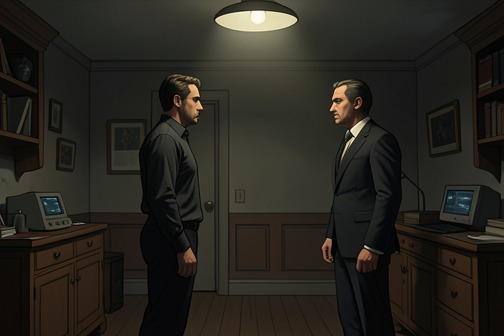
[Robert Mallory](entity:character-recall-character-robert-mallory-ae01c493887e)’s nighttime visit to [Bret Ellis](entity:character-recall-character-bret-ellis-24db207b1483)’s home brings [Bret](entity:character-recall-character-bret-7b256fc8a433)’s suspicions and attraction to a head in the same room. Robert arrives after dark, asks whether Bret searched the house in Benedict Canyon, and challenges him to explain who he thinks Robert is. Bret names the Trawler; Robert does not answer that accusation directly. Instead, a sudden intimate advance gives way to rejection and departure, leaving the encounter unresolved and Bret in tears.
## Causes and Background
The visit follows a period in which Bret has become increasingly fearful of being targeted. Earlier that afternoon, [Steven Reinhardt](entity:character-recall-character-steven-reinhardt-1d7688e88402) had warned him not to call [Terry Schaffer](entity:character-recall-character-terry-schaffer-ac600a9ebce1)’s household again. Bret then secured the doors and windows, turned down the phone ringer, and tried to sleep under the influence of a Quaalude. The ringing doorbell initially seemed part of that drugged sleep, but Robert was outside on the lawn, calling Bret’s name and asking to be let in.
Robert looked familiar rather than like the masked intruder Bret feared. He still wore his [Buckley](entity:organization-recall-organization-buckley-306f3c15107a) clothes, and Bret saw him as the polished fantasy figure he desired. That recognition did not erase the danger or suspicion surrounding him; it made the threshold between fear and longing harder for Bret to hold.
The scene also draws on the pair’s earlier history. At Buckley, Robert had been an object of Bret’s attraction, while Bret’s friendship with [Susan Reynolds](entity:character-recall-character-susan-reynolds-b299ccba7f71) had placed him close to her relationship with [Thom Wright](entity:character-recall-character-thom-wright-3c7fd30d0100). Robert and Susan’s relationship now formed part of the confrontation, while Bret’s private desire for Robert complicated his attempt to question him as a suspect.
## The Confrontation
Robert first asked Bret to open the door and suggested they talk by the pool. Bret unlocked the kitchen door and let him approach, then raised [Chicago](entity:location-recall-location-73935e623d95) and asked what Robert wanted. Robert brushed past that accusation, saying the situation had to stop and that Bret needed to get a grip. He also confirmed that he and Susan were together, adding that he was sorry if it bothered Bret. Bret answered that Robert was not sorry about anything.
Robert then asked whether Bret had broken into his house in Benedict Canyon and gone through his things. His apparent confusion startled Bret, especially because Robert referred to the house as his. Bret denied knowing what Robert meant. The question made the confrontation reciprocal: Bret had come to suspect Robert, but Robert was now testing whether Bret had searched his private space and what he had discovered there.
Asked who he thought Robert was, Bret said he believed Robert was connected to the Trawler and responsible for the girls. Robert told him to stop. Bret also brought up a tape involving Robert and [Matt Kellner](entity:character-recall-character-matt-kellner-7d4c7c775d94), but Robert denied leaving him one. Bret did not play it; he understood that it implicated him as well. Neither the tape nor the accusation produces a clear admission, and Robert’s account of the house and Bret’s investigation remain in tension.
## Intimacy and Rejection
Once they were in Bret’s bedroom, the argument gave way to an intimate advance. Robert touched Bret’s hair and face and kissed him; Bret responded, swept into the desire that had shaped his view of Robert. The encounter did not establish a mutual relationship or resolve the conflict between them. Robert stopped, wiped his mouth, and insulted Bret with a homophobic slur, then said he had known.
The reversal makes the scene’s intimacy inseparable from humiliation. Robert had approached as the person Bret wanted and had briefly seemed to reciprocate that desire, but the rejection left Bret exposed rather than reassured. The episode neither confirms that Robert’s earlier gestures were sincere nor explains why he made them. Its emotional consequence is clear even while its motive remains uncertain.
## Departure and Significance
After rejecting Bret, Robert stood at the bay window and looked out at the yard and the lit pool. He then left without further explanation. Bret remained in the room; shortly afterward, he experienced an intense release and collapsed to the floor sobbing. The scene ends not with a solved crime or a settled relationship but with an abrupt departure and a private emotional collapse.
The visit concentrates the novel’s entanglement of investigation, secrecy, and performed identities. Bret is trying to question Robert about the Trawler and the [Benedict Canyon house](entity:object-recall-object-db47df9df84c), but the tape he withholds also implicates Bret. Robert asks what Bret knows while remaining opaque about his own connection to the evidence. At the same time, Bret’s desire makes it difficult to separate suspicion from fantasy. The scene leaves the central questions open: whether Robert is connected to the Trawler, what he knows about Bret’s search, and what his brief intimacy meant.
Event 42
Robert Mallory’s fatal fall at Century Towers
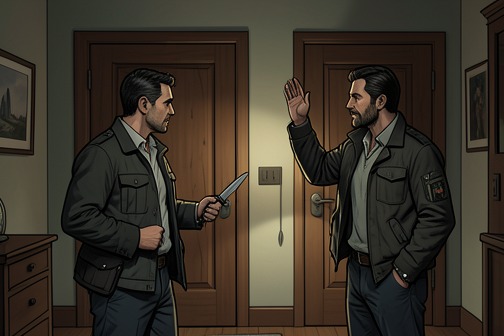
[Robert Mallory’s fatal fall at Century Towers](entity:event-recall-event-robert-mallory-century-18393012d826) is the outcome of a confrontation between Robert and [Bret Ellis](entity:character-recall-character-bret-ellis-24db207b1483) that turns [Bret](entity:character-recall-character-bret-7b256fc8a433)’s search for [Debbie Schaffer](entity:character-recall-character-debbie-schaffer-23db255cf219) into a deadly struggle. The encounter unfolds across the high-rise apartment and its balconies; Robert falls to the garage roof, while Bret survives and tells responders that Robert jumped.
## Causes and Background
Bret enters [Abigail Mallory](entity:character-recall-character-abigail-mallory-efa7797b6926)’s condo using a key he found in the room Robert occupied in the abandoned house on Benedict Canyon. He disables the entrance door and disconnects the apartment’s phones before going toward Robert’s bedroom. These actions leave the two men facing one another in a space where escape and communication have been restricted.
Robert appears with a knife, as does Bret. Bret says he wants Robert to confess and asks where Debbie is. Robert instead orders him to leave and accuses him of being with the people he fears. The scene’s central conflict is therefore also a conflict over what Bret believes Robert has done and what Robert believes Bret represents. Neither man persuades the other before the confrontation escalates.
## The Fight and the Fall
The confrontation becomes physical when Robert lunges and slashes Bret across the face. Bret, disoriented and bleeding, loses sight of Robert briefly; Robert then attacks him again, stabbing toward his chest. Bret pushes him away and cuts him in return, and the struggle moves to the balcony. Robert tries to hold the sliding glass door shut from the other side while calling for help, but Bret kicks until the glass breaks. The shattered doorway opens the fight onto the high-rise’s exposed balconies, where each man is injured and neither can secure an escape.
Robert climbs over the railing and drops to the balcony below, the twenty-seventh floor. Bret follows, continuing to demand that Robert tell him where Debbie is. Robert attempts to descend again, toward the twenty-sixth-floor balcony, while the two grapple at the railing. Bret calls for him to stop and says he wants to help, but the encounter remains a struggle for control: Robert tries to get over the edge, and Bret tries to prevent him. As Robert hangs from the railing, Bret brings his fist down on the back of his hand. Robert falls silently into the darkness.
## Immediate Aftermath and Conflicting Accounts
After Robert falls, the scene shifts from an active struggle to its uncertain public aftermath. Bret remains on the balcony, collapses, and calls for help as responders reach the apartment. Paramedics carry him away on a stretcher; another stretcher bears Robert’s remains. The contrast between the ordinary emergency response and the body’s altered, barely recognizable form makes the fall’s consequence both factual and difficult for Bret to comprehend.
Bret tells those around him that Robert attacked him and then jumped, insisting that he had tried to save his friend. While being taken through the building, he also accuses Robert of killing the girls and Debbie and attacking Susan. These are Bret’s frantic claims in the immediate aftermath, not an independent account establishing every allegation. The event therefore ends with a death confirmed but with the confrontation’s meaning filtered through a wounded, distraught survivor whose explanation is itself part of the scene.
## Significance and Uncertainty
The fall closes a confrontation begun as Bret Ellis’s attempt to make [Robert Mallory](entity:character-recall-character-robert-mallory-ae01c493887e) answer for [Debbie Schaffer’s disappearance](entity:event-recall-event-debbie-schaffer-1e2226651f5e), but it does not settle the questions driving it. Bret arrives armed with a knife and says he wants a confession; Robert, also holding a knife, sees him as part of the group he fears. Their opposed understandings of the encounter leave no shared account of what is happening even as the struggle becomes unmistakably real. In the aftermath, Bret’s repeated insistence that Robert jumped and that he tried to save him coexists with his accusations against Robert, all delivered while he is injured and hysterical. The scene confirms Robert’s death, but presents its surrounding claims through Bret’s distressed account rather than an independent reconstruction. The abrupt silence before Robert’s fall, followed by the sound of impact and the responders’ arrival, marks the transition from a desperate contest to an irreversible public fact; the body’s unrecognizable condition then makes that fact difficult for Bret to absorb.
Event 43
Bret’s false account of the Century Towers fight
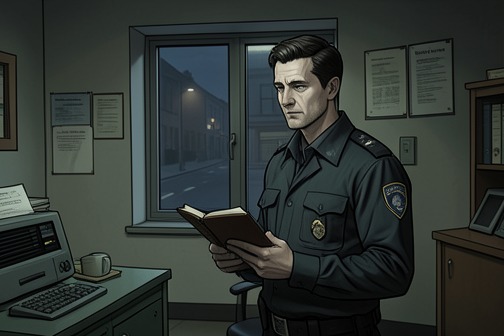
[Bret’s false account of the Century Towers fight](entity:event-recall-event-bret-century-towers-78e3faf11753) is the story he gives police and repeats to people around him after [Robert Mallory](entity:character-recall-character-robert-mallory-ae01c493887e) falls to his death. It recasts their encounter as an attempted rescue that became self-defense, assigning Robert the role of unstable attacker and [Bret](entity:character-recall-character-bret-7b256fc8a433) the role of frightened friend. The account becomes a powerful explanation in the immediate aftermath, but its authority is undermined by the novel’s later disclosure that Bret’s version helped make a disputed narrative seem like the truth.
## Background and the Search for an Explanation
The account follows Bret’s visit to Robert at [Century Towers](entity:location-recall-location-century-towers-d9532f10cd35) and the ensuing fight. Before the confrontation, Bret had already been trying to understand other unresolved events. At [Matt Kellner](entity:character-recall-character-matt-kellner-7d4c7c775d94)’s home, Matt’s father Ronald showed him crime-scene photographs and said the family did not know what had really happened. Bret later told [Dr. Croft](entity:character-recall-character-dr-croft-22b935baf720) that he had also seen Matt’s autopsy report and photographs of Matt, and that the evidence did not look accidental. These earlier encounters establish Bret as someone gathering fragments and trying to connect them, but they do not independently establish his later accusations against Robert.
Bret’s account draws on several different kinds of material: his claimed experience of the confrontation, information he says he knew about Robert’s past, and conclusions he had formed about the Trawler crimes. After Robert’s death, those elements are delivered together as a single, forceful explanation. The resulting narrative is not simply a description of the fight; it makes Bret’s interpretation of a much wider series of events part of his justification for what happened at Century Towers.
## The Story Bret Tells
Bret says Robert contacted him after leaving the hospital and sounded extremely upset. According to Bret, he went to [Century City](entity:location-recall-location-century-city-6364cc26b88c) because he feared that Robert, who had attempted suicide before, might kill himself. He portrays himself as panicked but motivated by concern for a friend, arriving at the apartment intending to prevent another suicide attempt.
Bret says that he could not find Robert at first and was searching the master bedroom when he heard a noise. He then claims to have discovered that Robert had secured the front door in a way that prevented Bret from leaving, trapping him inside. In Bret’s version, he called for help, could not get anyone to respond, and defended himself with a knife he found in the kitchen. He says the fight continued across the balconies on the twenty-eighth and twenty-seventh floors, where he tried to pull Robert away from the railings while protecting himself. His telling ends with Robert jumping.
The account frames the encounter as a rescue reversed into a struggle: Bret says he went to help, but Robert made him a prisoner and forced him to defend himself. Bret emphasizes Robert’s previous suicide attempt and mental instability, and connects him to the disappearance of [Katherine Latchford](entity:character-recall-character-katherine-latchford-b303abca40f3), the Trawler crimes, [Debbie Schaffer’s disappearance](entity:event-recall-event-debbie-schaffer-1e2226651f5e), the attack on [Susan Reynolds and Thom Wright](entity:relation-recall-relation-susan-reynolds-and-t-e5905de21f01), and Matt’s death. These are Bret’s claims to the police, not facts established by the account itself. Their accumulation gives his explanation a broad apparent coherence while making it difficult to separate firsthand observation from inference.
## Repetition, Evidence, and Credibility
Bret repeats his story to the police, the Reynolds family, [Laurie Wright](entity:character-recall-character-laurie-wright-47a64420395d), and the doctors treating him. He says that he went to help a distressed friend, that Robert had trapped him, and that he fought back. He also tells listeners that Robert had been institutionalized, had attempted suicide, and had harmed his stepsister. The repeated version holds to the same central sequence and presents Robert’s history as context for the encounter.
The scene also distinguishes between what Bret claims and what others have verified. Bret sustains injuries and receives 115 stitches, but the account says physicians found no serious or lethal injury. His injuries support the fact that a confrontation occurred; they do not, by themselves, establish the details or the direction of responsibility in his narrative. The police ask few questions, and Bret signs statements while bandaged. He becomes tearful during questioning, but the story offers no independent confirmation of the claims that Robert called him, intended to kill himself, or deliberately trapped him.
That gap between physical aftermath and narrated explanation is central to the event. Bret’s statement supplies the sequence that available questioning does not test in depth. His distress and injuries make the story immediately persuasive, while the allegations about Robert make Bret’s actions appear defensive and necessary. The account thus functions both as testimony and as self-exoneration: it gives a legible cause to the fight, but it cannot resolve what actually happened between the two men.
## Consequences and Narrative Significance
Bret’s version becomes the core account of the November 7 encounter, even as Robert’s aunt Abigail publicly disputes what she believes happened between Robert and Bret. Abigail was not present, and the force of Bret’s dramatic description helps it prevail as the narrative carried forward. The novel does not present that public acceptance as proof that Bret’s version is true; instead, it shows how an account can acquire authority through its vividness and through the absence of a witness able to refute it.
That authority does not last. After the Trawler abducts [Leslie Slavin](entity:character-recall-character-leslie-slavin-6d526e25984b) and takes credit for [Audrey Barbour](entity:character-recall-character-audrey-barbour-96d09b8a3fa9)’s death, it becomes clear that Robert did not commit the murders Bret had attributed to him. The revised understanding casts Robert as a victim of the Trawler’s long-running manipulation and obsession, rather than the perpetrator Bret had described. Bret’s explanation of the Century Towers fight remains forceful enough to shape the immediate story, but its broader accusations collapse, and Bret becomes increasingly isolated at school.
The event therefore makes narration itself consequential. Bret’s story protects him in the immediate aftermath and organizes a confusing chain of violence into a comprehensible account, yet its unverified details and disproved accusations leave the reader alert to the difference between what he says, what the evidence shows, and what other characters come to believe. The fight’s significance lies not only in Robert’s death, but in the story Bret constructs around it—and in the social consequences that follow when that story is accepted and then questioned.
Event 44
Audrey Barbour’s body is discovered in Benedict Canyon
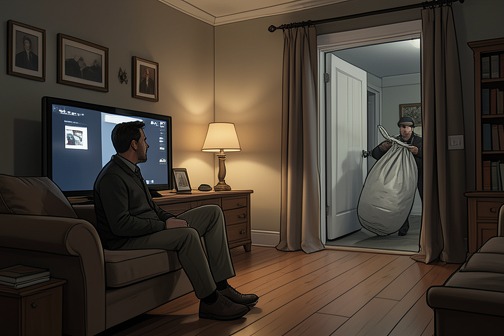
[Audrey Barbour](entity:character-recall-character-audrey-barbour-96d09b8a3fa9)’s body is discovered in a soundproofed room in an abandoned house in Benedict Canyon, making her the Trawler’s fourth known victim and turning a place [Bret](entity:character-recall-character-bret-7b256fc8a433) had already entered into the setting of a confirmed murder scene. The discovery appears to reinforce his suspicions about [Robert Mallory](entity:character-recall-character-robert-mallory-ae01c493887e), who had been associated with the house, but it does not establish Robert as the killer; the account preserves that uncertainty even as later revelations expose the Trawler’s use of animal remains in a staged construction.
## Discovery at the Benedict Canyon House
On Monday morning, November 9, Bret watches local news coverage from the Wrights’ home while recovering from the recent violence and taking Vicodin. The report says that a dozen police cars had arrived at the abandoned [Benedict Canyon house](entity:object-recall-object-db47df9df84c) late the previous night. Officers found Audrey in a soundproofed room in the makeshift basement, a space Bret had previously tried but failed to enter. The report transforms his memory of the house: it is no longer merely a place connected with Robert and with [Matt Kellner](entity:character-recall-character-matt-kellner-7d4c7c775d94)’s disappearance, but a site where Audrey had been held and killed.
The television footage shows a body bag being carried out through a door Bret recognizes from his own entry into the house. [Laurie Wright](entity:character-recall-character-laurie-wright-47a64420395d) cries as the scene unfolds. Bret connects the location to his belief that Robert had held Matt there and made plans in the house, but these are his understanding of the place, not a conclusion established by the discovery itself. The revelation makes the house a junction between Bret’s private suspicions and the public investigation.
## [The Trawler](entity:character-recall-character-the-trawler-8d8a25ce6371)’s Pattern and Its Delayed Explanation
The discovery confirms Audrey as the fourth known victim of the Trawler, whose earlier pattern had included the disappearance of pets around intended victims. That animal clue had been visible before the killings were fully understood, but its purpose remained unknown. Bret and the others had not yet learned what the Trawler did with the animals or why they disappeared.
The explanation arrives months after Audrey’s body is found. Her remains had been assembled with limbs from missing animals, a carefully sewn construction that the Trawler and his associates called a project. The book identifies this as an elaborate variation on what had been done to the other three girls, some of whom may also have spent time in the house. Thus the apparent animal disappearances acquire a more disturbing significance in retrospect: they were not incidental losses but part of the Trawler’s larger pattern of preparation and staging.
## What the Later Disclosures Reveal
The account of Audrey’s presentation is withheld at first and disclosed only in fragments over time; the full extent of the Trawler’s work takes a year to emerge. The room’s soundproofing, the concealment of the body, and the use of animal remains establish that the murder scene was deliberately prepared, rather than simply a place where the body happened to be found. The staged construction also connects the individual crime to the recurring pattern that had preceded it.
The delayed disclosure changes the meaning of the initial news report without resolving every question. The Trawler’s involvement is confirmed, but Robert does not become the principal suspect in the days after the discovery. Bret later learns that investigators considered the theory tempting, while concluding that certain elements did not fit. The event therefore strengthens the connection between Robert, the house, and the wider sequence of crimes, while leaving the crucial distinction between association and proof intact.
Event 45
Susan discovers the bite mark on Bret’s arm
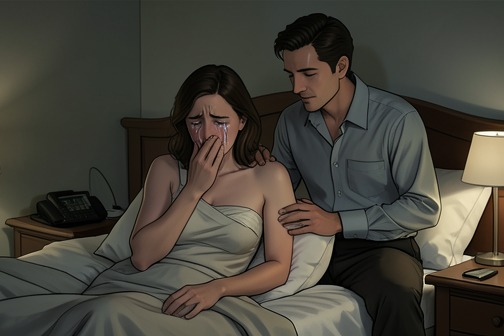
Six days after the attack on Canon Drive, [Bret Ellis](entity:character-recall-character-bret-ellis-24db207b1483) visits [Susan Reynolds](entity:character-recall-character-susan-reynolds-b299ccba7f71) in her bedroom and finds her recovering from severe injuries. When she spots a wound on his forearm and believes it is the bite mark she left on her attacker, the quiet visit becomes a crisis of recognition: Susan suspects [Bret](entity:character-recall-character-bret-7b256fc8a433) may have been the assailant, and he responds by physically restraining her and demanding that she keep his secret. Her later report to [Thom Wright](entity:character-recall-character-thom-wright-3c7fd30d0100), followed decades afterward by Thom’s question to Bret, carries the suspicion beyond the bedroom without resolving it for the reader.
## The Visit During Susan’s Recovery
Bret arrives at Susan’s house on a Friday afternoon, six days after the attack. Gayle lets him in and leads him upstairs to Susan’s bedroom. Susan is propped up in bed, sedated by painkillers and listening to [Icehouse](entity:organization-recall-organization-icehouse-3b7e9288bfea). The bandage around her chest makes the damage unmistakable: one side of her body is flattened, and the injury is too stark for Bret to meet without suppressing a gasp.
Their attempt to hug turns into a painful, tearful embrace. Susan’s bandaged hand covers her mouth as she cries; Bret bows his head and sobs. Neither needs to spell out what the tears include: the attack, what happened to Thom, what happened to Robert, the song in the room, and the larger accumulation of their recent losses. Their reunion is at once intimate and deeply fragile, a moment of shared grief before the discovery that changes its terms.
They speak quietly and make promises. Susan tells Bret that she saw Thom on Wednesday, before she was discharged, and that Thom would be all right. Bret has barely left his room, has not returned to [Buckley](entity:organization-recall-organization-buckley-306f3c15107a), and says he is taking Vicodin continually. The details establish how narrowly both friends are moving through recovery: Susan is confined to bed, while Bret has come to see her despite his own isolation and medication.
## The Wound and Susan’s Recognition
Susan asks Bret what happened on Saturday night in [Robert Mallory](entity:character-recall-character-robert-mallory-ae01c493887e)’s apartment and asks him to tell her what really happened. Rather than answer, Bret places a finger to her lips. She smiles in recognition and closes her eyes; the gesture belongs to a familiar exchange between them, one that signals they need not say what they already understand, or what would make no difference if spoken. That shared shorthand briefly appears to protect the tenderness of the visit.
The mood shifts when Susan notices Bret’s exposed forearm. He is wearing a long-sleeved blue Polo shirt, but the sleeve falls back as he lifts his arm. She sees a deep wound surrounded by purple-and-yellow bruising, and her relaxed expression disappears. She reaches for the sleeve and draws it farther down to inspect the injury. The narrative marks the turn as a sudden activation: the earlier exhaustion and ease give way to tension, while Susan shakes and looks from the wound to Bret.
Susan says she thinks it is a bite mark. She believes it lies precisely where she bit the intruder on Saturday night and that the indentations of her teeth are visible. The wound therefore becomes more than an injury: to Susan, it is a bodily trace connecting Bret to the person who attacked her. Her recognition is immediate, but the scene does not independently establish who caused the wound. That gap between what Susan believes she sees and what Bret says becomes central to the event’s unresolved force.
## Secrecy, Force, and the Collapse of the Visit
Susan stares at Bret without speaking, then starts to cry and vomits onto the front of her robe. When he asks what is wrong, she pulls away while he clutches her bandaged hand. She turns aside, trembling and shaking her head, with drool and vomit on her chin. The scene’s physical details register the shock of her suspicion before she can make a fuller accusation.
Bret tells her not to worry, says Robert is gone and cannot hurt her anymore, and grips her hand so tightly that she cannot pull away. He asks whether his secret is safe with her, repeating the question in a whisper. As he reassures her that she is safe, he continues crushing her hand until he feels it begin to break. Susan faints and slides off the bed. The language of comfort and the violence of his grip operate together: Bret presents his words as reassurance while making it physically difficult for Susan to escape or answer.
Bret then manages the appearance of an ordinary medical emergency. He leaves the room and tells Gayle that Susan feels strange, took too many painkillers, vomited, passed out, and may have broken something in her hand. Gayle rushes upstairs and calls a doctor; Bret helps move Susan to another room after the bed is found wet with urine. His account redirects attention toward medication and the fall, while his earlier demand and the injury to Susan’s hand remain concealed from the explanation he gives Gayle.
## The Suspicion’s Afterlife
Bret assumes Susan never told anyone what she thought she saw and says he never spoke to her again. Susan does not return to Buckley; she finishes her senior year at Marymount and graduates in June. The bedroom encounter thus becomes their last meeting for decades, leaving Bret’s assumption of silence in place until a later conversation reveals that it was mistaken.
When Bret and Thom meet again years later, Thom tells him that Susan called from the hospital after seeing him. She sounded high and desperate, and told Thom she had seen something on Bret’s arm. She wanted them to call the police because she thought Bret had done it. Thom initially dismissed her as crazy and said he would deny the accusation, but admits that her certainty frightened him. At their reunion, he finally asks Bret whether it was him. Bret says it was not, attributing Susan’s belief to her being high on painkillers when she saw the wound. The later exchange confirms that Susan did disclose her suspicion, but it does not provide independent proof that either her interpretation or Bret’s denial is true.
The episode makes the body both evidence and an unstable surface of interpretation. Susan reads the wound through the bite she remembers inflicting; Bret responds by suppressing speech and controlling her body, then offers a benign account of her collapse to Gayle. The scene’s uncertainty is not resolved by the later conversation: instead, Susan’s report and Bret’s denial remain in tension, showing how an experience can be hidden from public view yet return through memory, testimony, and questions delayed for years.
Event 46
Leslie Slavin is abducted by the Trawler
[Leslie Slavin’s abduction](entity:action-recall-action-leslie-slavin-s-abduct-b0032eecc57f) is the event that ruptures [Bret Ellis](entity:character-recall-character-bret-ellis-24db207b1483)’s account of [Robert Mallory](entity:character-recall-character-robert-mallory-ae01c493887e) as the Trawler. On a crowded Saturday night in [Westwood](entity:location-recall-location-westwood-538fe26718d7), the seventeen-year-old disappears after leaving friends at Yesterdays and walking to her car in a Glendon Avenue garage. [The Trawler](entity:character-recall-character-the-trawler-8d8a25ce6371)’s subsequent letter to the [Los Angeles](entity:location-recall-location-los-angeles-11eff639bdf5) Times claims the crimes for himself and his associates, identifies [Audrey Barbour](entity:character-recall-character-audrey-barbour-96d09b8a3fa9) as a sacrifice, and clears Robert of responsibility. Leslie’s disappearance therefore does more than extend the campaign: it exposes the false certainty at the center of [Bret](entity:character-recall-character-bret-7b256fc8a433)’s story.
## Background: A Story Bret Believes He Has Solved
By the time Leslie disappears, Bret has told his classmates that Robert was the Trawler and that Robert died after trying to kill him. The tale has brought Bret attention and sympathy; students regard him as the survivor who exposed the killer. But the story’s confidence exceeds what Bret knows. The evidence eventually shows that the Trawler and his followers had been fixated on Robert and had also targeted people in his circle, a pattern Bret had mistaken for proof that Robert himself was responsible.
The abduction also follows a renewed wave of home invasions. Earlier attacks had involved warning signs such as silent calls, rearranged household objects, and missing neighborhood pets; the Trawler’s methods had included preparing for attacks in advance and remaining difficult to identify. The account of Leslie’s disappearance places her within that continuing threat, rather than presenting it as an isolated crime.
## The Abduction and the Trawler’s Claim
Leslie vanishes on November 21 after leaving her group of friends at Yesterdays and heading alone toward the car parked in a garage on Glendon Avenue. The evidence establishes the circumstances and location of her disappearance, but does not describe the abduction itself or establish Leslie’s ultimate fate.
Afterward, a letter sent by the Trawler to the Los Angeles Times and verified by the [Los Angeles Police Department](entity:organization-recall-organization-c38071a69813) changes the meaning of the crimes. The writer acknowledges a renewed series of home invasions, while denying responsibility for the attack on the Reynolds residence on North Canon Drive. He identifies Robert indirectly as “the God,” describes Audrey Barbour as a sacrifice, and says the sacrifice was intended for the deceased boy he calls by that name. The letter thus claims the killings for the Trawler while rejecting the accusation that Robert was the killer.
The letter further states that the Trawler and his associates had soundproofed the basement of the abandoned [Benedict Canyon house](entity:object-recall-object-db47df9df84c) that Robert sometimes visited. Audrey had been held there for days before she was killed and discovered. Bret realizes that her body may have been in the house when he himself wandered through it. The disclosure joins a physical location Bret had encountered to the campaign he had misread, without resolving every detail of what happened there.
## Consequences: Bret’s Account Collapses
The letter also describes the Trawler and his friends as having become intimate with people associated with Robert, and mentions gifts left for Robert’s classmates, including mementos, photographs, and posters. These disclosures recast the campaign as a sustained fixation on Robert and his social world. They also explain why proximity to Robert had seemed to connect so many people to the crimes, while not proving that Robert had committed them.
Leslie’s abduction and the Trawler’s claim have a direct social consequence for Bret. Once it becomes apparent that Robert did not kill anyone and had instead been the target of the Trawler’s mind games and obsession, Bret’s insistence that Robert was the killer can no longer hold. Bret becomes a pariah at [Buckley](entity:organization-recall-organization-buckley-306f3c15107a): classmates and teachers avoid him, he is left alone at school, and former friends occupy the place in the courtyard and at lunch that he once shared with them. His dramatic story had made him appear heroic; the new evidence makes that performance untenable.
## Narrative Significance
The event is presented retrospectively by Bret, whose earlier version of Robert’s death has shaped both his classmates’ understanding and the narrative he tells about himself. Leslie’s disappearance interrupts that version, while the verified letter supplies information that Bret had not known and forces him to confront the gap between a compelling story and an accurate one.
The abduction itself remains only partly narrated: the text gives Leslie’s age, the Saturday-night setting, the route from Yesterdays to the Glendon Avenue garage, and the fact that she vanished, but not the mechanics of the crime or a confirmed outcome for her. That restraint keeps the focus on what the event reveals about the larger plot. The Trawler remains active, Robert is recast as a target rather than the murderer Bret alleged, and Bret’s public certainty gives way to isolation and doubt.
Event 47
Trawler letters are revealed and clear Robert Mallory
The revelation of the Trawler’s letters clears [Robert Mallory](entity:character-recall-character-robert-mallory-ae01c493887e) of responsibility for the crimes [Bret Ellis](entity:character-recall-character-bret-ellis-24db207b1483) had attributed to him, while exposing a different and more sustained danger: the Trawler and his followers had been watching Robert and leaving crimes and mementos as offerings to him. The letters resolve one strand of the mystery, but their publication also overturns [Bret](entity:character-recall-character-bret-7b256fc8a433)’s public narrative and helps turn him from a celebrated survivor into an outcast.
## Background: Clues Without a Name
The connection between the Trawler’s crimes and Robert had been difficult to recognize while the events were unfolding. Early home invasions appeared random, and the clues were not yet linked into a coherent account. One recurring pattern involved pets: animals disappeared in and around neighborhoods before attacks, and, in some cases, three animals were sacrificed before an assault. The reason for this pattern was not understood until late [1981](entity:time-recall-time-1981-16063b32b4e5). In the meantime, missing animals, silent phone calls, and rearranged furniture began to appear around [Matt Kellner](entity:character-recall-character-matt-kellner-7d4c7c775d94) as well, prompting Bret to fear that Matt had become another victim. But Bret also recognized that his theory rested on a pattern that might not be as consistent as he believed.
Robert’s own past supplied another source of suspicion. At a gathering, [Susan Reynolds](entity:character-recall-character-susan-reynolds-b299ccba7f71) said that Robert had spent the previous spring receiving treatment at what [Dr. Croft](entity:character-recall-character-dr-croft-22b935baf720) called a developmental center, for depression and other issues, and that he had been discharged in May. Bret rejected the euphemism, insisting that the group recognize the seriousness of Robert’s hospitalization. That exchange did not establish Robert’s guilt, but it helped shape the language through which Bret and the others interpreted his behavior.
Bret’s suspicions grew into a timeline: he argued that the home invasions and assaults began when Robert first came from [Chicago](entity:location-recall-location-73935e623d95), stopped when he left, and resumed during later visits. He placed [Katherine Latchford’s disappearance](entity:action-recall-action-katherine-latchford-s-72bec3fb3ad5) and [Sarah Johnson](entity:character-recall-character-sarah-johnson-fa8b9bb9dd9c)’s disappearance within periods when Robert was in [Los Angeles](entity:location-recall-location-los-angeles-11eff639bdf5), then pressed [Abigail Mallory](entity:character-recall-character-abigail-mallory-efa7797b6926) about whether Robert had been there in June. Dr. Croft called Bret’s proposed connection an enormous leap. The contrast between a chronology that looked incriminating and evidence that did not prove responsibility would become central to the eventual reversal.
## [The Trawler](entity:character-recall-character-the-trawler-8d8a25ce6371)’s Claims
The change begins with the Trawler’s claim about [Leslie Slavin](entity:character-recall-character-leslie-slavin-6d526e25984b), a seventeen-year-old abducted on November 21 after leaving friends at Yesterdays in [Westwood](entity:location-recall-location-westwood-538fe26718d7) and walking to her car in a garage on Glendon Avenue. The Trawler was identified as responsible for her abduction, and a smaller series of home invasions followed. Those incidents were described as less violent than the attack at the Reynolds residence on North Canon Drive; the Trawler denied responsibility for that particular assault while tacitly acknowledging the other intrusions.
A letter sent to the Los Angeles Times and verified by the [Los Angeles Police Department](entity:organization-recall-organization-c38071a69813) made the larger claim explicit. It referred to Robert not by name but as “the God,” and said that another “gift” had been left at the house on Benedict Canyon where he sometimes stayed. The gift was [Audrey Barbour](entity:character-recall-character-audrey-barbour-96d09b8a3fa9), whom the letter described as a sacrifice, continuing the pattern associated with Katherine and the other girls. The writer rejected suspicion directed at [“the God”](entity:expression-recall-expression-the-god-5a4423ce3747) and insisted that the Trawler, not Robert, deserved credit for Audrey’s death and the other crimes. He presented Audrey as the last victim in a project dedicated to the deceased boy he called “the God.”
The letter also explained that the Trawler and his friends had soundproofed the basement of the abandoned [Benedict Canyon house](entity:object-recall-object-db47df9df84c). Audrey had been held there for days before she was killed and discovered on a Sunday night. Bret realized, while reading the account, that her body might have been in the house when he had wandered through it and entered the basement. The letter thus connected a location Bret had personally visited to the Trawler’s crimes, but did so after the fact, when the discovery could no longer protect Audrey.
The Trawler described himself and his friends as having become intimate with many of Robert’s acquaintances, and referred to gifts left for Robert’s classmates: mementos, photographs, and posters. These claims expanded the threat beyond the victims named in the crimes. The people around Robert had also been watched and drawn into the Trawler’s campaign, whether or not they understood the meaning of what was left for them.
## The Fan Letters and Robert’s Exoneration
Abigail Mallory released the letters sent to Robert from the summer of [1980](entity:time-recall-time-1980-87083d7775fd), after Katherine disappeared, through early fall 1981. Their voice matched the Trawler’s. They contained no clear names of victims or descriptions of home invasions; instead, they addressed Robert as “the God,” professed the writer’s devotion, and promised that the Trawler and his friends were watching over him and leaving gifts and sacrifices around the city. The letters called these offerings “treasures” and repeatedly told Robert that he had been spotted or was being watched over.
Because the letters did not identify the victims or spell out the crimes, Robert had not connected them to the wider pattern by the time Audrey disappeared. According to Abigail, he had at one point assumed they came from “psycho chicks” or from a girl he had dated and abandoned during his first months in California. The letters therefore work as both evidence and misdirection: they show that Robert was being stalked, but, without the missing links between their promises and the crimes, they had not given him a usable explanation of what was happening.
Their release abruptly changed how the evidence could be read. What had seemed like a suspicious connection between Robert’s presence and the crimes now appeared as the Trawler’s campaign of attention and offerings directed at him. The Trawler’s language of worship did not make Robert responsible for the violence; it made him its chosen recipient and object. The letters cleared him by revealing that the apparent pattern around him had been built by his followers, who watched him and the people closest to him for nearly a year and a half.
## Bret’s Account and the Reversal
The exoneration did not settle the account of what had happened between Bret and Robert. Abigail publicly disputed Bret’s description of their encounter in her condominium on November 7, while acknowledging that she had not been present. Bret’s version, however, was forceful and dramatic enough to become the central story: Robert was no longer presented as the Trawler but as a dangerous, suicidal figure who meant to harm a student suspicious of him. That account survived as the basis of the narrative for a time, but it could not protect Bret once the letters established Robert’s victimization by the Trawler.
Bret’s earlier reasoning had moved from clues to accusation without closing the gap between them. He had treated timing as a pattern, and Robert’s hospitalization, evasiveness, and association with the missing women as support for a theory that Abigail and Dr. Croft questioned. Even the evidence surrounding Matt remained uncertain: [Ronald Kellner](entity:character-recall-character-ronald-kellner-f2c83421c463) said he did not know what had happened to his son, and the Datsun’s mileage showed that Matt had not driven the distance he might have claimed. Such details intensified suspicion without, by themselves, proving who had caused Matt’s death. The letters supplied new evidence against Bret’s central claim, but they did not make every earlier question disappear.
After Leslie’s abduction and the Trawler’s claim for Audrey, it became clear to those around Bret that Robert had not killed anyone and had instead been caught in the Trawler’s mind games and obsession. Bret’s standing collapsed through small, accumulating acts of exclusion: people stopped greeting him, teachers looked away, students avoided him at his locker, and he found himself alone at assembly and in the senior parking lot. He was no longer invited to lunch with people he had considered friends, and he ate at a far table rather than the center table he had once shared with Ryan Vaughn and others. When [Debbie Schaffer](entity:character-recall-character-debbie-schaffer-23db255cf219) did not invite him to [Jeff Taylor](entity:character-recall-character-jeff-taylor-3284df352d5c)’s eighteenth-birthday party at the [Schaffer residence](entity:location-recall-location-schaffer-residence-9ae4cf17e9f1), Bret understood the estrangement; he also stopped speaking to Terry and Liz. A missed invitation to a group movie in Westwood made his new status unmistakable. The Trawler’s letters exonerated Robert, but their publication also exposed how completely Bret had committed himself to an accusation that others no longer believed.
## Significance
The episode turns the story’s clues into a dispute over who controls their meaning. Pets disappearing, posters, photographs, letters, and the timing of Robert’s visits had all been read as fragments of a case against him. The Trawler’s messages reveal that those fragments belonged to a campaign aimed at Robert, not evidence that he directed it. Yet the reversal does not restore a stable, complete truth: the letters explain the Trawler’s self-appointed relationship to “the God,” while Bret’s account of the November 7 confrontation remains contested.
The shift is also social rather than merely investigative. Before the letters were released, Bret’s dramatic narrative had made him the boy believed to have stopped the Trawler. Once the evidence recast Robert as a target, the same confidence that had given Bret authority helped isolate him. The revelation therefore clears one accused person while leaving the narrator to bear the consequences of having mistaken a constructed pattern for proof.
Event 48
Bret Ellis reunites with Thom Wright in Boston
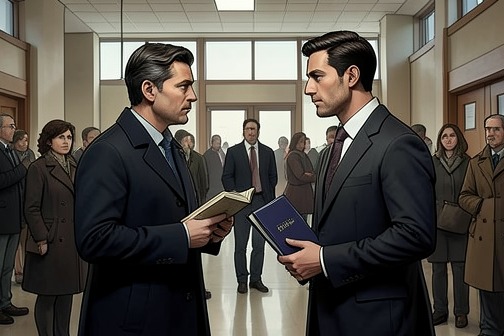
In January 1999, a book-signing in [Boston](entity:location-recall-location-boston-aded649f4602) brings [Bret Ellis](entity:character-recall-character-bret-ellis-24db207b1483) face to face with [Thom Wright](entity:character-recall-character-thom-wright-3c7fd30d0100) for the first time since [1981](entity:time-recall-time-1981-16063b32b4e5). Their reunion turns a public appearance into an uneasy reckoning: Thom discloses that [Susan Reynolds](entity:character-recall-character-susan-reynolds-b299ccba7f71) once suspected [Bret](entity:character-recall-character-bret-7b256fc8a433) of hurting her, and Bret denies it, leaving the identity of the attacker uncertain. The conversation briefly makes room for recognition and confession, but it ends without a dinner, renewed contact, or a settled account of what happened.
## The unexpected recognition
Bret is in Boston on the first leg of a long publicity tour for his novel *Glamorama*. After reading for about twenty minutes to an audience at [Boston College](entity:location-recall-location-boston-college-d69f5179339f), he spends hours signing books in a line that winds through the auditorium lobby. A handsome man approaches with a pristine hardcover of *Less Than Zero*, a novel nearly fifteen years old. The man's Brooks Brothers suit, camel-hair coat, umbrella, and boyish face strike Bret as familiar, but recognition does not come immediately. The two hold each other's gaze in silence, and Bret experiences the encounter first as fear, then desire, then confusion.
The man asks Bret to sign the book for Thom, specifying that his name is spelled with an h. Bret recognizes Thom Wright and signs the name without being asked. The small correction and the silence surrounding it make the reunion's distance tangible: Thom has followed Bret's career since 1985, yet the two have not spoken since 1981. Bret asks him to wait until the signing is over so they can talk. Thom checks his Rolex, considers the invitation, and agrees.
## A conversation in the snow
Outside the auditorium, snow drifts beneath the entrance overhang as Bret finds Thom waiting. A black sedan is at the curb to take Bret to a television interview, and two publicists remind him that they must leave within thirty minutes. Against that hurried itinerary, the men make small talk about Thom following Bret's career. Their breath steams in the cold as the light fades, and Bret admits he cannot believe Thom is there. Thom says he had not planned to come but could not help himself.
Bret asks why they have not seen one another in twenty years and what happened. He says he has thought of Thom many times. Thom's expression changes before he answers: the past he brings up is not only the lost friendship, but Susan Reynolds's suspicion about Bret. Susan had called Thom from the hospital after seeing Bret. She sounded high and desperate, Thom recalls, and said that she had seen something on Bret's arm.
## Susan's accusation and Bret's denial
Thom explains that Susan wanted them to call the police because she thought Bret had done it. He had told her that she was crazy, that he would deny the accusation, and that he wanted no part of it. Yet her certainty frightened him. He had already been badly affected by what happened to him, and he had not wanted to see Bret—or really anybody—afterward. After carrying the question for years, he asks whether it was Bret.
Bret says it was not. He recalls that Susan had been high on painkillers when she saw him and believed she had noticed something on his arm. Thom does not simply accept the denial: he asks quietly who was responsible. Bret can offer only a possibility, suggesting that it may have been the Trawler, but adding that he does not know. Thom recognizes that the identity was never established and names the Trawler himself. Bret confirms that the perpetrator was never found. The exchange leaves the central fact unresolved: Susan suspected Bret, Bret denied it, and neither man can identify the attacker with certainty.
## An unfinished reunion
The conversation does not restore their friendship. Thom reflects that Susan was traumatized and, for a time, saw signs, signals, and omens everywhere; the relationship between Thom and Susan did not resume, so he says her state of mind no longer mattered to him. Bret apologizes for not reaching out over the years and for failing to explain how he felt about Thom. Thom replies that he had been unreachable for a long time, a restrained answer that acknowledges the distance without undoing it.
Bret invites Thom to dinner at the Ritz-Carlton, where he is staying. Thom politely declines, saying that he has plans, though he is glad to have seen Bret and thanks him for signing the book. Bret gives him his New York number. Thom never calls, and Bret never sees him again. The encounter supplies an answer to one question—Bret says he did not attack Susan—but not to the larger mystery of who did. Its briefness is part of its force: after nearly two decades of silence, the old attraction and the old fear return, while the possibility of renewed closeness disappears with the snowbound meeting.